




Every week, The American Journal of Managed Care® recaps the top managed care news of the week, and you can now listen to it on our podcast, Managed Care Cast.
Every week, The American Journal of Managed Care® recaps the top managed care news of the week, and you can now listen to it on our podcast, Managed Care Cast.

This week, the top managed care stories include the finding that new guidelines will mean the number of people with hypertension will soar; research finds that most diabetes apps don’t lower glycated hemoglobin; and a health plan announced its plan to fight housing instability.


Neurological damage begins early in infection, particularly during untreated infection, and worsens with the continued absence of combination antiretroviral therapy (cART). However, initiating cART may halt further deterioration, emphasizing the importance of early cART.

The FDA has warned of serious cases of neural tube birth defects involving the brain, spine, and spinal cord affecting babies born to women with HIV being treated with dolutegravir.

The FDA has approved an expanded indication for Gilead Science’s emtricitabine/tenofovir disoproxil fumarate (Truvada) to reduce the risk of HIV in at-risk adolescents. Truvada for pre-exposure prophylaxis (PrEP) was first approved for the use in adults in 2012.

The FDA has drafted new recommendations on the development of drugs to treat pediatric patients with HIV meant to be applied on a global scale.
Through an HIV heatmap, as well as an extensive survey and customized web-based software to connect social determinants with viral suppression rates, an HIV primary care program is working to reduce the number of new HIV diagnoses and increase viral suppression rates in Long Island and Queens.

The total cancer burden among people living with HIV will decrease from 8150 cases in 2010 to 6690 cases in 2030, and prostate and lung cancers will emerge as the most common types of cancer facing the patient population.

Aimee Tharaldson, PharmD, a senior clinical consultant in Emerging Therapeutics for Express Scripts, discusses specialty drugs that have recently been approved, and which we will likely see approved in the remainder of the year.

Tahir Amin, DipLP, co-founder and co-executive director of the Initiative for Medicines, Access, and Knowledge, discusses the organization’s focus on patent opposition for HIV drugs, the results of their work, and what efforts are still needed.
Patients with gaps between HIV primary care visits of 6 months up until 9 months did not have a significant difference in viral suppression loads. However, with gaps of 12 months or more, 23% of patients became unsuppressed.

Researchers from the University of Massachusetts Medical School will test the safety and tolerability of a vaccine that may have the potential to prevent HIV infection.

Between 2000 and 2015, $562.6 billion was spent on HIV/AIDS, with most spending occurring in high-income and upper-income countries and out-of-pocket spending accounting for less than 10%, according to the first long-term, comprehensive analysis of funding for the disease.
At the Academy of Managed Care Pharmacy's Managed Care & Specialty Pharmacy Annual Meeting, held April 23-26, in Boston, Massachusetts, an overflow capacity crowd gathered for one of the meeting’s yearly highlights­: Specialty Pharmaceuticals in Development. Aimee Tharaldson, PharmD, a senior clinical consultant in Emerging Therapeutics for Express Scripts, talked about the key trends in the specialty drug market, including cancer drugs, new competition, and orphan drugs.
A panel of experts in infectious disease and managed care to discuss management of HIV, including the need for individualized care and the role for newer treatments options.
AIDSinfo, a portal from the National Institutes of Health, has outlined recent changes that have been made to the adult, adolescent, and perinatal HIV guidelines, including the incorporation of people-first language.

The increased risk of cancer in patients with HIV has been well defined, and some studies have suggested that patients with HIV have not only a higher risk of lung cancer, but also an increased risk of mortality from their cancer than patients without HIV.

Emergency departments can play a critical role in the identification of undiagnosed HIV in low-resource areas, according to a study published in PLOS ONE.

This week, the top managed care stories included President Donald Trump signing an executive order requiring the poor to get jobs or lose food and healthcare benefits; a CMS report found ethnic, racial, and gender disparities in Medicare Advantage plans; CDC highlighted the impact of HIV on America's youth.
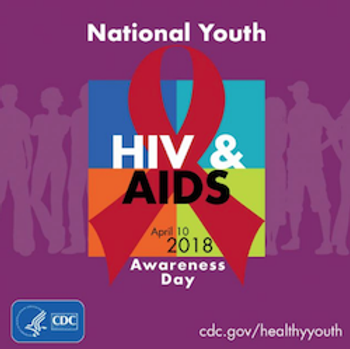
As April 10 marks National Youth HIV & AIDS Awareness Day, CDC and other organizations are highlighting the impact of HIV/AIDS on individuals aged 13 to 24, as they accounted for nearly one-fourth of all new HIV diagnoses in the United States in 2015.

Christie’s Place, a nonprofit social service organization, puts a large focus on social determinants of health to help their clients not only keep up with their medical care, but also improve their quality of life.

Coverage of our peer-reviewed research and news reporting in the healthcare and mainstream press.
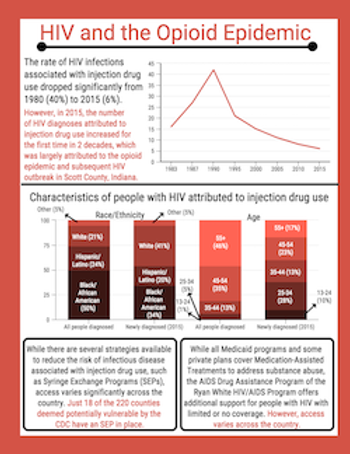
As the opioid epidemic persists as a public health crisis in the United States, there has been growing concern the injection drug use will affect infectious disease, as it increases the risk of infections, such as HIV. A graphic series from Kaiser Family Foundation took a look at the interaction between the nation's HIV and opioid epidemics. Here are 5 take aways.
Every week, The American Journal of Managed Care® recaps the top managed care news of the week, and you can now listen to it on our podcast, Managed Care Cast.