



Multiple Myeloma
Latest News
Advertisement
Experts Weigh in on Multiple Myeloma
Explore the expanding role of bispecific antibody therapies and strategies for managing cytokine release syndrome and infection risks. Dive into real-world data on teclistamab and talquetamab, and uncover new approaches to optimize patient outcomes.
Latest Videos




Advertisement
More News

The FDA approved the quadruplet regimen on July 30 for induction and consolidation therapies in patients with newly diagnoses multiple myeloma who are eligible for autologous stem cell transplant.
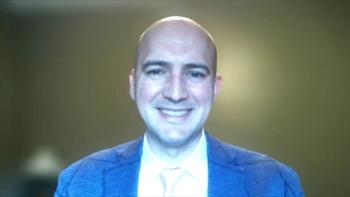
In part 1 of our interview with Leland Metheny, MD, he explained how a new triple-target chimeric antigen receptor (CAR) T-cell therapy works in multiple myeloma.
Leland Metheny, MD, is lead investigator for the Phase 1 BAFF CAR T clinical trial, which is evaluating the safety and effectiveness of a novel approach to chimeric antigen receptor (CAR) T-cell therapy in multiple myeloma (MM) that targets 3 receptors on cancer cells and uses electroporation vs the typical lentiviral vector delivery.
The complete response letter (CRL) was issued based on a pre-approval inspection at a third-party fill/finish manufacturer.
To continue the response they experienced with a first autologous stem‐cell transplant (ASCT) for their multiple myeloma, patients in this analysis received a second ASCT, with French investigators evaluating their outcomes.
Patients who have comorbid relapsed/refractory multiple myeloma (RRMM) and advanced chronic kidney disease (CKD) are often excluded from clinical trials, leaving treatment gaps for these high-risk patients.
Relapsed/refractory multiple myeloma (RRMM) remains an incurable hematologic cancer, often resulting in patients treated with several classes of medications—particularly older patients.

Daratumumab/hyaluronidase-fihj plus bortezomib, lenalidomide, and dexamethasone is now approved by the FDA to treat newly diagnosed multiple myeloma (MM) in patients eligible for autologous stem cell transplant.
Dr. Mikhael discusses EHA 2024 data he found particularly noteworthy to share with colleagues.
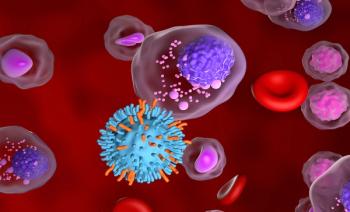
This new analysis examined the investigational chimeric antigen receptor (CAR) T-cell therapy GC012F among patients with newly diagnosed and high-risk multiple myeloma (MM).
Dr. Mikhael outlines the significant hurdles in bispecific antibody therapy, as presented at the European Hematology Association's 2024 conference.
Alfred L. Garfall, MD, discusses his hopes for the future treatment landscape of multiple myeloma.
Alfred L. Garfall, MD, discusses follow-up data from the DREAMM-8 study presented at ASCO 2024.
Dr. Mikhael discusses the safety and usefulness of tesclistimab in patients with high-risk refractory multiple myeloma.
Alfred L. Garfall, MD, discusses long-term follow-up data from the MajesTEC-1 study presented at ASCO 2024.
Dr. Mikhael discusses treatment in early relapse of multiple myeloma.

Peer and survivorship support are lacking for patients living with multiple myeloma, leading investigators to evaluate a group-focused multidisciplinary intervention that encompassed physical and mental activities.
Patient outcomes in this trial were compared between the regimens of lenalidomide, bortezomib, and dexamethasone and daratumumab, lenalidomide, bortezomib, and dexamethasone for use against multiple myeloma (MM).
In the final part of our interview with Joseph Mikhael, MD, MEd, FRCPC, FACP, he addresses how patients who experience an early relapse of their multiple myeloma are predisposed to worse outcomes.

In part 2 of our interview with Suzanne Lentzsch, MD, PhD, Columbia University's College of Physicians and Surgeon, she touches on potential new therapies, important clinical considerations, and treatment challenge for relapsed/refractory multiple myeloma.
In April, the FDA approved decabtagene vicleucel (ide-cel) for earlier treatment of relapsed/refractory multiple myleoma.
In this interview from our coverage of the European Hematology Association 2024 Congress, Joseph Mikhael, MD, MEd, FRCPC, FACP, International Myeloma Foundation, discusses the complex principles that underlie treating multiple myeloma (MM) in the US.
Suzanne Lentzsch, MD, PhD, of Columbia University, presented promising results of linvoseltamab for treating relapsed/refractory multiple myeloma (RRMM) at the European Hematology Association 2024 Congress.
One patient died during this study, which used PET/CT, flow cytometry, and next-generation sequencing to define measurable residual disease negativity.
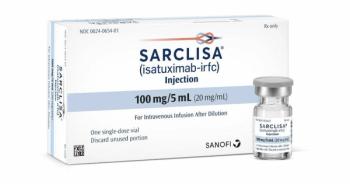
Combining the anti-CD38 monoclonal antibody with a standard backbone triplet should be the new standard of care for newly diagnosed patients not eligible for transplant, said lead investigator Thierry Facon, MD.
Advertisement
Advertisement
Trending on AJMC
1
TrumpRx Launch Brings Savings—and Uncertainty
2
As Cencora Closes With OneOncology, Patton Says Terms Show “Trust”
3
Benefits, Tradeoffs of Medically Integrated Dispensing in Oncology Care: Katherine Tobon, PharmD, BCOP
4
Asundexian Reduces Risk of Stroke Recurrence in Phase 3 OCEANIC-STROKE Trial
5