

Multiple Myeloma
Latest News
Advertisement
Latest Videos
Shorts

1:22
Expanding Treatment Access Via Academic-Community Ties: Amandeep Godara, MBBS
10 days ago
by
Brooke McCormick(+1 more)

0:32
Paving the Way to a Myeloma Cure: Ajay K. Nooka, MD, PhD
2 months ago
by
Maggie L. Shaw(+1 more)
0:57
The Future of Cell Therapy: Beyond Current Limitations: Muhammad Bilal Abid, MD
3 months ago
by
Muhammad Bilal Abid, MD(+1 more)
1:20
The Evolution & Risk of Modern Cell Therapy: Muhammad Bilal Abid, MD
3 months ago
by
Muhammad Bilal Abid, MD(+1 more)
0:30
How Academic Centers Can Support Community Hospitals: Andrew Yee, MD
7 months ago
by
Sabrina McCrear(+1 more)
1:09
Advanced Multiple Myeloma Therapies Require Dedicated Teams, 24/7 Support for Safe Patient Care: Ameet Patel, MD
7 months ago
by
Brooke McCormick(+1 more)
0:34
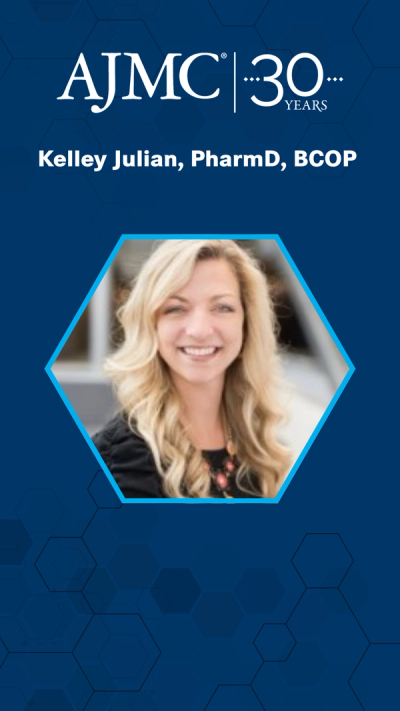
Remote Support Care and Drug Authorization: Kelley L. Julian, PharmD, BCOP
10 months ago
by
Maggie L. Shaw(+1 more)
Podcasts
Advertisement
More News
The new MonumenTAL-6 combination data appear to exceed MajesTEC-9 numbers.
Moving to a subQ formulation makes sense, if you want to be 100% convenient for patients and the centers that treat them, explains Xavier Leleu, MD, PhD.

Coverage from the Institute for Value-Based Medicine session in Dallas, Texas, held May 21,2026.
This analysis, presented by Rahul Banerjee, MD, FACP, at EHA 2026, builds on data that supported the FDA’s March 2026 approval of teclistamab.
Ajay K. Nooka, MD, MPH, explains why CD38 exposure complicates trial applicability, how MRD could speed approvals, and what a dex-free future looks like.

FDA Approves Isatuximab On-Body Injector, Raising Anti-CD38 Competition in Myeloma
Published: | Updated:
FDA clears hands-free on-body injector for isatuximab in multiple myeloma, cutting treatment time and reactions while matching IV efficacy.

Ajai Chari, MD, addresses myeloma’s future: personalized care, shared decision-making, and why striving for a functional cure matters now.
Tec-Dara showed higher MRD-negative CR rates and a 3-year PFS signal in high-risk relapsed/refractory MM, with durability still under longer-term follow-up.
Swarup Kumar, MD, discusses how myeloma programs can bridge gaps between academic innovation and community access for bispecific antibody therapy.
Mohit Narang, MD, discusses how community oncology practices can expand access to CAR T and bispecific therapies through better infrastructure and collaboration.

New research reveals complex treatment costs from MM strain patients and caregivers during active therapy, while pain goes undertreated at end of life.
The myeloma space has undergone tremendous transformation recently, says Prerna Mewawalla, MD, including CAR T-cell therapies and bispecific antibodies.
The lead investigator for SUCCESSOR-2 discusses the potency of a potential successor to pomalidomide in treatment of multiple myeloma, with survival outcomes that rival CAR T-cell therapy.
Ajai Chari, MD, unpacks resistance mechanisms, treatment sequencing, and why myeloma’s future may be brighter than anyone predicted.

Discussions highlighted implementing innovative treatments and ensuring patients treated in the community setting have equitable access to advanced therapeutics.
Swarup Kumar, MD, discusses how bispecific antibodies are pushing myeloma cure rates to 40%—and what clinicians must know about managing infections and CRS.
Researchers found major differences between smoldering myeloma risk tools, raising concerns about overtreatment and defining “high risk.”
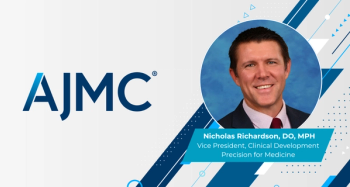
Nicholas Richardson, DO, MPH, discussed the implications of the FDA’s January draft guidance proposing MRD-negative complete response as a primary end point for accelerated approval in multiple myeloma.

Philadelphia oncology leaders tackle gaps in biomarker testing, breast cancer advances, myeloma innovation, and clinical trial equity.

Experts discussed value-based oncology care, CAR T-cell therapy access gaps, myeloma advances, and bispecific therapy challenges.
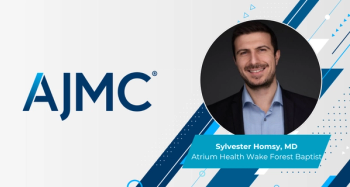
CAR-T and bispecifics in multiple myeloma are reshaping sequencing, enabling earlier use, but access and standardization challenges remain, per Sylvester Homsy, MD.
Bispecific antibodies are delivering unprecedented response rates in multiple myeloma, offering fast, flexible options alongside CAR T-cell therapy, explains Prerna Mewawalla, MD.
New myeloma therapies—CAR T, bispecific antibodies, and oral CELMoDs—expand options, protect QOL, and raise hopes of cure, notes Asya Nina Varshavsky-Yanovsky, MD, PhD.
Despite high rates of grade 3/4 infection, teclistamab was granted full approval by the FDA. Ajay K. Nooka, MD, speaks on how to optimally treat this adverse effect.
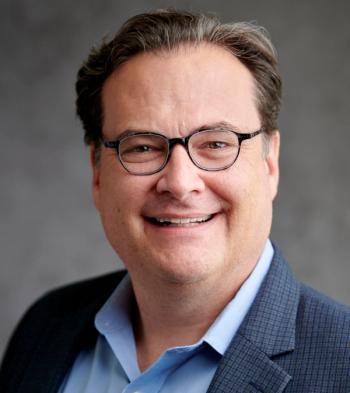
Lalan Wilfong, MD, a medical oncologist well known for his work in practice transformation, said he looks forward to creating "something more or less from scratch."
Advertisement
Advertisement
Trending on AJMC
1
FDA Expands Finerenone Approval to CKD Associated With Type 1 Diabetes
2
A Patient-Centered Reconstruction of 340B in Oncology: Transparency, Equity, and Site-of-Care Accountability
3
Delayed Dupilumab Raises Asthma Costs 32%: Nicola Hanania, MD
4
Twice-Yearly CD19 Therapy Targets MG Root Cause: Richard Nowak, MD, MS
5