





Population Health
Latest News
Advertisement
Advertisement

While Black people are consistently underrepresented, White people are consistently overrepresented in inflammatory arthritis trials for rheumatoid arthritis, psoriatic arthritis, spondyloarthritis, and juvenile idiopathic arthritis.

The Accountable Health Communities Model facilitates multisector coordination. Implementation science elucidated the contextual factors that facilitated the use of this model in Arizona.

Johns Hopkins Medicine underwent a reorganization of its population health services, with a new structure, set of priorities, and development of a 3-year strategic plan.

On this episode of Managed Care Cast, we feature several leaders in diversity, equity, and inclusion advancing health equity in their respective organization’s policy and practice initiatives.

The best leaders are those who foster open communication, says Lee A. Norman, MD, MHS, MBA, who appeared at The American Journal of Managed Care®’s Institute for Value-Based Medicine® event on population health in Kansas City, Missouri.
Keeping up-to-date on information, whether it is about clinical matters or information systems, is critical to a deliberate learning mindset that is beneficial to health care providers, says Lee A. Norman, MD, MHS, MBA, the senior medical director for Optum Care Kansas City.
Challenges around data are mostly around data itself, particularly if it is not timely, says Lee A. Norman, MD, MHS, MBA, the senior medical director for Optum Care Kansas City.
On this episode of Managed Care Cast, we feature several leaders in diversity, equity, and inclusion advancing health equity in their respective organization’s policy and practice initiatives.
Using evidence and being open-minded are 2 strategies for providers shifting to new models of delivering care, says Lee A. Norman, MD, MHS, MBA, senior medical director for Optum Care Kansas City.
Lee A. Norman, MD, MHS, MBA, who spoke at The American Journal of Managed Care®’s Institute for Value-Based Medicine® event on population health March 9, 2023, in Kansas City, Missouri, discusses the shift to value-based care.

At a Kansas City, Missouri, meeting of the Institute for Value-Based Medicine®, speakers discussed ways to eliminate wasteful care and build the infrastructure required to advance value-based care delivery.

Banner|Aetna has partnered with Virta and their diabetes reversal program, which now has data on outcomes and patient populations served so far.
On this episode of Managed Care Cast, we feature several leaders in diversity, equity, and inclusion advancing health equity in their respective organization’s policy and practice initiatives.

Findings of a meta-analysis showed that women with epilepsy were at increased odds of miscarriage, stillbirth, and maternal death, and risk of poor perinatal outcomes increased with greater use of antiseizure medication.

Risk of primary hypertension in youth may be significantly higher in poor neighborhoods.
Lee A. Norman, MD, MHS, MBA, spoke at The American Journal of Managed Care® (AJMC®)’s Institute for Value-Based Medicine®'s March 2023 event on population health about leading physician practices and navigating through change; here, he talks about how the COVID-19 pandemic shifted how he thinks about resiliency during times of intense stress and work.

When a series of winter storms in Austin, Texas, in February 2021, 62% of children with epilepsy were negatively affected, according to a new study.

On this episode of Managed Care Cast, we speak with Jennifer Schneider, MD, co-founder and chief executive officer of Homeward, a value-based care provider aiming to improve access to high-quality care in rural communities through tech-enabled clinical services, partnerships with local physicians and health plans, and community-level demographic data.

Kirk Campbell, MD, FASN, vice chair for diversity, equity, and inclusion in the Department of Medicine at Mount Sinai Health System in New York, spoke on health equity efforts by his organization to improve clinical outcomes through demographic data collection, educational research, and workforce training.

Seeking to speed up the execution of evidence-based care practices, the Patient-Centered Outcomes Research Institute (PCORI) announced the 42 health systems across the country who will join a 5-year program to build capacity and implementation to improve health care outcomes.

Joneigh Khaldun, MD, MPH, FACEP, vice president and chief health equity officer for CVS Health, speaks on the launch of her organization’s Community Equity Alliance that aims to address structural barriers to equitable care in underserved communities through partnerships with local academic and health care institutions.
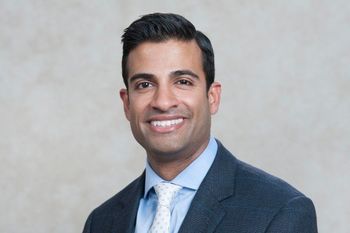


Joneigh Khaldun, MD, MPH, FACEP, vice president and chief health equity officer for CVS Health, speaks on the goals of the Community Equity Alliance in improving health care disparities, particularly for cardiovascular health and mental health outcomes, within underserved communities.
Advertisement
Advertisement
Trending on AJMC
1
FDA Expands Finerenone Approval to CKD Associated With Type 1 Diabetes
2
Delayed Dupilumab Raises Asthma Costs 32%: Nicola Hanania, MD
3
A Patient-Centered Reconstruction of 340B in Oncology: Transparency, Equity, and Site-of-Care Accountability
4
Twice-Yearly CD19 Therapy Targets MG Root Cause: Richard Nowak, MD, MS
5