

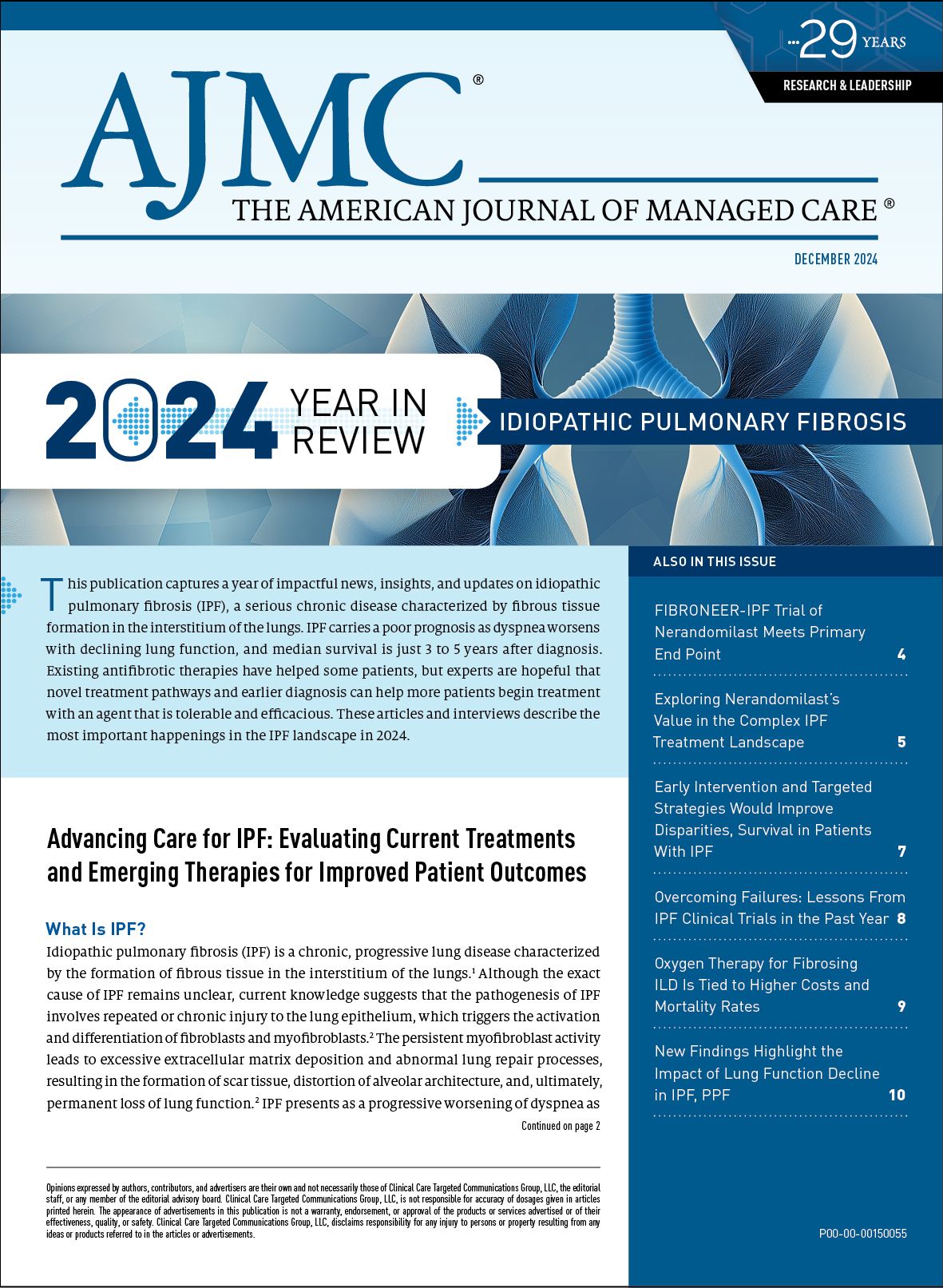



Pulmonary Fibrosis
Latest News
Advertisement
Latest Videos


Advertisement
More News

The increase in the global burden of interstitial lung disease (ILD) and pulmonary sarcoidosis had the greatest impact on countries with a high sociodemographic index.

This recent study highlights key risk factors for rheumatoid arthritis–associated interstitial lung disease (RA-ILD), emphasizing the importance of early screening to improve diagnosis and patient outcomes.

The development of a novel, artificial intelligence (AI)-generated biotechnology has the potential to transform care options for patients with idiopathic pulmonary fibrosis (IPF).

Toby Maher, MD, PhD, discusses how delays in treatment for idiopathic pulmonary fibrosis (IPF) can significantly worsen patient outcomes and accelerate disease progression, underscoring the critical need for timely intervention.

Maria L. Padilla, MD, Icahn School of Medicine at Mount Sinai, previews that experts will discuss critical management strategies for interstitial lung disease and idiopathic pulmonary fibrosis, including the latest diagnosis and treatment protocol advancements, at Advances in Pulmonary Medicine 2024.
Toby Maher, MD, PhD, discusses the various barriers that frequently hinder patients with idiopathic pulmonary fibrosis (IPF) from receiving appropriate treatment and shares effective strategies he has implemented to overcome these challenges.
Despite proven benefits, referrals to pulmonary rehabilitation and palliative care for patients with idiopathic pulmonary fibrosis (IPF) in England remain significantly lower than for other respiratory conditions.
Toby Maher, MD, PhD, discusses how common signs and symptoms of idiopathic pulmonary fibrosis (IPF) at diagnosis can indicate disease progression, while also identifying key risk factors associated with IPF and emphasizing the importance of modifying certain lifestyle factors to help prevent the disease.
Toby Maher, MD, PhD, discusses how comorbidities complicate the diagnosis and management of idiopathic pulmonary fibrosis (IPF) and influence treatment decisions, highlighting the need for a comprehensive approach in patient care.
Toby Maher, MD, PhD, discusses how idiopathic pulmonary fibrosis (IPF) is diagnosed through specific imaging and tests, with an average diagnosis time that can delay effective treatment, emphasizing that early diagnosis is crucial for reducing disease severity and expanding available treatment options.

Posters presented at the CHEST 2024 annual meeting revealed that delays in diagnosing fibrotic interstitial lung disease (ILD) can negatively impact overall survival, while supplemental oxygen therapy may exacerbate clinical burdens through increased rates of acute exacerbations and hospitalizations.

Early Intervention, Targeted Strategies Needed to Improve Disparities, Survival in Patients With IPF
Two posters presented at the CHEST 2024 annual meeting highlighted the importance of addressing socioeconomic disparities and identifying clinical predictors to improve outcomes and survival rates among patients with idiopathic pulmonary fibrosis (IPF).
Toby Maher, MD, PhD, discusses how idiopathic pulmonary fibrosis (IPF) severely affects patients’ quality of life and daily functioning, with a median survival that underscores the disease’s severity, while also highlighting the substantial financial burden and health care resource utilization associated with managing this condition.
Toby Maher, MD, PhD, discusses how idiopathic pulmonary fibrosis (IPF) is a specific form of interstitial lung disease characterized by progressive lung scarring, which leads to significant respiratory impairment and distinct clinical challenges compared with other interstitial lung diseases.

At CHEST 2024, Cesar Davila-Chapa, MD, University of Nebraska Medical Center, brings awareness to the racial disparities demonstrated in his investigation of idiopathic pulmonary fibrosis (IPF) hospitalizations and outcomes.

Two posters presented at CHEST 2024 revealed significant racial and ethnic disparities in the hospitalization and treatment of patients with idiopathic pulmonary fibrosis (IPF), with Black patients hospitalized at younger ages but less likely to receive antifibrotic medications than White patients.

Anna-Maria Hoffmann-Vold, MD, PhD, a senior consultant and leader of inflammatory and fibrotic research area at Oslo University Hospital, discusses therapies and management guidelines for patients with interstitial lung disease (ILD).


Toby Maher, MD, PhD, professor of clinical medicine, Keck Medicine of USC, discusses the impact of changes in lung function in patients with idiopathic pulmonary fibrosis (IPF).
The positive phase 3 results showed improved lung function with nerandomilast vs placebo at 52 weeks in idiopathic pulmonary fibrosis (IPF).

Findings of a systematic review highlight the need for standardized assessment tools and targeted treatments for chronic cough in patients with idiopathic pulmonary fibrosis and other interstitial lung diseases.
Toby Maher, MD, PhD, professor of clinical medicine, Keck Medicine of USC, discusses recent advancements in clinical trials for patients with idiopathic pulmonary fibrosis (IPF) and progressive pulmonary fibrosis (PPF).
Researchers say machine learning advances make it possible to use more sophisticated body composition analyses to assess risk of mortality from idiopathic pulmonary fibrosis (IPF).

Luca Richeldi, MD, PhD, outlined crucial lessons from recent idiopathic pulmonary fibrosis (IPF) trial failures, advocating for adaptive trial designs, rigorous statistical methods, and a focus on patient-relevant outcomes to enhance future research.

A pair of studies presented at the European Respiratory Society Congress 2024 emphasized the importance of close monitoring and proactive treatment approaches for patients with idiopathic (IPF) and progressive pulmonary fibrosis (PPF).
Advertisement
Advertisement
Trending on AJMC
1
Perspectives on Health-Related Social Needs for Medicare Advantage Beneficiaries
2
Systemic Sclerosis Linked to Dramatic Rise in Lung Cancer Risk
3
FDA Approves First Heart Valve to Keep Pace With Children's Growth
4
Psoriasis Is Much Rarer in Indigenous Groups Worldwide
5