

Experts emphasize the need for enhanced clinical trial infrastructure in community oncology to ensure equitable access to innovative therapies for all patients.
Experts emphasize the need for enhanced clinical trial infrastructure in community oncology to ensure equitable access to innovative therapies for all patients.
Mike Fazio, director of value-based care at Navista, Cardinal Health, discusses a trending topic at the 2025 Community Oncology Conference: optimizing oncology care with technology.
Oncology leaders from Alliance Cancer Specialists, American Oncology Network, CHI St. Vincent, Memorial Sloan Kettering Cancer Center, and New York Cancer & Blood Specialists discussed the power of collaboration in cancer care, highlighting partnerships that enhance patient outcomes and resource sharing in community practices.

This article appears in the April issue of Evidence-Based Oncology.

Demonstration projects to show accurate use of artificial intelligence (AI) in cancer care are important to prevent a loss of credibility in the technology, explained Glenn Balasky, executive director, Rocky Mountain Cancer Centers.

Policy changes, such as banning spread pricing and promoting transparency, are necessary to realign the pharmacy benefit manager (PBM) market and ensure that health care resources benefit patients and providers rather than being diverted by middlemen, according to panelists at the Community Oncology Alliance Payer Exchange Summit.
The transition to value-based care is extremely challenging because everyone is also still being paid by fee for service, said Lalan Wilfong, MD, senior vice president, value-based care, Thyme Care.

The need for improved collaboration between payers and providers is key to successfully implementing value-based care initiatives that address patient needs, ensure measurable outcomes, and overcome challenges, according to panelists at the Community Oncology Alliance Payer Exchange Summit.

A panel discussion at the Community Oncology Alliance (COA) Payer Exchange Summit highlighted the tension between state regulation of pharmacy benefit managers (PBMs) and the Employee Retirement Income Security Act (ERISA) preemption, emphasizing the need for reforms to balance employer uniformity with addressing PBM practices.
There are concerns that the negotiated drug prices under the Inflation Reduction Act (IRA) are leading to large provider reimbursement cuts, explained Nick Ferreyros, managing director, Community Oncology Alliance.

Panelists at the Community Oncology Alliance Payer Exchange Summit 2024 agreed that overcoming health care challenges will depend heavily on collaboration and active engagement from multiple stakeholders in the policy and regulatory process.
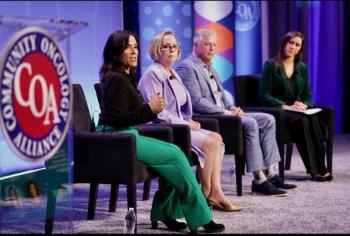
Coverage from the Community Oncology Alliance Community Oncology Conference, held April 4-5, 2024, in Orlando, Florida.

Shawn Tuma, JD, CIPP/US, cybersecurity and data privacy attorney, Spencer Fane LLP, highlights the biggest threats concerning a cyberattack on oncology practices.
Judith Alberto, MHA, RPh, BCOP, director of clinical initiatives at the Community Oncology Alliance (COA), discusses upcoming policy initiatives and the current oncology landscape amid a health care cyberattack.

In this interview from our coverage of the 2024 Community Oncology Conference, Shawn Tuma, JD, CIPP/US, Spencer Fane LLP, discusses how he helps clients reduce their cyber risk and be better prepared for breaches when they occur.

The annual legislative update at the Community Oncology Alliance Community Oncology Conference identified what Congress may focus on prior to the upcoming election.
This panel at the Community Oncology Alliance conference discussed the impact of pharmacy benefit manager (PBM) response to the end of direct and indirect remuneration fees, which has been dramatic cuts to cancer drug reimbursement.
"The government really didn't rise to the challenge the way that it should have,” notes Ben Jones, vice president of government relations and public policy for The US Oncology Network. “Practices were in distress…stretching all resources to figure out workarounds."

Kathy Oubre, MS, CEO of Pontchartrain Cancer Center, is 1 of 6 cochairs for the 2024 Community Oncology Conference, and here she discusses how meeting content has incorporated ongoing coverage of the extremely disruptive cyberattack and how there is still so much work to be done.
Jonathan E. Levitt, Esq, founding partner of boutique health care law firm Frier Levitt, LLC, discusses a recent class-action lawsuit brought against Johnson & Johnson in which an employee alleged a breach of fiduciary duty regarding her employer-sponsored pharmacy benefits.
Judy Alberto, MHA, RPh, BCOP, director of clinical initiatives at the Community Oncology Alliance (COA), addresses the challenges pharmacies face in managing formularies to provide optimal patient care.
After the end of the Oncology Care Model (OCM), practices are working with primary care providers, which has pros and cons.
A lawsuit that followed a health system revoking community oncologists' hospital privileges was the jumping off point for a discussion of how to manage this key relationship.
The annual Community Oncology Conference comes on the heels of a cyberattack that has caused significant disruption to providers, and many have sought relief from payers in areas such as prior authorization.

With the 2024 Community Oncology Conference, from the Community Oncology Alliance (COA), set to kick off this week in Orlando, Florida, The American Journal of Managed Care® spoke with Emily Touloukian, DO, COA board member and 1 of 6 cochairs for this year’s meeting, on highlights from the packed agenda and the power of advocacy.
While the Enhancing Oncology Model is the successor of the Oncology Care Model, it includes some very real challenges for participating practices, explained Lalan Wilfong, MD, senior vice president of payer and care transformation at The US Oncology Network.

A one-size-fits-all approach to alternative payment models (APMs) often isn’t very fair to community practices, said Miriam Atkins, MD, FACP, president of the Community Oncology Alliance.
Our top coverage from this year’s Community Oncology Conference, hosted by the Community Oncology Alliance, included discussions around alternative payment models, shifts in the community oncology landscape in recent decades, and the need for reform in several areas.
Activity to regulate pharmacy benefit managers (PBMs) has started in the states and is trickling up to the federal level, said Ted Okon, MBA, executive director of the Community Oncology Alliance.
Mike Lattanzi, MD, genitourinary medical oncologist, Texas Oncology, discusses recent findings from studies he participated in on targeted therapies for muscle-invasive bladder cancer.