
Richard Snyder, MD, executive vice president of Facilitated Health Networks and chief medical officer at Independence Blue Cross, discusses how the increasing share of novel, costly therapies will impact the prevalence of value-based agreements.
Richard Snyder, MD, executive vice president of Facilitated Health Networks and chief medical officer at Independence Blue Cross, discusses how the increasing share of novel, costly therapies will impact the prevalence of value-based agreements.
The main thing that the Oncology Care Model (OCM) has brought is a shift in the mindset, said Terrill Jordan, chief executive officer of Regional Cancer Care Associates.
Lawrence N. Shulman, MD, director of the Center for Global Cancer Medicine at the Abramson Cancer Center, and professor of Medicine at the Hospital of the University of Pennsylvania, explains how providers are reacting to more effective, more costly therapies entering the cancer landscape.
Terrill Jordan, chief executive officer of Regional Cancer Care Associates, discusses Oncology Care Model performance period 4 results and the biggest challenges community oncologists continue to face when trying to perform under the model.
Michael Kolodziej, MD, vice president and chief innovation officer at ADVI Health, Inc., discusses the move to 2-sided risk in the Oncology Care Model (OCM).
CMS is trying to make a 2-sided risk model in the Oncology Care Model enticing for practices, but there is still a lot of math practices need to work out before making the decision, said Blase Polite, MD, associate professor of medicine and the executive director for accountable care at the University of Chicago.
Lani M. Alison, BSN, MS, HCQ, PCMH, CCE, vice president of Clinical Affairs, Regional Cancer Care Associates, explains how the implementation of the Oncology Care Model (OCM) allowed practices to better integrate palliative care.
Innovation that transform cancer care delivery have to be multi-level, explained Iuliana Shapira, MD, chief medical officer, Regional Cancer Care Associates.
Lani M. Alison, BSN, MS, HCQ, PCMH, CCE, vice president of Clinical Affairs, Regional Cancer Care Associates, explains the questions that patients have about oncology care pathways and treatment guidelines.
Iuliana Shapira, MD, chief medical officer, Regional Cancer Care Associates (RCCA), discusses how RCCA is managing the higher costs of immuno-oncology drugs in value-based care.
Lani M. Alison, BSN, MS, HCQ, PCMH, CCE, vice president of Clinical Affairs, Regional Cancer Care Associates, discusses how providers discuss the Oncology Care Model (OCM) with patients and the questions they ask about it.
Iuliana Shapira, MD, chief medical officer, Regional Cancer Care Associates (RCCA), discusses how data analytics have improved RCCA’s revenue cycle.
Innovation is being used to improve quality metrics in oncology care at the patient forefront and in data, explained Lani M. Alison, BSN, MS, HCQ, PCMH, CCE, vice president of Clinical Affairs, Regional Cancer Care Associates.
Jason Mitchell, MD, chief medical and clinical transformation officer, Presbyterian Healthcare Services, discusses the role primary care will play in the transition to value-based care.
Jason Mitchell, MD, chief medical and clinical transformation officer, Presbyterian Healthcare Services, discusses the role of commercial payers in the shift toward value-based care.
Data is critical to all value-based care, said Jason Mitchell, MD, chief medical and clinical transformation officer, Presbyterian Healthcare Services.
Diabetes is a self-managed disease, which makes the role of diabetes education crucial in order for patients to succeed in managing their disease, said Kellie Rodriguez, RN, MSN, MBA, CDE, director, Global Diabetes Program, Parkland Health & Hospital System.
Diabetes educators can help patients with diabetes who face financial challenges make appropriate choices and receive assistance to afford medications, said Kellie Rodriguez, RN, MSN, MBA, CDE, director, Global Diabetes Program, Parkland Health & Hospital System.
The person-centered factors that drive outcomes in diabetes requires hospital systems that can actually address those needs, said Kellie Rodriguez, RN, MSN, MBA, CDE, director, Global Diabetes Program, Parkland Health & Hospital System.
In the last 2 decades, the cost of healthcare has risen, but the expectations of self-management for people with diabetes has stayed the same, which has made it more challenging to live with the disease, said Kellie Rodriguez, RN, MSN, MBA, CDE, director, Global Diabetes Program, Parkland Health & Hospital System.
Jason Mitchell, MD, chief medical and clinical transformation officer, Presbyterian Healthcare Services, discusses how freestanding emergency departments can be utilized in the move toward value-based care.
Devin Incerti, PhD, lead economist, Innovation and Value Initiative, discusses lessons learned and best practices that have emerged as a result of different approaches to value assessment.
Alliances are going to help community oncology participate in things that, as individual practices, they don‘t have the opportunity to do, said Barry Russo, chief executive officer of The Center for Cancer and Blood Disorders.
Triage pathways can transform practices and save practices and CMS money by keeping people out of the emergency department and hospital, said Ray Page, DO, PhD, president and director of research at The Center for Cancer and Blood Disorders.
An artificial intelligence system can digest what would take a person 29 hours to read in about 30 seconds, so everything is right in front of providers at the point of care, says Barry Russo, chief executive officer of The Center for Cancer and Blood Disorders.
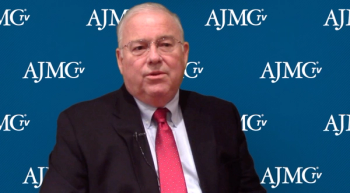
Stephen Grubbs, MD, vice president of clinical affairs at the American Society of Clinical Oncology, explains what stakeholders can expect from the new updates to the Patient-Centered Oncology Payment (PCOP) model, as well as some key differences between PCOP and the Oncology Care Model.
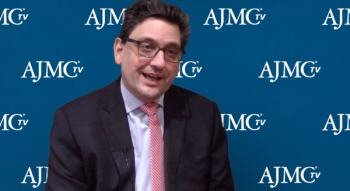
Blase Polite, MD, associate professor of medicine and the executive director for accountable care at the University of Chicago, discusses why he chose to focus on the state of the Oncology Care Model at the April 25 meeting of the Institute for Value-Based Medicine.
With all the regulatory changes that CMS and HHS are rolling out, community oncology practices are facing significant changes in how they take care of patients, said Barry Russo, chief executive officer of The Center for Cancer and Blood Disorders.
Using oncology care pathways and treatment pathways has helped practices use evidence-based data to facilitate them to be sure they are using the right drug for the right patient at the right time, said Ray Page, DO, PhD, president and director of research at The Center for Cancer and Blood Disorders.
Community oncology practices need to come together as much as possible in order to respond to changes in the market, have a common voice, and to share best practices and learn from each other, said Barry Russo, chief executive officer of The Center for Cancer and Blood Disorders.