

For all the success the hematology/oncology space has seen over the past 20-plus years, difficult discussions now focus on paying for that care, explained David A. Eagle, MD, New York Cancer & Blood Specialists.
For all the success the hematology/oncology space has seen over the past 20-plus years, difficult discussions now focus on paying for that care, explained David A. Eagle, MD, New York Cancer & Blood Specialists.
There are various areas across different patient care and support perspectives that offer opportunities to improve value-based care in oncology, said Ryan Huey, MD, gastrointestinal medical oncologist at MD Anderson Cancer Center in Houston, Texas.

At a Kansas City, Missouri, meeting of the Institute for Value-Based Medicine®, speakers discussed ways to eliminate wasteful care and build the infrastructure required to advance value-based care delivery.
Sashi Naidu, MD, is director of research at Carolina Blood and Cancer Care Associates, where the No One Left Alone (NOLA) initiative is working to break down cancer health disparities among its patients and prevent care fragmentation.
Close to 80% of what influences how long someone is going to live is where and how they live, and we need to pay more attention to that or we’re not paying attention to everything that affects their lives, explained David A. Eagle, MD, of New York Cancer & Blood Specialists.
Many people believe health equity is such a big issue that there is not much an individual practice can do to address it, explained Susan Sabo-Wagner, MSN, RN, OCN, executive director of clinical strategy, Oncology Consultants of Houston.

Lee A. Norman, MD, MHS, MBA, spoke at The American Journal of Managed Care® (AJMC®)’s Institute for Value-Based Medicine®'s March 2023 event on population health about leading physician practices and navigating through change; here, he talks about how the COVID-19 pandemic shifted how he thinks about resiliency during times of intense stress and work.

Carolina Blood and Cancer Care Associates’ No One Left Alone initiative works to dismantle cancer health disparities and increase health care equity among its rural patient population. Sashi Naidu, MD, director of research, discusses delivering next-generation sequencing testing to patients.

Stephen M. Schleicher, MD, MBA, chief medical officer at Tennessee Oncology, discusses the present state of value-based oncology care and what the future may bring when the Enhancing Oncology Model kicks off on July 1.
David A. Eagle, MD, New York Cancer & Blood Specialists, discusses the present state of treatment for cancer, which often sees patient financial concerns outweighed by the cost of treatment.
Coverage from the January 18, 2023, Institute for Value-Based Medicine session with Regional Cancer Care Associates held in New Brunswick, New Jersey.
We’ve found through health equity initiatives that the search for the right telehealth modality is never ending, explained Oncology Consultants of Houston’s Susan Sabo-Wagner, MSN, RN, OCN, executive director of clinical strategy.
At Carolina Blood and Cancer Care Associates, the No One Left Alone (NOLA) initiative is working to break down cancer health disparities among its patients by addressing the social determinants of health that may be preventing equitable access to care.
Hilary Tindle, MD, MPH, associate professor of medicine at Vanderbilt University, discusses plans for implementing precision approaches to quitting smoking, as well as patient hesitations around such approaches.
Hilary Tindle, MD, MPH, associate professor of medicine at Vanderbilt University, discusses key findings and patient attitudes toward precision approaches to quitting smoking.
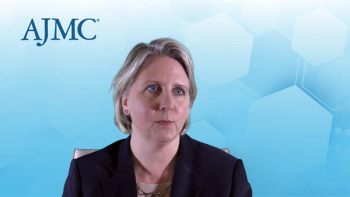
Hilary Tindle, MD, MPH, associate professor of medicine, at Vanderbilt University, discusses how the nicotine metabolite ratio (NMR) can help inform doctors and patients on choosing the optimal treatment for quitting smoking.
Hilary Tindle, MD, MPH, associate professor of medicine, Vanderbilt University, discusses the nicotine metabolite ratio (NMR) is and how it's used to help identify vulnerable individuals for lung cancer and heart disease.
Across several Institute for Value-Based Medicine® (IVBM) events held in 2022, the most-viewed content from these events cover a variety of topics in oncology care.
The dilemma of Alzheimer disease in primary care, as well as other health challenges in aging populations, was the focus of a recent Institute for Value-Based Medicine® event in Portland, Oregon.
Leaders from Ochsner, Xavier, and their partners gathered on September 13, 2022, in New Orleans to offer an overview of the Healthy State initiative during a session of the Institute for Value-Based Medicine®.
Coverage from the Institute for Value-Based Medicine® event with Oncology Consultants of Houston, held in Texas on October 11, 2022.
Coverage from the Institute for Value-Based Medicine® event in Denver, Colorado, held October 5, 2022. The event was held in partnership with Rocky Mountain Cancer Centers.
Lucy Langer, MD, MSHS, national medical director, oncology and genomics, MSHS, national medical director, oncology and genomics, UnitedHealthcare, discussed value-based contracting at the IVBM® session October 5, 2022.
Coverage from the Institute for Value-Based Medicine® event in Nashville, Tennessee, held November 17, 2022. The event was held in partnership with Vanderbilt-Ingram Cancer Center.
Coverage from the Institute for Value-Based Medicine® session with Astera Cancer Care in Edison, New Jersey, held November 3, 2022.
Coverage from the Institute for Value-Based Medicine® session with Astera Cancer Care in Edison, New Jersey, held November 3, 2022.

During an Institute for Value-Based Medicine® event held in New York City, Samyukta Mullangi, MD, MBA, fellow in medical oncology at Memorial Sloan Kettering Cancer Center, discussed how disruptions from the COVID-19 pandemic are ushering in health care delivery reform.
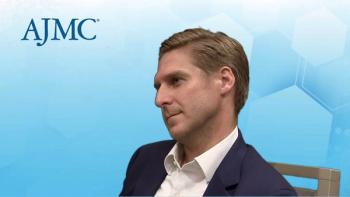
Stephen M. Schleicher, MD, MBA, chief medical officer at Tennessee Oncology, addresses the “huge problem” of financial toxicity among patients with cancer, which can be attributed in part to both the high price of targeted treatments and even from ordering only necessary testing.
Coverage from the New York City presentation of the Institute for Value-Based Medicine, co-chaired by Emeline Aviki, MD, MBA, of Memorial Sloan Kettering Cancer Center (MSKCC), and Robert Daly, MD, MBA, medical oncologist and lung cancer specialist at MSKCC.