


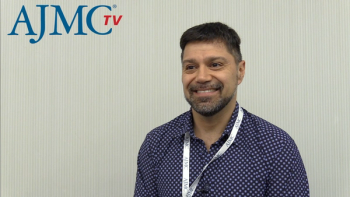
Matias Sanchez, MD, assistant professor in the Department of Medicine at the University of Illinois Chicago, discussed recent advancements in multiple myeloma treatment, including the potential of cell therapies and bispecific antibodies.
Matias Sanchez, MD, assistant professor in the Department of Medicine at the University of Illinois Chicago, discussed recent advancements in multiple myeloma treatment, including the potential of cell therapies and bispecific antibodies.
Matias Sanchez, MD, assistant professor in the Department of Medicine, Division of Hematology and Oncology, University of Illinois Chicago, emphasizes the importance of patient education and caregiver involvement in managing complex therapies and advises oncologists to confidently integrate advanced treatments.
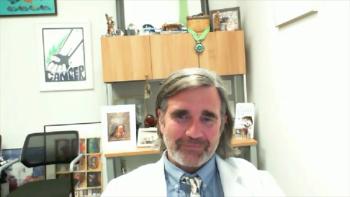
In this second part of our discussion with Don M. Benson, MD, PhD, from our recent Institute for Value-Based Medicine® event in Cleveland, Ohio, he explains how his ultimate goal for his patients is for them to live as long and as well as possible.
Mei Wei, MD, an oncologist specializing in breast cancer at Huntsman Cancer Institute at the University of Utah, discusses the latest advancements in HR+/HER2– breast cancer research, as well as the increasing role of genomic profiling in tailoring treatment plans.
Kasey Bond, MPH, of Perlmutter Cancer Center at NYU Langone Health, speaks to why it’s vital to keep patients at the center of all strategic partnerships between academic institutions and community-based oncology practices.
Don M. Benson, MD, PhD, has cared for patients at James Cancer Hospital in Ohio for 22 years, where he and his team see approximately 10,000 patient visits each year.
Oncology pharmacists play a vital role in managing complex outpatient therapies by assessing patient suitability, educating patients, and implementing protocols to ensure safe and effective treatment.
At our recent Institute for Value-Based Medicine® event hosted with NYU Langone Health, Brita Roy, MD, MPH, MHS, spoke on improving cancer health outcomes through community-clinical partnerships.
In the final part of our interview, Ticiana Leal, MD, Winship Cancer Institute, looks to the future of perioperative care in the non–small cell lung cancer (NSCLC) arena and the importance of risk stratifying patients.
In this clip from our interview with Oscar B. Lahoud, MD, cochair of our Institute for Value-Based Medicine® evening hosted with NYU Langone Health, he addressed medical mistrust in underrepresented communities.
Mabel Mardones, MD, Rocky Mountain Cancer Centers, discusses the future of HR+/HER2– breast cancer treatment, focusing on the importance of biomarkers and the potential of SERDs to improve patient outcomes.
The American Journal of Managed Care® and Vanderbilt University Medical Center partnered on a recent Institute for Value-Based Medicine® event, which had the theme, “Bringing the Future to the Present in Cancer Care.”
Mei Wei, MD, an oncologist specializing in breast cancer at Huntsman Cancer Institute at the University of Utah, discusses new treatments for HR+/HER2- breast cancer and immunotherapy challenges, particularly regarding immune-related adverse events.
The theme of our recent Nashville Institute for Value-Based Medicine® event was ”Bringing the Future to the Present in Cancer Care.”
At the regional Institute for Value-Based Medicine® event in Boston, Vinayak Venkataraman, MD, medical oncologist at Dana-Farber Cancer Institute and Harvard Medical School, was a panelist for the discussion, “Recent Advancements in Identifying Predictive Biomarkers for Sarcomas."
Mabel Mardones, MD, board-certified medical oncologist and hematologist who specializes in breast cancer at Rocky Mountain Cancer Centers, emphasizes the importance in identifying patients with HR-positive, HER2-negative (HR+/HER2–) breast cancer with unmet treatment needs.
Mei Wei, MD, an oncologist specializing in breast cancer at Huntsman Cancer Institute at the University of Utah, discusses advancements in breast cancer treatment, highlighting CDK4/6 inhibitors and antibody-drug conjugates as promising alternatives to traditional therapies.
Glenn Balasky, executive director of Rocky Mountain Cancer Centers, emphasizes the need for government support to sustain telehealth and suggested a hybrid model combining centralized high-tech care with remote monitoring to address the challenges of providing innovative care in rural settings.
Viet Le, PA-C, Intermountain Health, gives insights into the benefits cardio-renal-metabolic care models provide for patients in need.
Navdeep Tangri, MD, PhD, FRCP, University of Manitoba, speaks to the value of population health strategies in clinical approaches to care delivery for patients with chronic kidney disease (CKD).
The current research focus for Umit Tapan, MD, Boston Medical Center, is reducing disparities in lung cancer care and improving treatment access, in particular for immunotherapy and targeted treatments.
Seth Southwick, MHA, Intermountain Health, discusses in detail the power of leveraging community partnerships and advanced data analytic systems to optimize kidney care.
At our recent Institute for Value-Based Medicine® event in Boston, Hari Deshpande, MD, Yale Cancer Center, presented on predictive biomarkers in sarcomas.

Miriam Godwin, CMMI, National Kidney Foundation, touches on the gaps in kidney care that public policy can address, as well as the importance of thinking about the long-term benefits of value-based care.
Ticiana Leal, MD, Winship Cancer Institutes, explains the importance of biomarker testing and multidisciplinary conversations while caring for patients with early-stage non–small cell lung cancer (NSCLC).
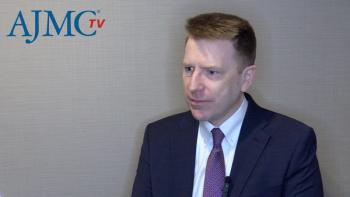
In this interview from our Institute for Value-Based Medicine® event in Boston, we speak with Michael Hassett, MD, MPH, Dana-Farber Cancer Institute, on the clinical significance and cost implications of HER2 in the breast cancer space.
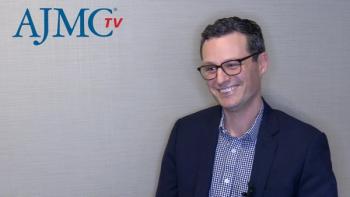
The theme of our inaugural regional Institute for Value-Based Medicine® event in Boston was, “Elevating Value in Cancer Care,” and one of the 4 panel discussions focused on the important contributions of pharmacists and the practice of pharmacy to the oncology space.
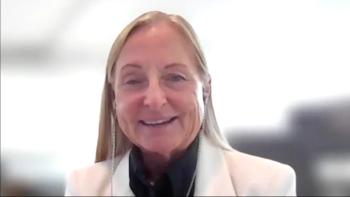
Linda Bosserman, MD, PhD, FASCO, FACP, of City of Hope, discusses the implementation of cutting-edge cancer treatments, emphasizing the need for effective information sharing and collaboration to improve cancer care access for diverse populations.
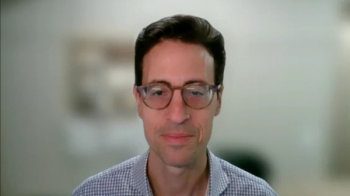
Andrew Leitner, MD, of City of Hope, discusses the challenges of integrating supportive care into cancer treatment and proposes solutions to improve access for patients from underserved communities.
Linda Bosserman, MD, PhD, FASCO, FACP, of City of Hope, emphasizes the need for a sustainable health care system that balances cost with care so patients can achieve the best survival and quality of life after a cancer diagnosis.