

Experts examine what is working in production, where the guardrails are being tested, and why the most transformative chapter of AI in health care hasn’t started yet.
Experts examine what is working in production, where the guardrails are being tested, and why the most transformative chapter of AI in health care hasn’t started yet.
Lekan Ajayi, PharmD, explains how remote therapy monitoring keeps patients with cancer on track with their care and reduces emergency visits.
New research incorporating Flatiron Health and SEER data, confirms community oncology care matches or beats other settings, says Diana Verrilli, MS, Navista.
Bringing these curative treatments to more patients means making them available at the community practice level. But that's a big lift, according to experts who spoke at a COA session.

A study using Flatiron Health and SEER data shows community oncology patients with metastatic breast cancer and metastatic NSCLC live longer, highlighting COA-backed local care advantages.
As pricing reforms like Most Favored Nation reshape global drug launches, patients may ultimately pay the highest price, said Dee Chaudhary of Clarivate.
Drug pricing transparency and easy discounts cut abandoned prescriptions, as federal policies put pressure on pharma, says Laura Jensen of GoodRx.

The future of specialty pharmacy is not automation alone, but technology designed to assist patients through personalized support.

The entire commercial logic of the pharmaceutical industry’s patient engagement model is built for a moment that no longer exists, according to Chris Moose.

Policy and market access experts break down the compounding forces reshaping drug pricing, PBM regulation, and manufacturer strategy heading into the 2026 midterms.
Community oncology delivers top-tier cancer care close to home, said Nicolas Ferreyros, COA, championing research, advocacy, and innovation to prove it.
COA’s Christine Pfaff, RPh, MBA, highlights clinical and operational innovation, AI adoption, and practice-sharing as keys to advancing community oncology care.
COA's annual conference hits Orlando April 28, focusing on AI, targeted therapy innovation, and state-level oncology advocacy, explains cochair Johnetta Blakely, MD, MS, MMHC.
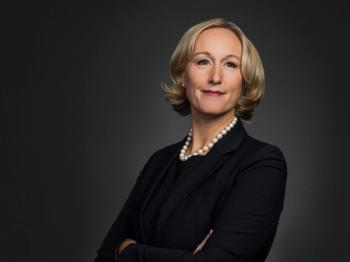
The COA Community Oncology Conference will tackle AI, the rollout of bispecifics and CAR T in the community setting, plus reimbursement, radiation oncology, and patient access strategies.

At NAACOS 2026, value-based care leaders make the case for treating payers as partners and explain what providers must see in return.

Speakers at the NAACOS Spring 2026 Conference illustrated means of using technology in value-based care to implement preventive medicine.

Fran Gregory, PharmD, MBA, explains why community providers can't go it alone—and how specialty pharmacy is stepping in to carry the load.

Nicole A. Caffiero, PharmD, MBA, BCACP, concluded AMCP 2026 by highlighting key themes shaping the specialty drug market.

Cemdisiran offers lower treatment burden for patients living with generalized myasthenia gravis, only needing to be taken every 3 months.
AMCP 2026 spotlighted oncology innovation, AI, and payer strategies, with KOL insights on cost, access, and evolving managed care trends.
Tuan Vu, MD, explains the results of the NIMBLE trial, whose results will be presented at the American Academy of Neurology conference.
Experts from AMCP emphasize the importance of drug-adjacent early detection tests and screening ability to improve patient outcomes.
Experts from AMCP discuss the real-world evidence on GLP-1 usage and health care spending.
Daryl Pritchard, PhD, discusses the challenges to implementing biomarker testing that would advance precision medicine and improve patient outcomes in oncology.
At AMCP 2026, Kelsea Aragon, PharmD, discussed PrEP coverage, long-acting injectables, and payer strategies to improve HIV treatment access and adherence.

A new industry report underscores the momentum—and the work ahead—as gene-, cell-, and tissue-based treatments move from academic health systems into community care.
Patty Taddei-Allen, PharmD, MBA, examines how co-pay accumulators, maximizers, and AFPs shift costs, impact rebates, and create access challenges for patients.
At AMCP 2026, Adam Colborn, JD, warns the Alternatives to PAIN Act may expand access but risk destabilizing Medicare Part D and limiting plan participation.
Abby Kim, PharmD, delves into oncology trends, biomarker testing gaps, and evolving clinical pathways shaping precision care and treatment decisions.

The 2026 Regional Diabetes Summit is taking place from April 28 to 29, 2026, in Wilmington, Delaware.