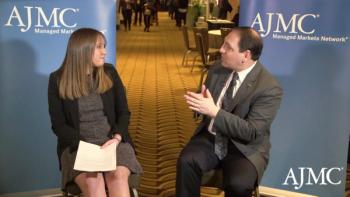
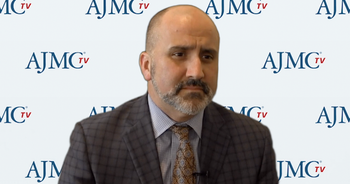
More attention needs to be brought to palliative care practices in ovarian cancer after a woman relapses, said John Schorge, MD, associate editor of The Green Journal, and Gynecologic Oncologist at Tufts Medical Center.

More attention needs to be brought to palliative care practices in ovarian cancer after a woman relapses, said John Schorge, MD, associate editor of The Green Journal, and Gynecologic Oncologist at Tufts Medical Center.

Enhanced recovery pathways are important because they allow the human body to be as normal physiologically as it can be while undergoing the stress of surgery, explained Jamie Bakkum-Gamez, MD, associate professor of Obstetrics and Gynecology and gynecologic oncologist at Mayo Clinic.

Clinicians in the audience attending the annual meeting of the American College of Obstetricians and Gynecologists said patients and payers may only see the headlines about the US Preventive Services Task Force (USPSTF) ratings and don't pay attention to finer points about recommendations for subgroups.

Curtis Lowery, MD, chair of the Department of Obstetrics and Gynecology at the University of Arkansas for Medical Sciences and director of the Center for Distance Health, discusses how technology will impact the future of healthcare.

Former Ambassador Nancy Brinker, founder of Susan G. Komen, talks about the stigma that used to surround breast cancer and how she brought awareness to the disease.

New therapies and imaging modalities have helped providers treat patients who have prostate cancer earlier, said Joe O'Sullivan, MD, FRCR, clinical professor, School of Medicine, Dentistry and Biomedical Sciences, Queen's University Belfast.

The drug's sponsor filed for FDA approval earlier this week under breakthrough therapy status.

Women face many barriers to treatment for postpartum depression, but obstetricians are well-positioned to help overcome them.

Michele McCourt, senior director of the CancerCare Co-Payment Assistance Foundation, recognizes the financial hardships of cancer patients when paying for medications.

Mary Norine Walsh, MD, immediate past president of the American College of Cardiology, discusses the importance of women being their own advocate when receiving postpartum care.

The CDC designed a tool to help identify a facility's level of maternal and neonatal care. Rear Admiral Wanda Barfield, MD, MPH, director of the Division of Reproductive Health for the CDC, discusses how it works to assess risk-appropriate care.

One study revealed that 40% of residents in the South report financial barriers that prevent them from giving patients long-acting reversible contraception, including lack of insurance coverage and the cost of the device, which prevents it from being stocked.

The president's panel at the American College of Obstetricians and Gynecologists' 2018 Annual Clinical and Scientific Meeting in Austin, Texas, discussed how to make postpartum care more value-based as women give birth at older ages and need team-based care.

Mark Soberman, MD, MBA, FACS, explains why he chose to focus on creating the next generation multidisciplinary team in cancer care during his 1-year tenure as president of the Association of Community Cancer Centers (ACCC).

I think the hardest thing about advanced and recurrent endometrial cancer is that the outcomes are still fairly poor, explained Victoria Bae-Jump, MD, PhD, associate professor, gynecologic oncology, University of North Carolina Lineberger Comprehensive Cancer Center.

At the Academy of Managed Care Pharmacy’s Managed Care & Specialty Pharmacy Annual Meeting, experts addressed the cost of treating patients with hemophilia and the importance of care coordination to ensure a more holistic approach toward caring for these patients.

Physician involvement, patient input, and accuracy are the most important aspects of successfully implementing guidelines, said Derek Raghavan, MD, PhD, FACP, FRACP, president, Carolinas HealthCare System's Levine Cancer Institute.

Problems in healthcare seem overwhelming, with at least 17 different factors cited as driving unsustainable spending, according to a presentation at the Academy of Managed Care Pharmacy’s Managed Care & Specialty Pharmacy Annual Meeting held April 23-26, in Boston, Massachusetts. Two executives from Precision for Value LLC spoke about “Charting the Shifting Value-Based Healthcare Landscape: Emerging Developments for 2018 and Beyond” and offered their view on what healthcare companies can do to succeed.

Tina Joseph, PharmD, BCACP, assistant professor, college of pharmacy, Nova Southeastern University, discusses collaborative practice agreements between pharmacists and physicians, as well as the challenges with, and best practices for, successful implementation.

We may not be ready for patient-reported outcomes (PROs) to be the sole decision-maker yet, but the trend is toward PROs being included more and more in value-based processes, explained Somali Burgess, PhD, senior director, Xcenda.

The main causes of burnout stem from the system of the practice, not individual behaviors, said Barbara Balik, EdD, MS, RN, co-founder of Aefina Partners and senior faculty at the Institute of Healthcare Improvement.

During a Science and Innovation Product Theater, sponsored by Amgen, Seth J. Baum, MD, FAAC, FACPM, FAHA, FNLA, FASPC, president of the American Society for Preventive Cardiology, explained the significance of evolocumab's expanded indication, which makes it no longer mandatory for patients to try statins first.

There are 6 key issues that market access teams are facing amid evolving marketplace trends in the pharmaceutical industry, said Douglas Long, BS, MBA, vice president, industry relations, IQVIA, when speaking at the headline session of the Academy of Managed Care Pharmacy’s Managed Care & Specialty Pharmacy Annual Meeting held April 23-26, in Boston, Massachusetts.

Migraine is a chronic illness, but many people, including both patients and healthcare providers­, don’t think of it that way, said Richard G. Wenzel, PharmD, CPPS, speaking at the Academy of Managed Care Pharmacy’s Managed Care & Specialty Pharmacy Annual Meeting held April 23-26, in Boston, Massachusetts.

We have a number of biomarkers that we have shown are associated with a better response to certain new therapies, said Oliver Dorigo, MD, PhD, associate professor, obstetrics and gynecology, Stanford University Medical Center.

There is a lot of competition in specialty pharmacy right now, said Aimee Tharaldson, PharmD, a senior clinical consultant in Emerging Therapeutics for Express Scripts.

Brandon Newman, PharmD, MMHC, CSP, program director, specialty pharmacy, Vanderbilt University Medical Center, explains the benefits of collaboration between payers and academic centers and how this collaboration, in turn, benefits patients.

While use of services at federally qualified health centers has increased particularly since the implementation of the Affordable Care Act, the increasing trend started back in 2002, said M. Kristina Wharton, MPH, of the Department of Global Health Management and Policy at Tulane University School of Public Health and Tropical Medicine.

When Robert Navarro, PharmD, started his career decades ago at a managed care company, healthcare as a percentage of the gross domestic product was 8%. Now, the clinical pharmacy professor noted, the figure is at nearly 18% and rising, and the industry keeps having a conversation about value­. Speaking at the Academy of Managed Care Pharmacy’s Managed Care & Specialty Pharmacy Annual Meeting, held April 23-26, in Boston, Massachusetts, he and Ashok Vegesna, PharmD, MS, of Novartis, spoke about Visions of a Value-Based Health Care System.

Through Medication Therapy Management, a pharmacist will be able to recognize indications of potential opioid abuse, explained Brian Litten, JD, chief strategic officer, Tabula Rasa HealthCare.

259 Prospect Plains Rd, Bldg H
Cranbury, NJ 08512
© 2025 MJH Life Sciences®
All rights reserved.