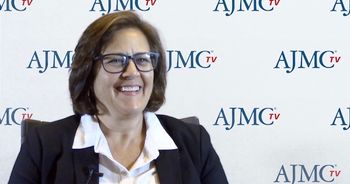
High costs in cancer care not only affects treatment outcomes for patients, but also their overall quality of life, explained Michele McCourt, senior director of the CancerCare Co-Payment Assistance Foundation.

High costs in cancer care not only affects treatment outcomes for patients, but also their overall quality of life, explained Michele McCourt, senior director of the CancerCare Co-Payment Assistance Foundation.

Dan Klein, President and CEO, Patient Access Network Foundation, discusses how the lack of a limit on cost sharing in Medicare affects patient outcomes and disease states that PAN Foundation is keeping an eye on.

At the Society of Gynecologic Oncology’s 2018 Annual Meeting on Women’s Cancer, 1 abstract found Patient-Centered Oncology Payment model would yield savings if hospitalizations were reduced, while another abstract piloted a scoring system for financial toxicity in gynecological cancers.

The lead researcher said the study could lead to women being given a statin as soon as they are diagnosed with endometrial cancer.

Oliver Dorigo, MD, PhD, associate professor, obstetrics and gynecology, Stanford University Medical Center, discusses the use of PARP inhibitors and immunotherapy in gynecologic cancers.

William Cliby, MD, consultant, division of gynecologic surgery, department of obstetrics & gynecology, Mayo Clinic, discusses predictors of overall outcomes and survival in patients with ovarian cancer.

The use of immune checkpoint inhibitors has revolutionized the treatment of cancer, said John A. Thompson, MD, of the Fred Hutchinson Cancer Research Center and the Seattle Cancer Care Alliance, but “With this good news has come some not so good news”: immune-related adverse events can cause serious harm to patients receiving these drugs.

Much about using PARP inhibitors is open to debate, starting with what kind of genetic test to give before using them. Combination therapies are the next frontier, according to an expert panel.

Jim Schwartz, RPh, president of the National Community Oncology Dispensing Association and executive director of pharmacy operations for Texas Oncology, discusses how his practice will handle using CAR T-cell therapies to treat patients.

One in 5 parents of boys said the main reason that they haven’t vaccinated their sons for HPV was because they didn’t receive a recommendation for the vaccination, compared with 1 in 10 girls, said Anna Beavis, MD, MPH, a gynecologic oncologist fellow at Johns Hopkins University.

Approximately 60% of patients with endometrial cancer are obese, explained Victoria Bae-Jump, MD, PhD, associate professor, gynecologic oncology, University of North Carolina Lineberger Comprehensive Cancer Center.

Uptake for the human papillomavirus (HPV) vaccination has never reached CDC targets. Minority children from lower-income households are more likely to get the vaccination than white children from higher-income households, according to the study author.

An educational session helps oncologists understand the decision-making process for selecting treatments for recurrent ovarian cancer.

Having healthcare professionals with different sets of experiences or different training can help create better solutions and improve patient outcomes, explained Scott Page, PhD, the Leonid Hurwicz Collegiate Professor of Complex Systems, Political Science, and Economics at the University of Michigan.

Clinical trials, and offering patients support to take part in them, can extend lives of patients with ovarian cancer, according to a researcher from the Medical College of Georgia. But another analysis finds that gynecologial cancers are low on the government's funding priority list.

When making changes in healthcare, the patient’s voice is rarely at the table, said Martha Gaines, MD, JD, LLM, founder and director of The Center for Patient Partnerships, clinical professor of law, University of Wisconsin Law School.

Medicaid programs have been working to address to opioid epidemic in a number of ways and is starting to get involved in addressing social determinants of health, explained Anne L. Schwartz, PhD, executive director of the Medicaid and CHIP Payment and Access Commission.

At the National Comprehensive Cancer Network (NCCN) 23rd Annual Conference, held March 22-24 in Orlando, Florida, Sharon H. Giordano, MD, MPH, the University of Texas MD Anderson Cancer Center; Anthony D. Elias, MD, University of Colorado Cancer Center; and William J. Gradishar, MD, Robert H. Lurie Comprehensive Cancer Center of Northwestern University, provided an update on the NCCN guidelines for the treatment of breast cancer and discussed new directions in breast cancer therapy.

During a Friday session of the National Comprehensive Cancer Network 23rd Annual Conference in Orlando, Florida, Cliff Goodman, PhD, of the Lewin Group, moderated a multi-stakeholder panel discussion on delivering and receiving cancer care in value-based care models.

The purpose of using Positive Quality Interventions (PQIs) is to create a more positive patient experience and better outcomes, explained Neal Dave, PharmD, pharmacy manager for Texas Oncology and chair of the PQI initiative for National Community Oncology Dispensing Association (NCODA).

The second day of the National Comprehensive Cancer Network (NCCN) 23rd Annual Conference in Orlando, Florida, opened with a dual keynote presentation on transforming cancer care in the United States.

Sharing data and a collaborative relationship are 2 best practices from commercial payers participating in the Oncology Care Model, according to Ron Kline, MD, FAAP, of the Center for Medicare and Medicaid Innovation.

Sidedness matters for metastatic disease, and right-sided colon cancer has been known for a shorter time than left-sided colon cancer, making the right-sided version more difficult to treat, explained Alan Venook, MD, of the University of California, San Francisco, Helen Diller Family Comprehensive Cancer Center.

Ed F. Haislmaier, the Preston A. Wells Jr senior research fellow at the Institute for Family Community, and Opportunity at The Heritage Foundation, talks about the impact of new business partnerships on healthcare costs.

“Even though we have all these fancy, effective drugs,” said Shaji K. Kumar, MD, “supportive care still plays an important role in multiple myeloma.”

Alan Venook, MD, recalled a time when the National Comprehensive Cancer Network guidelines for treating colon cancer were just 4 pages long. “I don’t think we envisioned that these guidelines would take on the life that they have,” he said.

“HIV status alone should not be used for cancer treatment decision making,” said Gita Suneja, MD, Duke Cancer Institute.

Each stakeholder (employers, patients, family members, physicians, payers) values the impact of novel therapies differently, said Thomas Graf, MD, chief medical officer and vice president, Horizon Blue Cross Blue Shield of New Jersey.

At the Association of Community Cancer Centers’ (ACCC) 44th Annual Meeting & Cancer Center Business Summit, March 14-16, 2018, in Washington, DC, panelists discussed the most powerful forces that are reshaping cancer care to be more multidisciplinary.

Thomas LeBlanc, MD, Duke Cancer Institute, addresses the ways palliative care and hospice can improve end-of-life outcomes for patients with blood cancers.

259 Prospect Plains Rd, Bldg H
Cranbury, NJ 08512
© 2025 MJH Life Sciences®
All rights reserved.