
Results of the CLL14 trial, which were presented today at the 2019 Annual Meeting of the American Society of Clinical Oncology in Chicago, Illinois, resulted in the approval of the venetoclax combination for these patients in May.
Results of the CLL14 trial, which were presented today at the 2019 Annual Meeting of the American Society of Clinical Oncology in Chicago, Illinois, resulted in the approval of the venetoclax combination for these patients in May.
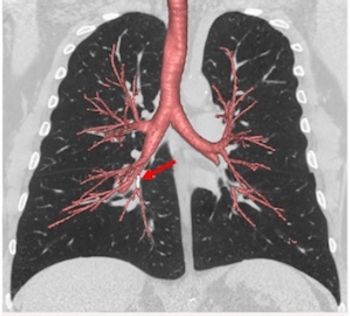
A number of abstracts at the 2019 American Society of Clinical Oncology Annual Meeting, held May 31 to June 4, 2019, in Chicago, Illinois, featured studies that focused on using real-world data to advance research and cancer care in non–small cell lung cancer (NSCLC).

During the American Society of Clinical Oncology’s Annual Meeting which took place May 31-June 4, 2019 in Chicago, Illinois, oncologists and representatives from UnitedHealthcare and the Center for Medicare and Medicaid Innovation (CMMI) took the stage to discuss oncology reimbursement reform and whether there are changes on the horizon for the promotion of higher value care.
The follow-up to the landmark TAILORx trial shows that adding a clinical risk evaluation of the breast cancer tumor may have prognostic value; the authors' recommendations are drawn from other studies.

Jonathan Campbell, PhD, associate professor, Department of Clinical Pharmacy, Pharmaceutical Outcomes Research, Skaggs School of Pharmacy and Pharmaceutical Sciences at the University of Colorado, discusses the value of multi-criteria decision analysis (MCDA) in value assessment, as well as lessons learned from using MCDA in other industries.

Parth Shah, PharmD, PhD, of the Fred Hutchinson Cancer Research Center, led a discussion on the uptake challenges of the human papilloma virus (HPV) vaccine at the American Society of Clinical Oncology’s Annual Meeting by first explaining the known percentages of attributable cancers to the virus in the United States: cervical cancer 91%, vagina cancer 75%, and vulva cancer 69%, among others. Although multiple cancers are attributable to the virus, explained Shah, of the population ages 13-17 in the United States that should be vaccinated, both boys and girls, only 49% actually receive the vaccine.

Oncologists, patient advocates, patients, and other stakeholders from around the world gathered to hear different perspectives regarding the use of cannabis in symptom management for patients with cancer. Panelist after panelist went up to present available data, and each reiterated the same point: We need more research.

Group purchasing organizations have an important purpose in healthcare, but there are some concerns, explained Martin Makary, MD, MPH, a surgical oncologist and chief of the Johns Hopkins Islet Transplant Center.
Patients with advanced pancreatic cancer linked to germline genetic mutations did not see their disease worsen for an additional 3.6 months when treated with olaparib, but an early interim analysis did not show a statistically significant difference in overall survival (OS), according to study results presented Sunday at the American Society of Clinical Oncology Annual Meeting 2019.

Drug pricing seemed like an appropriate topic for ASCO's town hall as the Trump administration has made lowering the cost of medications a major objective. By doing so, the administration has put out a series of proposals looking to address the cost of drugs, such as the International Pricing Index (IPI), and the recently finalized rule around direct-to-consumer advertising for pharmaceutical companies.

Erich Mounce, chief operating officer, OneOncology, discusses the importance of palliative care and how it impacts quality of life.

“How do you currently collaborate with your primary care colleagues in caring for patients with cancer?” This was how Larissa Nekhlyudov, MD, MPH, opened a session titled “Bringing the Primary Care Physician Back Into Cancer Care,” during the American Society of Clinical Oncology’s Annual Meeting, held in Chicago, Illinois from May 31-June 4, 2019.
People with mental illnesses often turn to using substances for self-medication, but this combination causes many problems that worsen quality of life, said Jonathan Avery, MD, director of addiction psychiatry, New York-Presbyterian Hospital, Weill Cornell Medical Center.

Susan Mani, MD, vice president of Clinical Transformation and Ambulatory Quality at LifeBridge Health, discusses barriers to understanding the return on investment of social determinants of health initiatives.
Psychiatrists can use cognitive behavioral therapy (CBT) techniques to help patients with psychosis understand and explore their own beliefs and to develop the therapeutic relationship, according to David Kingdon, MD, professor of mental health care delivery, University of Southampton.

Rose Gerber, director of patient advocacy and education for the Community Oncology Alliance, discusses how different structural barriers create access issues for patients looking to participate in clinical trials.

A computer simulated cost-effectiveness model of fremanezumab for migraine found that it was cost effective versus no treatment. Researchers presented a poster about its cost-effectiveness for the prevention of chronic and episodic migraine at ISPOR 2019.

Ben Jones, vice president, Government Relations & Public Policy, McKesson Specialty Health, offers his thoughts on whether site-neutral payments for outpatient clinic visits under the Outpatient Prospective Payment System will have positive implications for community practices.
More and more archives and databases, including psychiatric hospital records, are being digitized for preservation, but this can present privacy risks from hacking, cautioned King Davis, PhD, faculty member, University of Texas at Austin School of Information.

Isaac Galatzer-Levy, PhD, assistant professor in psychiatry and bioinformatics, NYU School of Medicine, and vice president of clinical and computational neuroscience, AiCure, describes how his team built a predictive algorithm using machine learning to predict the development of posttraumatic stress disorder (PTSD).
The upfront prices of potentially curative therapies are terrifying to commercial payers and government payers alike. A panel on the last day of ISPOR 2019 discussed these issues in a session called, “Is Affordability Driving a Need to Revolutionize Drug Pricing?”
Eleanor M. Perfetto, PhD, MS, senior vice president of Strategic Initiatives for the National Health Council, discusses criticisms of the quality-adjusted life year (QALY) and what factors the measure does not take into account.
Nicholas Robert, MD, medical director of Data, Evidence & Insights, McKesson Life Sciences, discusses the benefits of real-world evidence (RWE) for measuring end points, as well as the challenges posed by variability in clinical practice.

Current diagnostic tools, such as the Diagnostic and Statistical Manual of Mental Disorders, rely on symptoms to diagnose psychiatric diseases, but using biological measures instead could provide a more reliable, valid method of classifying these syndromes, said Godfrey Pearlson, MD, professor of psychiatry and neuroscience, Yale School of Medicine.

Through OneOncology, we will be able to identify best practices and support patients throughout the continuum of care, explained Jeff Patton, MD, chief executive officer of Tennessee Oncology.
During ISPOR 2019 annual meeting, a session featured biosimilar experts who reviewed the current state of affairs and various challenges related to uptake, while also sounding some notes of optimism.
The 175th Annual Meeting of the American Psychiatric Association featured a session on how cultural and ethnic differences could affect reponses to drugs.

Jason Mitchell, MD, chief medical and clinical transformation officer, Presbyterian Healthcare Services, discusses how freestanding emergency departments can be utilized in the move toward value-based care.

Devin Incerti, PhD, lead economist, Innovation and Value Initiative, discusses lessons learned and best practices that have emerged as a result of different approaches to value assessment.
At ISPOR 2019, the concept of real option value—paying for treatment that might keep a patient alive long enough to try a future improved therapy—was discussed.