
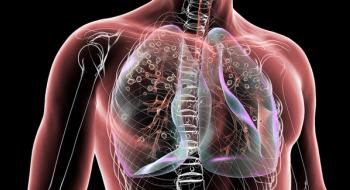
Experts at European Respiratory Society (ERS) Congress 2025 highlight the critical link between reduced lung function and increased cardiovascular disease risk, urging early intervention and awareness.
Experts at European Respiratory Society (ERS) Congress 2025 highlight the critical link between reduced lung function and increased cardiovascular disease risk, urging early intervention and awareness.

Michaela Nuttal, MS, explores the complex culture of smoking among nurses, highlighting challenges and motivations for quitting within health care settings.

Nerandomilast for idiopathic pulmonary fibrosis potentially improves survival and slows disease progression, explains Justin Oldham, MD, PhD, MS, FIBRONEER steering committee member.

There are clear benefits to starting biologic therapy earlier for severe asthma, as well as initiation patterns by ethnicity, according to data at ERS Congress 2025.

Expanding community-based cancer services brings advanced treatments closer to home and addresses social determinants of health, says Kathy Oubre, MS.

Digital health technologies enhance respiratory care through decentralized clinical trials and home monitoring, expanding access and improving patient engagement.

Davey Daniel, MD, shares strategies to prevent bias in artificial intelligence (AI) and outlining future opportunities for its adoption in precision oncology.

Christopher Carlin, MBChB, PhD, explores the potential of AI-driven insights to enhance COPD care and identify candidates for biologic therapy.

Research reveals that a high-fruit diet may protect women's lung function from air pollution, according to Pimpika Kaewsri, MSc.

Experts debate e-cigarettes' role in smoking cessation and public health at ERS Congress 2025, weighing benefits against potential risks and regulatory needs.

Integrating these care services can enhance patient QOL and address unmet needs in serious respiratory illnesses, explains Natasha Smallwood, BMedSci, MBBS, MSc, Monash University.

Experts reveal the health risks of indoor air pollution from biomass fuels and cleaning products, emphasizing prevention strategies for respiratory diseases.

Oncology stakeholders are navigating new policies as the landscape quickly evolves, according to Ryan Haumschild, PharmD, MS, MBA, CPEL.

Artificial intelligence (AI) holds the potential to democratize precision oncology, but it must be implemented thoughtfully.

In a time of skyrocketing oncology drug costs, the role of pharmacists in managing patients’ treatment and keeping care in the outpatient setting is more urgent than ever.

Teamwork between primary care providers and oncologists helps patients get needed care and achieve better results, according to Mark Fendrick, MD, at the Patient-Centered Oncology Care (PCOC) conference.
Kathy Oubre, MS, discusses opportunities for community cancer centers to expand service lines without sacrificing care quality.
Broader integration of artificial intelligence (AI) in precision oncology depends on overcoming barriers such as trust and transparency, according to Davey Daniel, MD.
Patients with hematologic malignancies face ongoing survivorship challenges as providers struggle to coordinate care, according to Brian Koffman, MDCM, DCFP, FCFP, DABFP, MSEd.

Panelists discussed the ingredients of successful handoffs at the time of cancer diagnosis and ways to collaborate as screening capabilities evolve.

Consolidation in oncology is creating access and cost challenges, whereas advocacy helps improve patient care and treatment availability, according to Sucharu "Chris" Prakash, MD.

Oncology utilization management often frustrates patients and payers, but collaboration and artificial intelligence can streamline processes and improve care quality, according to Vishnukamal Golla, MD, MPH.

As therapeutic advances enable patients with cancer to live longer, greater attention is needed to support the goal of survivorship, starting at diagnosis.

Explore cutting-edge discussions on patient-centered oncology, value-based care, AI innovations, and survivorship strategies Thursday and Friday at PCOC 2025 in Nashville.

Discover groundbreaking discussions at the European Respiratory Society Congress 2025, focusing on severe asthma, e-cigarette debates, and global health equity in respiratory care.

Patient-Centered Oncology Care (PCOC) conference co-chairs Kathy Oubre, MS, and Davey Daniel, MD, explain how the event unites experts to explore evolving oncology care and patient-centered strategies.

New findings reveal sotatercept's significant benefits for right ventricular function and tricuspid regurgitation in pulmonary arterial hypertension.

The combination of amivantamab and lazertinib in first-line non–small cell lung cancer (NSCLC) significantly reduces resistance mechanisms with implications for second-line treatment, said Danny Nguyen, MD, of City of Hope.

Remote patient monitoring enhances cancer care by improving outcomes and reducing emergency visits, despite challenges in reimbursement and technology access.
The subcutaneous dose had comparable efficacy to intravenous dosing while enhancing patient convenience in non–small cell lung cancer, explains Nicolas Girard, MD, PhD.