
Community oncology leaders navigate challenges in value-based care under the Enhancing Oncology Model, facing performance payment uncertainties and evolving drug markets.
Community oncology leaders navigate challenges in value-based care under the Enhancing Oncology Model, facing performance payment uncertainties and evolving drug markets.

Updated results from the MARIPOSA trial show that amivantamab plus lazertinib significantly reduces EGFR- and MET-driven resistance compared with osimertinib.

Byoung Chul Cho, MD, PhD, of the Yonsei University College of Medicine, discussed outcomes in the COCOON trial of an enhanced dermatologic regimen with amivantamab-lazertinib treatment.
Subcutaneous amivantamab plus chemotherapy offers an equally effective treatment for EGFR exon 20 insertion non–small cell lung cancer (NSCLC), mirroring PAPILLON results of the intravenous formulation, explained Sun Lim Min, MD, PhD.

The FDA's removal of REMS for CAR T-cell therapies enhances access for community oncology, paving the way for innovative treatments and improved patient outcomes.
Panelists at the Community Oncology Alliance Payer Exchange Summit discuss the urgent need for innovative reimbursement models in cancer care to match advancements in biomedical technology and drug discovery.

Monthly SC amivantamab plus daily lazertinib demonstrated strong efficacy and tolerability in EGFR-mutated advanced NSCLC, providing a convenient alternative to IV dosing.
Personalized testing is preferred for patients with NSCLC with mutations, but there are challenges to implementing this testing, said Yang Xia, MD, PhD.

Central nervous system (CNS) metastases in EGFR-mutant non–small cell lung cancer (NSCLC) remain a major challenge, with emerging therapies and evolving trial designs aiming to improve outcomes and address unmet needs.

Uncommon EGFR mutations in non–small cell lung cancer (NSCLC) remain challenging to treat, but new tyrosine kinase inhibitors, bispecific antibodies, and a proposed “PACCage insert” framework provide opportunities to advance precision therapy.

Treatment of EGFR-mutated non–small cell lung cancer (NSCLC) is shifting toward next-generation sequencing and combination regimens that improve survival but increase toxicity, requiring individualized care.

Antibody-drug conjugates are rapidly reshaping the treatment landscape of non–small cell lung cancer (NSCLC), with advances in design, clinical efficacy, and regulatory approvals tempered by ongoing challenges in toxicity, resistance, and biomarker optimization.
Bispecific antibodies are emerging as a transformative class in advanced non–small cell lung cancer (NSCLC), with agents such as amivantamab and zenocutuzumab already demonstrating clinical benefit and a broad pipeline of investigational therapies showing promise in overcoming resistance.

National Comprehensive Cancer Network (NCCN), the European Society for Medical Oncology (ESMO), and the American College of Chest Physicians (CHEST) offer complementary yet distinct frameworks for lung cancer care, reflecting differences in evidence evaluation, regional adaptation, and policy integration.

Efren Flores, MD, of Harvard Medical School and Massachusetts General Hospital, discussed the findings of a subanalysis of the Screen ASSIST tobacco cessation clinical trial.
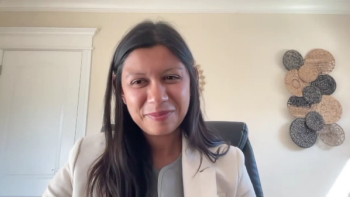
Surbhi Singhal, MD, of the University of California Davis, discussed disparities in biomarker testing among patients diagnosed with stage IV nonsquamous non–small cell lung cancer (NSCLC).

Renal denervation modestly lowers blood pressure, with durable long-term benefits, according to Deepak L. Bhatt, MD, MPH, MBA.
The American Society for Preventive Cardiology (ASPC) marked its 40th anniversary this year at the ASPC Congress on CVD Prevention in Boston, held August 1-3, with 3 days of debates, presentations, oral abstracts, and posters.

Deepak L. Bhatt, MD, MPH, MBA, of Mount Sinai Fuster Heart Hospital, spoke at the recent ASPC 2025 Congress on CVD Prevention to illustrate both the benefits and risks associated with renal denervation. Bhatt addresses the procedure in the context of lifestyle interventions and novel drug therapies.

Continuing his interview about these results, CEPHEUS lead investigator Saad Z. Usmani, MD, MBA, FACP, FASCO, highlights the minimal residual disease negativity findings.

In this retrospective study, Rakendu Rajendran, MBBS, and colleagues found higher rates of myocardial infarction and major adverse cardiovascular events in males and increased stroke incidence in females, among cannabinoid users.

Amy Paller, MD, pediatric dermatologist and clinical researcher at Northwestern Medicine's Feinberg School of Medicine, discussed the potential impact of reducing immunoglobulin E (IgE) levels in pediatric patients with atopic dermatitis.

Vivek Bhalla, MD, Stanford, calls for greater awareness and implementation of existing screening guidelines to help identify patients who may benefit from more targeted, disease-specific interventions for hypertension in the setting of primary aldosteronism.
Experts highlight advances in therapies, research on skin of color, and the impact of social determinants of health at the Society for Pediatric Dermatology's milestone annual meeting.

Rayan Salih, MD, a third-year internal medicine resident with the Northeast Georgia Health System, who hopes to specialize in cardiology, presented the poster, “Double Trouble: Pregnancy Challenges in Heart Failure With Preserved Ejection Fraction and Cardiac Amyloidosis.”

Glucagon-like peptide-1 (GLP-1) inhibitors have proven effective in preventing cardiovascular events, leading to experts promoting their use outside of care for diabetes.
Compared with previous surgical iterations of the procedure, explains Deepak L. Bhatt, MD, MPH, MBA, FACC, FAHA, FESC, MSCAI, Mount Sinai Fuster Heart Hospital, newer and FDA-approved catheter-based approaches are beneficial and safe.

Posters presented at the ASPC 2025 Congress on Cardiac Prevention showed the benefit of participating in cardiac rehabilitation for a variety of cardiac issues.

A lively debate on the pros and cons of using hormone therapy in women to prevent cardiovascular events had attendees engaged throughout.

Varsha Tanguturi, MD, cardiologist and DETECT AS investigator, presented new data on how the findings she and her colleagues saw indicate almost universal increases in rates of aortic valve replacement in patients with severe aortic stenosis (AS), across both provider and patient groups.