

New antitussive trials are challenged by large placebo effects and the risk of the trial being unblinded due to adverse effects, explained Ron Eccles, BSc, PhD, DSc, emeritus professor at Cardiff University.
New antitussive trials are challenged by large placebo effects and the risk of the trial being unblinded due to adverse effects, explained Ron Eccles, BSc, PhD, DSc, emeritus professor at Cardiff University.
The latest phase 2 MAGNOLIA results continue to show strong efficacy and tolerability for the Bruton tyrosine kinase inhibitor in marginal zone lymphoma.

In the frontline setting, daratumumab added to backbone combination therapies has resulted in high rates of minimal residual disease (MRD) negativity, said Ola Landgren, MD, PhD, of the University of Miami and Sylvester Comprehensive Cancer Center.

Using limited data from the ASPEN trial, investigators estimated survival probability and cost-effectiveness for zanubrutinib vs other agents in Waldenström macroglobulinemia.

A session presented at Virtual SLEEP 2021 highlights the social and environmental factors that impact sleep health.
Updated guidelines for adults and children highlight confusion over the name of the condition and the need for greater evidence.
Shalini Paruthi, MD, medical codirector, St. Luke’s Hospital, Sleep Medicine and Research Center, and cochair of SLEEP 2021, highlights discussion topics that will address best practices for evaluating, diagnosing, and treating common sleep disorders.
The placebo effect is a major problem in cough trials and can make it impossible to tell the true pharmacological effect of the medicine being studied, said Ron Eccles, BSc, PhD, DSc, emeritus professor at Cardiff University.
An interim analysis of the phase 3 ALPINE study demonstrated that zanubrutinib has a superior response rate, improved progressive-free survival, and lower rate of atrial fibrillation/flutter compared with ibrutinib in patients with relapsed/refractory chronic lymphocytic leukemia/ small lymphocytic leukemia (CLL/SLL).

Results from 2 studies presented at this year’s European Hematology Association meeting demonstrate the long-term tolerability and efficacy of the Bruton tyrosine kinase inhibitor.
The P2X3 antagonists are the furthest along in the drug development process, but there are other potential drugs being evaluated to treat chronic cough, which currently has no FDA-approved therapies on the market, said Peter Dicpinigaitis, MD, chair of the American Cough Conference.

Desensitizing the cough reflex and new technologies based on artificial intelligence are some of the oral abstracts that Jacky Smith, MB, ChB, FRCP, PhD, professor of respiratory medicine at the University of Manchester and an honorary consultant at Manchester University NHS Foundation Trust, who chairs that session, is looking forward to at the American Cough Conference.
Michael Thorpy, MD, director of the Sleep-Wake Disorders Center, Montefiore, and professor of neurology, Albert Einstein College of Medicine, discusses aspects of the Idiopathic Hypersomnia Severity Scale, and how it fared in measuring symptoms of idiopathic hypersomnia compared with traditional scales.

The populations represented in randomized controlled trials often do not match the populations being treated in the real world due to eligibility criteria, which can be challenging when translating those results to real-world decisions, explained speakers during a session at the European Hematology Association 2021 Virtual Congress.

Abstracts presented at SLEEP 2021 include real-world data characterizing individuals with central disorders of hypersomnolence.
The phase 2 ZUMA-3 trial of brexucabtagene autoleucel showed that it is possible to intervene early to prevent some toxicity, said Bijal Shah, MD, associate member in the Department of Malignant Hematology at Moffitt Cancer Center.

The interim results on the first 415 patients randomized in the phase 3 ALPINE study showed a significantly better response for zanubrutinib compared with ibrutinib in patients with relapsed/refractory chronic lymphocytic leukemia and small lymphocytic leukemia, said Peter Hillmen, PhD, MB ChB, professor at the University of Leeds.

There are many unknowns for third-line chronic myeloid leukemia (CML) treatment and beyond, speakers said at the EHA2021 Virtual Congress.
Larry D. Anderson Jr, MD, PhD, associate professor, Harold C. Simmons Comprehensive Cancer Center, discusses updated findings of the phase II KarMMa trial assessing ide-cel chimeric antigen receptor (CAR) T-cell therapy for treatment of adult patients with relapsed or refractory multiple myeloma after 4 or more prior lines of therapy.
Rebecca Spencer, PhD, professor, Department of Psychological and Brain Sciences, University of Massachusetts Amherst, and co-chair of SLEEP 2021, highlights takeaways from this year’s meeting and discussions she’s looking forward to.

Camille Hertzka, vice president and head of oncology, US Medical, AstraZeneca, speaks on how the OlympiA findings may warrant greater need of genetic testing for BRCA mutation and the efficacy of olaparib by patient subgroup.
Daratumumab will likely become a part of most combination therapies for patients with newly diagnosed multiple myeloma (MM) because it safely adds efficacy, according to Ola Landgren, MD, PhD, of the University of Miami and Sylvester Comprehensive Cancer Center.
With 5 chimeric antigen receptor (CAR) T-cell therapies approved by the FDA, and 299 agents in the pipeline, it’s no surprise that the virtual meeting of the European Hematology Association (EHA) will have a heavy presence of CAR T research being presented in sessions and posters.
Shalini Paruthi, MD, medical codirector, St. Luke’s Hospital Sleep Medicine and Research Center, and cochair of SLEEP 2021, discusses the sessions and discussions she is looking forward to at this year's meeting.
Camille Hertzka, vice president and head of Oncology, US Medical, AstraZeneca, discussed updated findings of the PACIFIC trial that indicated a third of patients with unresectable non-small cell lung cancer are stable at 5 years.
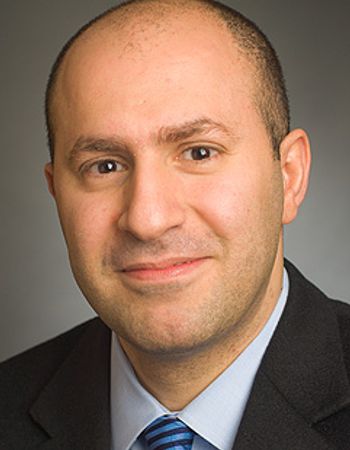
The study's lead author said researchers have searched for a generation for an effective therapy to give to high-risk patients with renal cell carcinoma after initial surgery for the tumor.
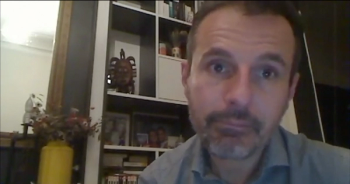
Antoine Italiano, MD, PhD, head of Early Phase Trials and Sarcoma Units at Institut Bergonié, Bordeaux, France, addresses findings of an extended follow-up of larotrectinib in patients with TRK fusion cancer that indicated prolonged progression-free survival in those undergoing the NTRK inhibitor.
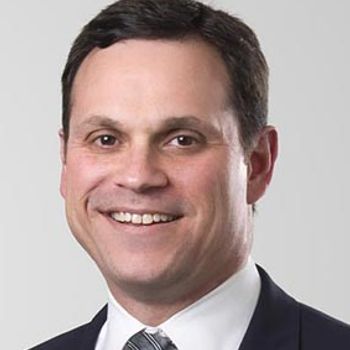
Also, phase 2 results for atezolizumab presented during the 2021 Annual Meeting of the American Society of Clinical Oncology could help patients in same setting who need another option.

Biomarker testing and remote patient monitoring are just 2 areas of research presented during the annual meeting of the American Society of Clinical Oncology (ASCO).
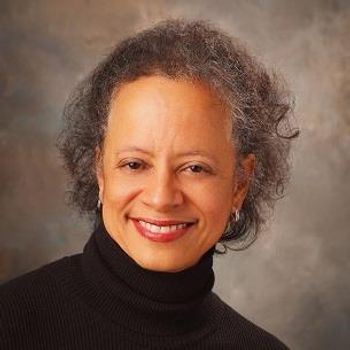
Equality in cancer care is not sufficient, said Lori Pierce, MD, FASTRO, FASCO, a radiation oncologist from the University of Michigan and president of the American Society of Clinical Oncology (ASCO). Equity—which means that patients have similar outcomes, regardless of circumstance—is harder to achieve.