

Panelists of the opening session at Asembia 2021 Specialty Pharmacy Summit in Las Vegas address emerging shifts in specialty pharmacy, its impact on the health care system, and future implications post pandemic.
Panelists of the opening session at Asembia 2021 Specialty Pharmacy Summit in Las Vegas address emerging shifts in specialty pharmacy, its impact on the health care system, and future implications post pandemic.

At the fully in-person meeting of the Asembia 2021 Specialty Pharmacy Summit, held in Las Vegas, Nevada, attendees will get multiple sessions looking into the future of specialty pharmacy, as well as sessions on hot topics like telehealth and health equity.
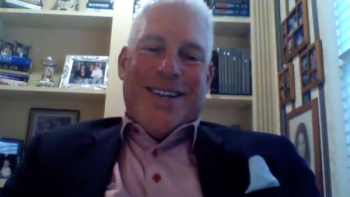
Horizon Blue Cross Blue Shield of New Jersey has been involved in a number of value-based cancer care initiatives that will be highlighted during an upcoming Asembia session, said Steven Peskin, MD, MBA, executive director, director of population health, Horizon Blue Cross Blue Shield of New Jersey.

In 2 sessions at the Asembia 2021 Specialty Pharmacy Summit, George Van Antwerp, MBA, managing director, Deloitte Consulting, will provide a look at the future of specialty pharmacy and health equity in pharmacy.
As deductibles for Medicare Part D beneficiaries and enrollment continue to rise, new policies and reconciliation negotiations aimed at lowering costs may hold the key to stabilizing Part D plans, according to presenters at the Academy of Managed Care Pharmacy Nexus 2021 meeting.

Two posters presented at AMCP Nexus 2021 review the high burden of social determinants of health (SDOH) on patients with serious mental illness.

During her presentation at the Academy of Managed Care Pharmacy Nexus 2021 meeting, Aimee Tharaldson, PhD, highlighted the most anticipated specialty pharmacy drugs awaiting FDA approval, including several treatments for cancer and rare diseases.

Novel financial concepts will help to ensure sustainable access to gene and cell therapies, which may help reduce disparities, said Jane F. Barlow, MD, MPH, MBA, senior advisor, FoCUS Project, MIT Center for Biomedical Innovation, and executive vice president and chief clinical officer at Real Endpoints.

There are potential ways that precision medicine could exacerbate disparities, but it should be used to guide people to the right treatments, said Nick Page, chief clinical and strategy officer, and Patty Taddei-Allen, PharmD, MBA, BCACP, BCGP, vice president of clinical programs and services, WellDyne.

There are currently no FDA-approved treatments for refractory chronic cough or unexplained chronic cough. At the CHEST Annual Meeting 2021, attendees heard a readout from a durability study as well as pooled analyses from 2 phase 3 trials for gefapixant.

Evan L. Stepp, MD, FCCP, CPE, a pulmonologist at National Jewish Health, discusses an apparent change in attitudes among patients in the wake of 2019’s e-cigarette or vaping use–associated lung injury (EVALI) crisis.

A panel discussion at AMCP Nexus 2021 explored the current biosimilar landscape and level of uptake, with survey results showing payers are accepting of biosimilars and that a majority support nonmedical switching.

There has been a huge shift forward in the understanding of innate and adaptive immune mechanisms that provoke type 2 inflammation in atopic disease and eosinophilic esophagitis, according to a CHEST Annual Meeting 2021 speaker.

A panel of experts highlighted a number of emerging product solutions that can help health plans overcome challenges associated with financing and reimbursing gene and cell therapies and offered insight into how these solutions can be expanded as more therapies enter the market.

Paradoxical bronchospasm, although rare, should be recognized more often in spirometry tests, said pulmonologist Malvika Kaul, MD, who discussed study findings from a population of veterans with chronic obstructive pulmonary disease (COPD) and asthma, where the possibly life-threatening condition was not picked up in lung tests.

Multiple trastuzumab biosimilars were approved and launched very quickly in the United States, which sets up an interesting scenario in the market to see the nuance of having multiple options available, said Cate Lockhart, PhD, PharmD, MS, program, director, Biologics and Biosimilars Collective Intelligence Consortium (BBCIC).

Large health system pharmacies need to first identify their own contributions to health care disparities before identifying areas of opportunity to address the issue, said Aimee Loucks, PharmD, manager, specialty clinical pharmacy programs and formulary, Kaiser Permanente.

A panel of experts at AMCP Nexus 2021 explored multiple ways that health plans and providers can begin to address disparities in health care and offered recommendations on how to implement these tactics effectively.

Nicole Herbst, MD, a pulmonary and critical care fellow, talks about how visitor restrictions and communication practices in intensive care units (ICUs) during the COVID-19 pandemic negatively impacted provider job satisfaction and were linked to job burnout, according to a survey presented at the CHEST Annual Meeting 2021.

A panel discussion at the CHEST Annual Meeting 2021 discussed disparities related to race, ethnicity, gender, and socioeconomic status that have been shown to impact access to high-quality lung cancer care.

At a session of the CHEST Annual Meeting 2021, specialists reviewed the need for a thorough diagnosis to tell whether a patient's symptoms are caused by asthma or another pulmonary condition.

Researchers at the CHEST Annual Meeting 2021 addressed the evolution of COVID-19 variants, how these emerging strains impact vaccines, and preventive recommendations for at-risk populations.

There are several reasons as to why precision therapeutics have not taken off for chronic obstructive pulmonary disease (COPD) in the same way that they have for other diseases, said Don Sin, MD, FRCP, MPH, a professor of respiratory medicine at the University of British Columbia and head of the Centre of Heart Lung Innovation, St. Paul’s Hospital.

Panelists of a session at CHEST 2021 discuss the latest research regarding efficacy and safety of therapies in the management of asthma, including biologics, corticosteroids, and more.
Evan L. Stepp, MD, FCCP, CPE, a pulmonologist at National Jewish Health, director of the Highlands Ranch Clinic, and an assistant professor, Department of Medicine, Division of Pulmonary, Critical Care and Sleep Medicine, discussed the recent FDA decision to authorize an e-cigarette intended to help current smokers quit combustible cigarettes.

Mariam Lewis, MD, FCCP, a pulmonologist at UF Health and the UF College of Medicine, discusses why women are more sensitive to the effects of tobacco.

The fall meeting has multiple sessions on different aspects of health disparities and addressing drug costs, including 3 sessions on biosimilars.

Tackling disparities in diabetes management first requires collecting data and identifying affected groups before being able to take action, explained Brenden O'Hara, RPh, BCACP, from Blue Cross Blue Shield of North Carolina.

Don Sin, MD, FRCP, MPH, who is presenting at CHEST 2021 on the topic of precision medicine and chronic obstructive pulmonary disease, discusses other topics of interest at CHEST 2021, which takes place virtually from October 17 to October 20, 2021.

Compared with conferences held a year ago at this time, when vaccines were not yet available and the United States had yet to hit the peak of the pandemic, there are now more data to discuss about what we know and do not know about COVID-19.