
AARP and other groups reacted strongly to reports that the pharmaceutical industry was using efforts to combat the opioid crisis to roll back an agreement to close the coverage gap in Medicare Part D.
AARP and other groups reacted strongly to reports that the pharmaceutical industry was using efforts to combat the opioid crisis to roll back an agreement to close the coverage gap in Medicare Part D.

Although many different treatments exist for basal cell carcinoma (BCC), many methods have not been compared in head-to-head randomized trials. A review recently published in Annals of Internal Medicine looked to evaluate the comparative effectiveness and safety of treatments in adults with BCC.

As the country continues to grapple with best practices for combating the high prevalence of obesity, here are 5 things to know.

A majority of US physicians have a pessimistic view about the future of medicine, believe value-based payments won't improve quality of care or reduce costs, and treat patients with social conditions that impact their health.

This week, the top managed care news included the Senate overwhelmingly voting to ban pharmacist gag clauses; a study found the current vaccine pipeline for HIV, tuberculosis, and malaria may fall short; an expert noted a trend of healthcare cost data seeping into nonhealthcare companies’ earnings calls.

An artificial intelligence startup with ties to employees and board members of Memorial Sloan Kettering Cancer Center is sparking dissent at the venerable institution; the American Medical Association (AMA) is opposing a change to patient privacy laws contained in a massive opioids bill; Republicans are struggling to find a healthcare message to sell to voters as the midterm elections draw near.

Coverage of our peer-reviewed research and news reporting in the healthcare and mainstream press.

In the United States, a woman age 30 to 70 years of age has a 1 in 8 chance of dying from a noncommunicable disease (NCDs), putting the nation on par with low and middle-income countries, and setting it apart with Iceland among high-income countries, according to a report published Thursday in The Lancet.

Senators Bill Cassidy, MD, R-Louisiana; Michael Bennet, D-Colorado; Chuck Grassley, R-Iowa; Tom Carper, D-Delaware; Todd Young, R-Indiana; and Clair McCaskill, D-Montana, have released the Protecting Patients from Surprise Medical Bills Act to protect patients from balanced billing for treatment and services from an out-of-network provider in an in-network facility.

CMS' Medicare Shared Savings Program proposal would make substantial changes to the benchmarking methodology for accountable care organizations.

A survey has revealed gaps in HIV providers’ knowledge of the Affordable Care Act. However, despite these gaps, the majority of surveyed providers expressed belief that Medicaid expansion would improve both HIV outcomes and general outcomes for patients with the disease.

A series of experiments identified both "good" and "bad" gut bacteria, suggesting possible treatments for obesity.
A new issue brief from the Henry J. Kaiser Family Foundation reports on healthcare and recovery efforts 1 year after Hurricane Maria struck Puerto Rico and the US Virgin Islands (USVI), with residents still struggling to regain what they lost, a lack of capacity due to damaged facilities or lack of staff, and financing woes that will make moving forward difficult if they are not addressed.
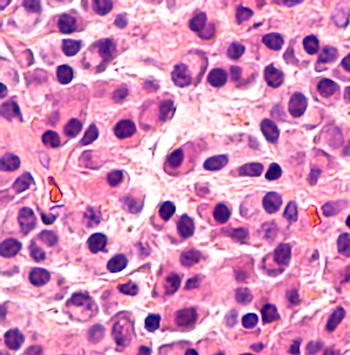
Amgen’s pipeline drug AMG 420, a bispecific T-cell engager (BiTE) for the treatment of patients with relapsing/refractory multiple myeloma (RRMM), has found positive preliminary results in a phase 1 trial.

States, communities, and organizations received more than $1 billion in grants from HHS to help them fight the opioid crisis; a preliminary study has found that children conceived through infertility treatments could be at higher risk for cardiovascular disease; the State of California is alleging that AbbVie boosted sales of Humira through kickbacks to prescribers and a network of nurse ambassadors.

The Multiple Sclerosis-Secondary Progressive Multi-Arm Randomization Trial (MS-SMART) is the first multiarm trial designed specifically to address the unmet need for further identification of neuroprotective drugs in secondary progressive multiple sclerosis.

A Mayo Clinic team critiqued the 2018 update to the Global Initiative for Chronic Obstructive Lung Disease guidelines, recommending several changes to the next update.

Despite efforts over the past decade to wring more value from healthcare in an effort to contain spending, healthcare spending as measured by those with employer-sponsored health insurance rose by 44% over the past decade, according to a new analysis from the Health Care Cost Institute (HCCI).

A new report contradicts CMS’ claim that the Medicare Shared Savings Program increased Medicare spending by $344 million from 2013 to 2015. The new analysis finds that accountable care organizations (ACOs) actually reduced federal spending by $542 million after accounting for shared savings payments earned.

In their study published in Nature Communications, the authors mapped out the epigenomic profiles of rheumatoid arthritis (RA) and osteoarthritis for the first time to provide insight on RA-specific pathways and transcription factor motifs. A surprising discovery was that the Huntingtin-interacting protein-1 may play a role in the pathogenesis of RA.

While it is well understood that psychological distress is a major side effect of cancer and its treatment, and that stress can have a strong impact on patients’ quality of life, a new study indicated that stress is linked with markers of more advanced disease in patients with chronic lymphocytic leukemia (CLL), the most common form of leukemia among adults.

A study says it found a link between bone mineral density and sleep onset latency in an elderly population.

With healthcare costs growing, a bipartisan group of senators has unveiled draft legislation that would protect patients from surprise bills and prevent medical bankruptcies; at least 17 hog-waste lagoons may have released feces and urine into flood waters in North Carolina, putting people at risk of viruses, parasitic infections, and rashes; African Americans accounted for fewer than 5% of patients in 24 trials for cancer drugs approved since 2015.

A study found that testosterone replacement therapy reduced the risk of respiratory hospitalizations in men with chronic obstructive pulmonary disease (COPD).
The bill is part of President Donald Trump's blueprint to rein in prescription drug prices, and advocates see it as a small step in the right direction.

Researchers examining how well integrated practice units (IPU) are implemented across 7 cancer centers in Europe found there was no clear, consistent strategy for developing and implementing IPUs, in an analysis that focused mostly on breast cancer clinical pathways.

With general consensus that those 70 years and older should not be routinely screened for prostate cancer, researchers argue that their study results identify an area for cutting low-value services to reduce healthcare spending.

Researchers determined that the current drug pipeline is unlikely to produce any highly effective vaccines for HIV, tuberculosis, or malaria, which could be important for controlling the spread of these diseases.

While the pathogenesis of autoimmune myelofibrosis is not completely understood, in patients with systemic lupus erythematosus, it may be triggered by circulating immune complexes that induce megakaryocytes to release platelet-derived growth factor.
Healthcare costs in America are seeping into nonhealthcare companies’ earnings announcements. None of those companies discussed healthcare this time last year.