



Health System
Latest News

Female Patients Less Likely to Receive Guideline-Directed HFrEF Therapies vs Males
By Rose McNulty
Advertisement
Latest Videos








Advertisement
More News

Especially during shortages, Kirollos S. Hanna, PharmD, BCPS, BCOP, FACCC, director of pharmacy services at Minnesota Oncology, says practices should carve out areas where going to a different therapeutic approach isn't considered off-pathway.

A real-world study found that patients treated with Bruton tyrosine kinase inhibitors had lower rates of treatment discontinuation and health care resource utilization compared with other first- and second-line treatment regimens.

Edward "Ted" Arrowsmith, MD, MPH, medical director for pathways at OneOncology and managing partner at Tennessee Oncology, talks about challenges and changes in clinical pathways and the importance of keeping them updated.

Four years after the publication of data showing that the Camden Coalition’s “hotspotting” care management program did not reduce hospital readmissions, the investigators have published new work delving into the mechanisms behind the null findings.
Margaret Liang, MD, MSHPM, gynecologic oncologist and health services researcher and director, Gynecologic Oncology Fellowship Program, Cedars-Sinai Cancer Center, discusses financial toxicity in cancer care and how institutions can help alleviate the financial burden for patients.

Employers, recognized as pivotal contributors to health equity, are urged to prioritize equitable benefits, address the complexity of health plans, and engage in education, data-driven interventions, and systematic measurements to comprehensively improve outcomes for diverse employee populations.
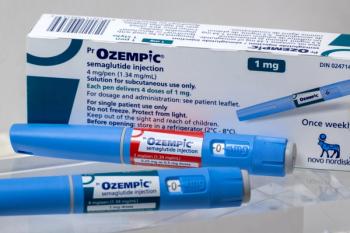
An in-depth look into what the drug is being used for and what has contributed to the shortage.

Advanced care at home (otherwise known as hospital at home) can be scaled and provide care for a sizable portion of a hospital’s inpatient census, creating hospital capacity in an integrated delivery system.
David Fajgenbaum, MD, MBA, MSc, cofounder of Every Cure, shared that the organization is able to reduce clinical trial costs to $1 to $5 million per drug trial, and that clinical trials are not always necessary to expand a drug's indication.

A new report from AHIP shows that Medicare Advantage outperformed traditional Medicare on several clinical quality measures, including preventive screenings. However, debate continues over these plans’ cost efficiency and impact on the financial sustainability of rural hospitals.
This editorial provides suggestions for improving the process of e-consults, which are a promising method of expanding access to specialty care.
US Department of Veterans Affairs (VA) clinicians’ perspectives on what constitutes a good e-consult and why suboptimal e-consult requests occur contain broadly applicable lessons for other health systems.

Cardiologists need skills in risk assessment, contraception counseling, and hypertension management for pregnant patients, according to Kathryn Lindley, MD, FACC, Vanderbilt University Medical Center.

Overall, the number of patients discharged from hospitals with an ulcerative colitis diagnosis increased between 2009 and 2018, but the number of patients opting for ileal pouch–anal anastomosis (IPAA) decreased.
Pharmacists’ roles in transitions of care continue to evolve. Evaluation of pharmacist-led interventions as patients transition from emergency department to home is needed.
Kathryn Lindley, MD, FACC, Vanderbilt University Medical Center, talks about why it’s important to incorporate cardio-obstetrics training into cardiovascular disease fellowship programs.
Incident reporting systems, which are often computer based and require no in-person interactions, can enable health care staff who perceive low psychological safety to speak up.

A new report highlighting the twin pressures hospitals have faced over the last 18 months shows that as reimbursement delays and denials increased and cash and investments decreased, operating expenses have risen sharply.

The highest incidence of pediatric type 1 diabetes (T1D) over the past 22 years was seen in Finland, high-income North American regions, and children aged 5 to 14 years.

Researchers concluded there is a clinically important increase in infection risk among patients with T1D in both primary care and hospital settings, and that guidelines must be developed to reflect this risk and encourage earlier treatment.

The study also identified similar 12-month outcomes between torsemide and furosemide regardless of heart failure (HF) type.

The Center on Health Equity and Access spotlights the latest health equity news, research, and initiatives to reduce health care disparities and improve access to care.

The tool assesses the risk of heart attack, stroke, and, for the first time, heart failure, offering a more comprehensive perspective on cardiovascular health.

An artificial intelligence (AI)–based prediction model correctly predicted outcomes for 78% of patients with high-grade serous ovarian carcinoma, with an accuracy of 80%.

New research highlights racial disparities in hemophilia care, revealing that Black and Hispanic patients are significantly less likely to receive immune tolerance induction treatment compared with White patients, even after considering clinical factors.
Advertisement
Advertisement
Trending on AJMC
1
Amid SOHO Data, Reviewers of BTK Inhibitors in MCL Call for Trials
2
Dosing, Tolerability, and Formulary Impact: Aripiprazole and Quetiapine XR in MDD
3
Newer Agents, New Advantages: Brexpiprazole, Cariprazine, and Lumateperone in MDD
4
Cross-Trial Vitiligo Data: What Payers Can and Can't Compare
5