

Oncology
Latest News
Advertisement
Latest Videos






CME Content


Advertisement
More News

Nivolumab proved superior to everolimus in improving overall survival in previously treated patients.
A gene known to cause cancer may also play a role in determining obesity, according to researchers at the Virginia Commonwealth University Massey Cancer Center.
The demand for oral parity for oncology medications is back up for vote in the Senate in North Carolina.
A presscast held prior to the annual meeting of the American Society of Clincal Oncology presented interim results from the phase 3 ELOQUENT-2 trial. Adding elotuzumab to lenalidomide and dexamethasone reduced the risk of disease progression by 30% in patients with relapsed-refractory multiple myeloma.
The Annual Report to the Nation on Status of Cancer, product of a collaboration between The American Cancer Society, Centers for Disease Control and Prevention, National Cancer Institute, and North American Association of Central Cancer Registries, has been published.
A study published in JAMA Oncology questions aggressive local treatment strategies in men with low-risk prostate cancer.
At the annual meeting of the American Society of Clinical Oncology in Chicago, physicians introduced some new lymphoma treatments as they described their personal experience with using them during the session, "Incorporating Novel Agents Into Lymphoma Therapy: Value in Everyday Practice."
Immuno-oncology continues to deliver results in oncology, as seen from results presented at the annual meeting of the American Society of Clinical Oncology. The combination of nivolumab and ipilimumab significantly improved survival in melanoma, while elotozumab showed encouraging results in relapsed refractory multiple myeloma.
A late-breaking abstract session early at the annual meeting of the American Society of Clinical Oncology presented datd for nivolumab in the treatment of hepatocellular carcinoma, non-squamous cell non-small cell lung cancer, and for tumors harboring mismatch repair deficiency.
The ACA eliminated patient cost sharing for evidence-based preventive care, yet this policy has not resulted in substantial increases in colonoscopy and mammography utilization.
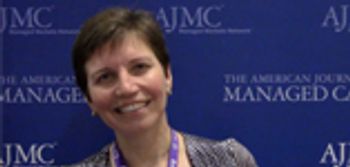
Jennifer Malin, MD, medical director for oncology at Anthem, explains how both physicians and payers struggle with the high cost of some cancer treatment drugs.
During the session "Health Services Research and Quality of Care" at the annual meeting of the American Society of Clinical Oncology, oncologists discussed factors that influence clinical trial participation and the cost of cancer care.
Young adult cancer survivors who had received their first rounds of cancer treatment between the ages of 20 and 44 were 1.5 times more likely to have more hospitalizations after remission than the general public.

Taking into account all of the factors a patient may be dealing with is 1 way to address the growing cost of cancer care and its associated problems, like medication or treatment nonadherence.
A very popular session on the "value" of cancer care during the annual meeting of the American Society of Clinical Oncology (ASCO) brought together a patient representative, an oncologist, an ASCO representative, and a payer.
At the annual meeting of the American Society of Clinical Oncology, Robin Zon, MD, discussed the growing administrative burdens in oncology practice with the movement towards value-based payment.
The retrospective study, conducted in centers across Germany, found that when colorectal cancer was detected during a screening colonoscopy, patients lived nearly 2 years longer than if it was detected during a diagnostic colonoscopy.
A poster presented at the 2015 annual meeting of the American Society of Clinical Oncology shared encouraging phase 3 survival data from the RECOURSE trial, after evaluating specific geographic subgroups.
During the Oncology Stakeholder's Summit 2015 hosted by AJMC, healthcare experts discuss the value of introducing palliative and end-of-life care discussions early in oncology care.
The American Journal of Managed Care invited healthcare experts to discuss the challenges associated with managing and paying for newer and more expensive agents in oncology, during the Oncology Stakeholders Summit.
The top story of the week was Aetna's purchase of Humana, which signals a growth in government managed care. In addition, the 340B drug discount program came under fire after a report from the Government Accountability Office.
The concept of value may be, and is, interpreted differently among healthcare stakeholders, and not only do cancer patients define value differently from policy makers, but also from other patients.
A landmark clinical trial that will channel patients into treatment arms based on molecular abnormalities rather than cancer type aims to simultaneously test the efficacy of more than 20 drugs.
Two posters summarized the safety of nivolumab in lung cancer and in glioblastoma, at the ASCO annual meeting.
A study of Kaiser Permanente cancer patients found that two-thirds of teen and young adult patients received aggressive care at the end of life. The special issue on the topic comes as CMS proposes paying doctors or nurses to discuss advanced care planning.
Advertisement
Advertisement
Trending on AJMC
1
TrumpRx Launch Brings Savings—and Uncertainty
2
As Cencora Closes With OneOncology, Patton Says Terms Show “Trust”
3
Benefits, Tradeoffs of Medically Integrated Dispensing in Oncology Care: Katherine Tobon, PharmD, BCOP
4
Exploring Identity, Appearance Experiences Among Patients With Alopecia
5