


Oncology
Latest News
Advertisement
Latest Videos






Advertisement
More News

Sashi Naidu, MD, is director of research at Carolina Blood and Cancer Care Associates, where the No One Left Alone (NOLA) initiative is working to break down cancer health disparities among its patients and prevent care fragmentation.
In a value-based cancer care model, patients can more easily access the best quality care and practices can get adequately paid for the services they offer.
Ryan Huey, MD, gastrointestinal medical oncologist at MD Anderson Cancer Center in Houston, Texas, discussed the vital roles multiple health care providers play in improving outcomes for patients with cancer.
Close to 80% of what influences how long someone is going to live is where and how they live, and we need to pay more attention to that or we’re not paying attention to everything that affects their lives, explained David A. Eagle, MD, of New York Cancer & Blood Specialists.

There is a “spectrum” of problems and obstacles in a patient’s way once melanoma has been detected before that patient sees the right physician and receives treatment, said Sancy Leachman, MD, PhD, professor and chair in the Department of Dermatology and director of the Melanoma Research Program at the Knight Cancer Institute at Oregon Health and Science University.

The FDA has granted full approval to pembrolizumab for the treatment of some patients with unresectable or metastatic microsatellite instability–high (MSI-H) or mismatch repair–deficient (dMMR) solid tumors that have progressed following previous treatment.

The FDA wants to discourage the use of single-arm trials for accelerated approvals of oncology drugs; Cigna’s review system allows doctors to reject claims without reading them, an investigation shows; US bishops want to restrict gender transition care in Catholic hospitals.

Samyukta Mullangi, MD, MBA, oncology fellow at Memorial Sloan Kettering Cancer Center and incoming medical director at Thyme Care, discussed how the transition to value-based care can contribute to operational and financial risks among oncology practices, and the effectiveness of care navigation platforms in addressing these concerns.

Manmeet Ahluwalia, MD, MBA, chief, Solid Tumor Medical Oncology; deputy director; and chief scientific officer at Miami Cancer Institute, spoke on the short- and long-term goals for Miami Cancer Institute’s Center for Equity in Cancer Care & Research in improving minority patient enrollment in clinical trials.
Growing bipartisan awareness of issues with the 340B drug pricing program will hopefully lead to reform, says Nicolas Ferreyros, BA, managing director of policy, advocacy, and communications at the Community Oncology Alliance.
On this episode of Managed Care Cast, we feature several leaders in diversity, equity, and inclusion advancing health equity in their respective organization’s policy and practice initiatives.

Osimertinib (Tagrisso; AstraZeneca) now has shown a statistically significant and clinically meaningful overall survival benefit in both the early adjuvant and late-stage metastatic settings.

Spending on novel therapies in high-risk bladder cancer had minimal impact on Oncology Care Model payments to practices, according to this cohort study and an average performance estimation.

A session at the Association of Community Cancer Centers (ACCC) 2023 Annual Meeting and Cancer Center Business Summit highlighted ongoing issues in oncology policy and payment, from the Cures 2.0 Act to 340B drug reimbursement.

A session at the ACCC 2023 Annual Meeting and Cancer Center Business Summit addressed the promise and potential drawbacks of multicancer early detection (MCED) testing for patients in the primary care setting.

In the first keynote session at the ACCC 2023 Annual Meeting and Cancer Center Business Summit, the history of CRISPR genome editing and its potential in cancer and other settings took center stage.
David A. Eagle, MD, New York Cancer & Blood Specialists, discusses the present state of treatment for cancer, which often sees patient financial concerns outweighed by the cost of treatment.
Utilizing real-world evidence that applies to the specific care needs of certain patient populations can promote timely decision-making among payers and providers on the use of effective cancer therapies available on the market, said panelists at the 2022 Patient-Centered Oncology Care® (PCOC) meeting.
Coverage from the January 18, 2023, Institute for Value-Based Medicine session with Regional Cancer Care Associates held in New Brunswick, New Jersey.
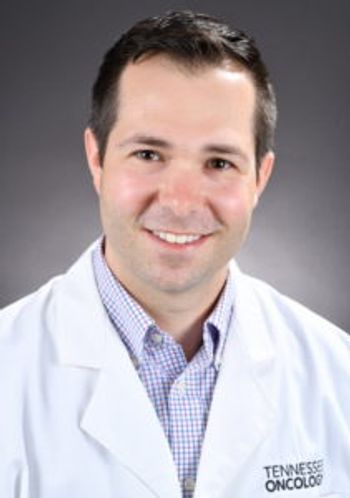
Richard L. Martin III, MD, MPH, medical director for Health Equity and Community Engagement, Tennessee Oncology; president, Tennessee Oncology Practice Society.
Advertisement
Advertisement
Trending on AJMC
1
TrumpRx Launch Brings Savings—and Uncertainty
2
As Cencora Closes With OneOncology, Patton Says Terms Show “Trust”
3
Benefits, Tradeoffs of Medically Integrated Dispensing in Oncology Care: Katherine Tobon, PharmD, BCOP
4
Asundexian Reduces Risk of Stroke Recurrence in Phase 3 OCEANIC-STROKE Trial
5