






Highlighting the latest ophthalmology-related news reported across MJH Life Sciences™.
Highlighting the latest ophthalmology-related news reported across MJH Life Sciences™.

Patients with moderate to severe psoriasis were shown to achieve and maintain higher levels of complete skin clearance and quality of life when treated with brodalumab vs ustekinumab, regardless of the presence of lifestyle risk factors.

Male patients with young-onset type 2 diabetes were found to be at 72% greater risk of retinopathy compared with those who received a diagnosis at 50 years or older.

Migraines plague some 35 million Americans, the majority of them women in their 30s and 40s, and disabling pain and symptoms are linked to lost productivity at work, school, and home. On this episode of Managed Care Cast, we bring you an excerpt of an interview with a headache specialist about the extra challenges for patients and providers during the pandemic.

Patients with obstuctive sleep apnea were found to be significantly more likely to have brain white matter hyperintensities, lesions known to signal brain aging and potential risk of Alzheimer disease.

Francis Collins, MD, PhD, will step down as director of the National Institutes of Health (NIH) at the end of the year; the Biden administration ends a ban on federal funds for clinics that provide abortion referrals; the Pfizer/BioNTech COVID-19 vaccine is 90% effective in preventing hospitalization and death 6 months after the second dose.

Aligned with increases in costs for both airplane and helicopter air ambulance transport, average estimated air ambulance costs rose 76.4% from 2017 to 2020, according to Robin Gelburd, JD, president of FAIR Health.

Secukinumab was associated with a high rate of short- and long-term drug survival in the treatment of patients with psoriasis, with factors such as obesity and prior biologic use linked to discontinuation of use.

Dosing from pivotal phase 3 trials of tyrosine kinase inhibitors (TKIs) in chronic myeloid leukemia (CML) is not optimal for real-world patients who experience different efficacy and adverse events (AEs).
Highlighting the latest ophthalmology-related news reported across MJH Life Sciences™.

Although physicians’ clinical decisions serve as the biggest drivers behind the cost of care, hospitals have long been reluctant to take financial accountability. If such accountability is to be transformed from a diffuse fear to a manageable managerial task, institutional engagement with physicians will be a critical next step.

Chronic disease caregivers are more likely to report both risky and health-promoting behaviors than noncaregivers, according to a new study.

Risk of diabetic retinopathy (DR) was found to be decreased in young patients with type 1 diabetes (T1D) who were treated with insulin pumps, with findings also indicating a 2.1-fold greater risk of DR in Black participants compared with White individuals.

The Drug Enforcement Administration (DEA) issues a warning on fentanyl-laced counterfeit prescription drugs; a new FBI report shows a year-to-year increase in murders nationwide from 2019 to 2020; Pfizer will soon begin testing a novel combination therapy as a preventive measure against COVID-19 infection.

Patients with periodontitis had a potential increased risk of developing psoriasis, particularly those who smoked.
With the Oncology Care Model (OCM) slated to end in 2022, the successor model is still not in place. According to panelists, there is likely going to be a gap after OCM ends and the new model begins, but more importantly, practices should prepare for the new model to be mandatory.
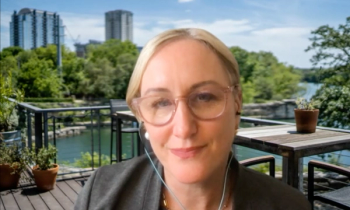
The pandemic has acted as a catalyst to increase the use of digital health and telemedicine, allowing providers to continue to deliver great care and even reach their rural patients, said Debra Patt, MD, PhD, MBA, executive vice president of Texas Oncology.

A new report from the CDC details how testing for HIV and care for the disease among at-risk populations were affected by the COVID-19 pandemic and proposes that self-testing may be a workable solution.
In the opening sessions at the Patient-Centered Oncology Care® conference, held September 23-24 both virtually and in Nashville, Tennessee, speakers focused on addressing disparities by getting involved and engaged with the community.

Rajesh Rajpal, MD, chief medical officer, global head of clinical medical affairs, Johnson & Johnson Vision, addresses ongoing and future innovations in eye lens technology and instruments for cataract surgery.

Coverage of our peer-reviewed research and news reporting in the health care and mainstream press.

Having the option of receiving care in their community instead of a large hospital located hours away is not only a benefit for many patients, but research is showing community oncology practices are a low-cost, high-quality provider of care, explained Jeff Patton, MD, executive chairman of Tennessee Oncology and CEO of OneOncology.

Remote patient monitoring includes urgent care uses, long-term monitoring to help keep patients with cancer out of the hospital by monitoring the effects of oncology treatment at home, and even voice monitoring to check for altered mental status, said Elizabeth Kwo, MD, MBA, MPH, the deputy chief clinical officer at Anthem BCBS, and a speaker at the 10th anniversary of Patient-Centered Oncology Care® conference.

Advanced dementia and serum albumin levels were better predictors of poor outcomes, the investigators said, among older patients with Clostridioides difficile infection (CDI).

Two posters presented at the European Society of Medical Oncology highlighted the unmet needs of cancer survivors.