



Clinical
Latest News

Advertisement
Latest Videos





CME Content


Advertisement
More News

Medical experts illustrate an array of characteristics presented in patients with HoFH.

The findings from among patients with myasthenia gravis (MG) could point the way to a potential new drug target, the authors said.

With most previous studies on ocular myasthenia gravis stemming from investigations the neurology field, the present investigators came to their conclusion via neuro-ophthalmic analysis.

The FDA has approved pirtobrutinib (Jaypirca) for the treatment of adult patients with relapsed or refractory mantle cell lymphoma following at least 2 lines of systemic therapy, including a previous Bruton tyrosine kinase (BTK) inhibitor.

The FDA has approved elacestrant (Orserdu) for the treatment of postmenopausal women or adult men with estrogen receptor–positive, HER2-negative, ESR1-mutated advanced or metastatic breast cancer with disease progression following at least 1 line of endocrine therapy.

Treatment strategies for patients with lower-risk MDS are examined.

Biosimilar products may be utilized as treatment options in PNH.

The report also suggests that ataxia telangiectasia and Rad3-related protein inhibition could be a valuable tool to overcome resistance.

A study published in Nature Medicine found that certain tumor mutations are more persistent and may predict immunotherapy responses more reliably than overall tumor mutational burden.

A panel of experts discuss the most important goals of therapy for patients with chronic lymphocytic leukemia, mantle cell lymphoma, and small lymphocytic lymphoma and the largest unmet needs in leukemia/lymphoma.
Brian Koffman, MD, and Callie Coombs, MD, provide the prevalence and incidence rates of chronic lymphocytic leukemia (CLL), mantle cell lymphoma (MCL), and small lymphocytic lymphoma (SLL), and describe how the diagnosis and management of CLL/MCL/SLL impacts a patient’s quality of life.
Callie Coombs, MD, and Brian Koffman, MD, provide an overview of chronic lymphocytic leukemia, mantle cell lymphoma, and small lymphocytic lymphoma, and explore the key differences between these disease states.

Cardiovascular risk can be significantly impacted by the presence of diabetes.
Experts highlight key factors when considering costs associated with diabetes treatment pathways.

Dr Haumschild leads a discussion regarding frontline MM treatment products as categorized by NCCN.
Raymond Thertulien, MD, PhD, highlights provider incentives for adherence to MM treatment pathways.

Paige Nues of the International Rett Syndrome Foundation explores the broader effect on a patient’s family members and caregivers.
Rett syndrome significantly impacts both patient and family’s quality of life.

Bruce Sherman, MD, FCCP, FACOEM, explores how to improve treatment for psoriasis and education surrounding diagnosing psoriasis for all skin phototypes.
Amy McMichael, MD, and Maria Lopes, MD, MS, review factors to evaluate when starting treatment and how to educate patients on the possible adverse events from that treatment.

This new study has found different labs followed similar practices, but the way they scored patients varied significantly.

A new review article shows how technologies like next-generation sequencing might help clinicians tailor care for myelodysplastic syndromes (MDS).

Compared with sorafenib, a combination of sintilimab and a bevacizumab biosimilar improved responses in patients with unresectable hepatocellular carcinoma (HCC).

Clarivate’s “Drugs to Watch” list for 2023 mentions 15 therapeutics, including teplizumab for type 1 diabetes (T1D).
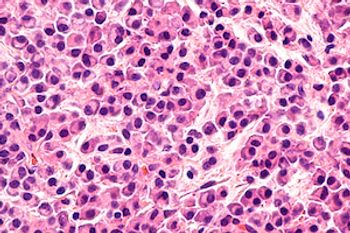
A recent study found that ixazomib was associated with better progression-free survival versus a placebo in multiple myeloma regardless of cytogenetic risk status.
Advertisement
Advertisement
Trending on AJMC
1
TrumpRx Launch Brings Savings—and Uncertainty
2
As Cencora Closes With OneOncology, Patton Says Terms Show “Trust”
3
Benefits, Tradeoffs of Medically Integrated Dispensing in Oncology Care: Katherine Tobon, PharmD, BCOP
4
Asundexian Reduces Risk of Stroke Recurrence in Phase 3 OCEANIC-STROKE Trial
5