


Clinical
Latest News
Advertisement
Latest Videos


CME Content


Advertisement
More News

A study found the use of interprofessional education improves students' knowledge and skill sets and promotes collaborative behaviors.

A phase III randomized trial, with results being presented in June at the American Society of Clinical Oncology Annual Meeting, found the addition of nelarabine to standard chemotherapy regimen in patients with T-cell malignancies can improve disease-free survival rates.

The FDA has approved daratumumab in combination with bortezomib, melphalan, and prednisone to treat patients with newly diagnosed multiple myeloma who are ineligible for autologous stem cell transplant.
Two posters presented at the American Psychiatric Association's 2018 Annual Meeting examined the factors patients with schizophrenia consider when deciding whether or not to take their medications and outcomes of a new medication to treat patients with schizophrenia and alcohol use disorder.

Ohio proposes safety checkpoints for patients with chronic pain when their painkiller dose is increased; Sandoz's proposed rituximab biosimilar is rejected by the FDA; the White House is vetting 3 potential nominees with stronger political backgrounds for secretary of the Department of Veterans' Affairs.

The chimeric antigen receptor T-cell therapy tisagenlecleucel has been approved for a second type of blood cancer; the National Institutes of Health has started recruiting individuals for a database that will include data on more than 1 million people; Kansas’ request to impose a 3-year lifetime limit on Medicaid benefits is testing just how open the Trump administration is to allowing states flexibility.

Chimeric antigen receptor (CAR) T-cell treatments are still new enough that there are still unknown regarding long-term side effects, which is something patients need to understand before they undergo treatment, said Shannon L. Maude, MD, PhD, of The Children's Hospital of Philadelphia.
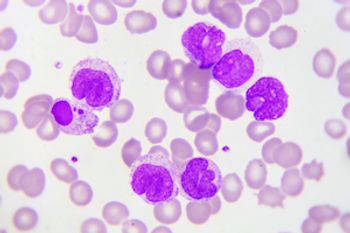
Researchers have identified a new gene that may predispose individuals to develop acute lymphoblastic leukemia (ALL). In addition, variants in the gene can influence patient response to treatment.
Every week, The American Journal of Managed Care® recaps the top managed care news of the week, and you can now listen to it on our podcast, Managed Care Cast.

This week, the top managed care stories included an announcement from CMS of creating direct provider contracting, plus a broad set of proposed rules for health information technology; new recommendations to improve postpartum care; a look at future competition among specialty drugs.

A new tool has been created to measure patient uncertainty to predict which patients might return to the emergency department (ED) after discharge.

Takeda Pharmaceutical has increased its bid to purchase Shire Plc to $64 billion; a process for reviewing drug patents has been ruled constitutional by the Supreme Court of the United States; at the University of California, Los Angeles, an “unspoken taboo” against reusing transplanted kidneys is being challenged.
A panel of experts in infectious disease and managed care to discuss management of HIV, including the need for individualized care and the role for newer treatments options.

HHS will shift federal funding aimed at reducing teen pregnancy rates to focus on programs that teach abstinence; relying on data about doctor-diagnosed arthritis alone may miss almost half of cases in middle aged adults; the Trump administration is seeking to reverse an Obama administration decision preventing healthcare discriminating against transgender patients.
With chimeric antigen receptor (CAR) T-cell therapy being so new, there is going to be a learning curve as providers become more educated about the treatments, the manufacturing process, and the toxicities, Houston Holmes, MD, MBA, FACP, a medical oncologist with Texas Oncology, explained at the Community Oncology Alliance’s (COA) 2018 Community Oncology Conference.

A novel drug that targets MDMX and MDM2, which inhibit a protein that suppresses tumors when they are overexpressed, has tripled the median survival rate in an animal model of human acute myeloid leukemia, according to new research.
Stacey McCullough, PharmD, senior vice president of pharmacy at Tennessee Oncology, discusses the importance of the pharmacist there are more advances being made and therapeutic options becoming available in oncology.

While clinicians can have a bad reaction to the idea of “cookbook medicine,” it can really result in patients getting the best treatment, said Derek Raghavan, MD, PhD, FACP, FRACP, president, Carolinas HealthCare System's Levine Cancer Institute.

Pembrolizumab (Keytruda) monotherapy as first-line treatment in locally advanced or metastatic non-small cell lung cancer (NSCLC) met its primary endpoint of overall survival in the Phase 3 KEYNOTE-042 trial when compared with standard of care platinum-based chemotherapy.
Every week, The American Journal of Managed Care® recaps the top managed care news of the week, and you can now listen to it on our podcast, Managed Care Cast.
While there has been progress with using chimeric antigen receptor (CAR) T cells to treat multiple myeloma, these treatments aren’t ready for prime time, said Nina Shah, MD, associate professor, University of California, San Francisco, School of Medicine.

This week, the top managed care news included final numbers for 2018 enrollment in Affordable Care Act plans; an increase in Medicare Advantage payments; National Public Health Week highlighted the importance of community relationships in improving health.

Enrollment for 2018 in Affordable Care Act plans is only slightly below figures from 2017; a rare breed of antibiotic-resistant bacteria is spreading in hospitals; a new company will develop off-the-shelf CAR T-cell therapies that do not need to be personalized to the patient.

Physicians using molecular therapies need to be educated on where the therapies are best used during treatment, and patients need to understand that the radiation is safe for those around them, said Joe O'Sullivan, MD, FRCR, clinical professor, School of Medicine, Dentistry and Biomedical Sciences, Queen's University Belfast.
With more oncology patients receiving oral therapies, the pharmacist plays an important role in patient education and follow-up, said Stacey McCullough, PharmD, senior vice president of pharmacy at Tennessee Oncology.
Advertisement
Advertisement
Trending on AJMC
1
TrumpRx Launch Brings Savings—and Uncertainty
2
5 Things to Know About the Oral GLP-1 Era
3
Exploring Identity, Appearance Experiences Among Patients With Alopecia
4
Even After 6 Years, Disease Progression Impacts Survival in Mantle Cell Lymphoma
5