






Clinical
Latest News
Advertisement
Latest Videos




Advertisement
More News

Jill Jarecki, PhD, chief scientific officer at Cure SMA explained the current data and potential for gender to impact the severity spinal muscular atrophy (SMA).

The procedure might work best in patients who have had multiple sclerosis (MS) for less than 10 years, the report said.

The study compared patients given-low-dose ketamine with those given morphine for acute pain relief.

Researchers conducting broad next-generation sequencing discovered more actionable variants in patients and families than they would have otherwise; they did so by using a universal approach, rather than sticking with clinical guidelines.

Quality of life for patients with multiple sclerosis (MS) could be better when they are off medication because they will not have adverse effects related to those medications, said John Corboy, MD, professor of neurology, University of Colorado Denver, School of Medicine.

Major issues still surround COPD treatment, noted Nicola Hanania, MD, MS, pulmonary critical care physician and director, Airway Clinical Research Center, Baylor College of Medicine, Houston, Texas.

The FDA has approved new indications for Foundation Medicine's liquid biopsy assay and also its tissue-based companion diagnostic for solid tumors.

Newer therapies have led to a boost in the number of patients with relapsed or refractory multiple myeloma (R/R MM) who are prescribed triplet regimens. As that shift has occurred, death rates appear to have dropped.
Previous research has found a link between a prior malignancy and secondary primary malignancy risk in patients with multiple myeloma. A new study suggests a similar association in follicular lymphoma.

When the first biologic to treat asthma was approved by the FDA in 2003, it needed to be administered subcutaneously in the physician’s office. Now, there are 3 options available for at-home use: mepolizumab, benralizumab, and dupilumab.

Study results demonstrate the multimillion-dollar savings achieved among patients with heart failure with reduced ejection fraction (HFrEF) following treatment initiation with sacubitril and valsartan.

Much of the population experiences disordered breathing at night, explained Krishna M. Sundar, MD, clinical professor, Pulmonary Division, Department of Medicine, and medical director, Sleep-Wake Center, University of Utah.

A study analyzed the personal and family history of patients who developed chronic obstructive pulmonary disease (COPD) before age 50.

In severely obese patients with previous myocardial infarction, metabolic surgery was associated with a lower risk of heart attack and new onset heart failure, according to study results published in Circulation.

A 72-year-old patient with Burkitt lymphoma was successfully treated with nivolumab after standard-of-care chemotherapy failed.

In a longitudinal cohort study, researchers identified 17 seemingly novel variants of the PDE6A retinitis pigmentosa gene, suggesting it may be amenable to gene therapy.

Although renal replacement therapy is a clinically meaningful end point, trials must include numerous patients and follow them for long periods of time, said Kunihiro Matsushita, MD, an associate professor in the Department of Epidemiology and Division of Cardiology at Johns Hopkins University.

This story was updated in February 2022 to show that this original story, published in October 2020, is out of date, and adds new information.

Initial preliminary efficacy and safety data are expected sometime next year, stated Aditya Bardia, MBBS, MPH, breast medical oncologist, Massachusetts General Hospital, Harvard Medical School.
Early treatment of infants with spinal muscular atrophy (SMA) can drastically improve motor function for patients, explained Jill Jarecki, PhD, chief scientific officer at Cure SMA.

Andre Goy, MD, chairman, director, and chief of the Division of Lymphoma at John Theurer Cancer Center in Hackensack, NJ, discussed the potential benefits of using CAR T-cell therapies as a second-line treatment.

Two abstracts presented at a recent multiple sclerosis meeting examined depression in pregnancy and pregnancy outcomes in ozanimod trials.
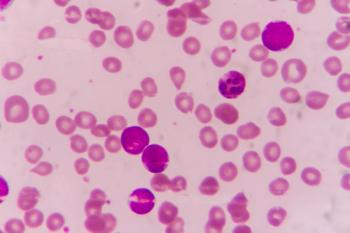
Their study outlines several treatments being investigated for the treatment of patients with myelofibrosis and other myeloproliferative neoplasms, generally after they have become resistant or intolerant to Janus kinase inhibition.

Finerenone slowed chronic kidney disease (CKD) progression by 18% and cut cardiovascular (CV) events by 14%, according to phase 3 trial results.

Despite the benefits of switching to a different mode of action in the second line, almost half of patients with rheumatoid arthritis were cycled to a second tumor necrosis factor inhibitor.
Advertisement
Advertisement
Trending on AJMC
1
CMS Rule Ends Medicaid, CHIP Funding for Pediatric Gender Care
2
Oral JAK Inhibitors Boost Hair Regrowth Odds in Alopecia Areata
3
Coroner Reports Pennsylvania's Sixth Measles-Associated Death
4
Panel Calls for Earlier Detection, Clearer Pathways in Rare Glomerular Disease
5