





Clinical
Latest News
Advertisement
Latest Videos



Advertisement
More News
In the final discussion, expert panelists navigate treatment sequencing in MM treatment strategies.
Dr Nadeem provides community and clinical strategies to treat patients with MM.

Callie Coombs, MD, discusses how pirtobrutinib (LOXO-305), a Bruton tyrosine kinase inhibitor (BTKi) being investigated in the BRUIN trial, might impact the BTKi landscape.
Brian Koffman, MD, reviews how Bruton tyrosine kinase inhibitors are addressing unmet needs in chronic lymphocytic leukemia, mantle cell lymphoma, and small lymphocytic lymphoma, and what unmet needs remain.

The effects of physical activity and exercise have previously been reported, with data pointing to improvements in quality of life as well as such clinical markers as immune response in tumors

The method had high rates of sensitivity and specificity, although its sensitivity was somewhat lower in cases of localized prostate cancer.
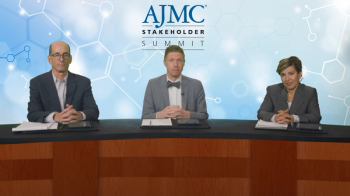
Maria Lopes, MD, MS, reviews how to educate providers on the risks and burdens of psoriasis and how to improve early diagnosis and treatment for all skin phototypes and ethnicities.
Bruce Sherman, MD, FCCP, FACOEM, underlines how to support patients financially to afford therapies and maintain adherence.

Data from 2 prospective studies showed correlations between impaired patient health-related quality of life (HRQOL) and disease severity, as well as correlations between the health of caregivers and their HRQOL and caregiver burden.

Dr Brinton provides an overview of guideline-directed therapies in HoFH.

Seth Baum, MD, and Erin Michos, MD, MHS, discuss pediatric diagnosis of homozygous FH.

A novel test developed at Cedars-Sinai Medical Center was able to detect and characterize even microscopic amounts of prostate cancers and could potentially help individualize treatment in the clinical setting.

Having models like these that produce more plausible results are crucial for decision-making in an era of targeted treatments that often come with immature data, argued researchers of their findings for minimal residual disease (MRD) in newly diagnosed multiple myeloma (NDMM).

The approval is based on results from the phase 3 TROPiCS-02 trial demonstrating overall and progression survival benefits with sacituzumab govitecan compared with physician’s choice of single-agent chemotherapy.

The study suggests there is measurable amount of microbiome within the soft tissue sarcoma tumor environment, which was previously thought to be sterile.
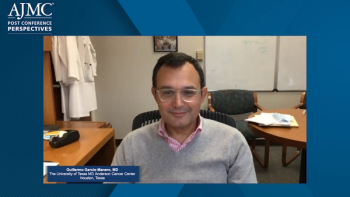
In his closing thoughts, Dr Garcia-Manero provides an overview of the treatment management approach for patients with MDS.
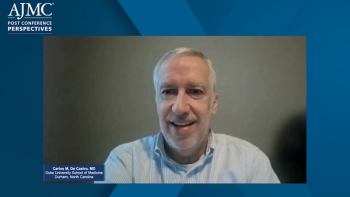
Dr De Castro explores considerations surrounding cost in treatment of PNH.

Known to be a contributing factor to polyp development at high levels, periostin’s potential as a biomarker for eosinophilic chronic rhinosinusitis (ECRS) severity was investigated in a new study in which outcomes were compared between patients who had ECRS and those with non-ECRS.

Health care expert and lived experience panels came to a consensus on several aspects that should be considered in the decision to offer and continue active surveillance for prostate cancer.
Dr Lipe shares disparities between academic and community practice settings for patients with MM.
Highlighted are updates in NCCN guidelines for frontline MM treatment strategies.

Treatment strategies for diabetes should include a comprehensive approach involving multidisciplinary care teams.
Treatment strategies for diabetes should include a comprehensive approach involving multidisciplinary care teams.
A panel of experts discuss the provider, payer, and patient challenges that must be considered with BTK inhibitors in chronic lymphocytic leukemia, mantle cell lymphoma, and small lymphocytic lymphoma.
Callie Coombs, MD, discusses recent changes you have seen in the treatment of chronic lymphocytic leukemia (CLL), mantle cell lymphoma (MCL), and small lymphocytic lymphoma (SLL) and provides an overview of the Bruton tyrosine kinase inhibitor landscape for CLL, MCL, and SLL.
Advertisement
Advertisement
Trending on AJMC
1
TrumpRx Launch Brings Savings—and Uncertainty
2
As Cencora Closes With OneOncology, Patton Says Terms Show “Trust”
3
Benefits, Tradeoffs of Medically Integrated Dispensing in Oncology Care: Katherine Tobon, PharmD, BCOP
4
Asundexian Reduces Risk of Stroke Recurrence in Phase 3 OCEANIC-STROKE Trial
5