




IVBM
Latest Content
Advertisement
Latest Videos



Shorts

2:05
Bridging Geographic Gaps in Specialized Cancer Care: Christos Vaklavas, MD
a month ago
by
Brooke McCormick(+1 more)

1:57
Policy, Technology Misalignment Slows NSCLC Genomic Testing: Robert Kratzke, MD
3 months ago
by
Brooke McCormick(+1 more)
0:53
Why Nurse Navigators are Vital to Oncology Care: Christopher A. D'Avella, MD
6 months ago
by
Giuliana Grossi(+1 more)
0:49
Why Clinical Trials Are the Key to Beating Cancer: Amir Fathi, MD
8 months ago
by
Sabrina McCrear(+1 more)
0:30
How Academic Centers Can Support Community Hospitals: Andrew Yee, MD
8 months ago
by
Sabrina McCrear(+1 more)
1:09
Advanced Multiple Myeloma Therapies Require Dedicated Teams, 24/7 Support for Safe Patient Care: Ameet Patel, MD
9 months ago
by
Brooke McCormick(+1 more)
0:35
Access, Geography, and Cost Limit Patient Participation in Clinical Trials: Susan Vadaparampil, PhD, MPH
9 months ago
by
Brooke McCormick(+1 more)
1:00
How Successful Medically Integrated Dispensing Works in Practice: Kenneth Komorny, PharmD, BCPS
9 months ago
by
Brooke McCormick(+1 more)
1:03
Weighing the Pros, Cons of Medically Integrated Dispensing: Katherine Tobon, PharmD, BCOP
9 months ago
by
Brooke McCormick(+1 more)
1:15
Strengthening Trial Infrastructure to Broaden Patient Access: Tina Bhatnagar, DO
9 months ago
by
Maggie L. Shaw(+1 more)
Podcasts
Advertisement
More News

Philadelphia oncology leaders tackle gaps in biomarker testing, breast cancer advances, myeloma innovation, and clinical trial equity.

Experts discussed value-based oncology care, CAR T-cell therapy access gaps, myeloma advances, and bispecific therapy challenges.

Experts examined oncology care innovation, access gaps to CAR T-cell therapy, advances in myeloma care, and partnerships in value-based care.

Justin Favaro, MD, discusses independent oncology models, ACA challenges, and strategies to reduce health care costs at IVBM Charlotte 2026.

Parth Desai, MBBS, MD, discusses how clinicians balance liquid biopsy, tissue testing, and fast-start chemo to personalize non–small cell lung cancer treatment.

Discussion covered lung cancer biomarker testing, care in hematologic malignancies, health equity in cancer screening, and medically integrated pharmacy dispensing
Clinical trials are evolving toward decentralized, patient-centered models, but enrollment challenges, outdated protocols, and infrastructure gaps persist.

New myeloma therapies—CAR T, bispecific antibodies, and oral CELMoDs—expand options, protect QOL, and raise hopes of cure, notes Asya Nina Varshavsky-Yanovsky, MD, PhD.
Hayley Knollman, MD, explains how ctDNA and genomic testing impact ER-positive metastatic breast cancer care, guiding sequencing decisions amid evolving HER2 categories.
Oral semaglutide hasn't shifted prescribing as expected. Shawn Davis, MD, discusses what access and policy changes are needed to close the coverage gap.
Amy Leader, DrPH, MPH, explains that trust is key to clinical trial enrollment at an Institute for Value-Based Medicine event in Philadelphia.
Equity gaps in lung cancer molecular testing persist; reflex testing and nurse navigation speed care, while coverage and access barriers stall outcomes
Reflex molecular testing and nurse navigation cut delays in lung cancer care, helping more patients get targeted results before first-line therapy, says Christopher D'Avella, MD.
With obesity costing $1.4 trillion annually, Shawn Davis, MD, argues the return on treatment investment is clear if we build systems to measure it.
Shawn Davis, MD, explains why shifting from BMI to adiposity-based care could transform how health systems allocate resources and reduce obesity-driven hospital costs.

Learn how CRS and ICANS present in patients undergoing immunotherapy and what clinicians should know about recognizing and managing these toxicities.

Oncology has never had more to offer, and yet it is straining under the weight of its own progress.

Delivering value-based oncology care requires both scientific breakthroughs and deliberate system redesign, experts concurred during this February IVBM in Los Angeles.

Although they covered diverse topics across the cancer continuum, the event’s 4 panel discussions shared a common focus on advancing more equitable and coordinated care.

Discussions at this February IVBM evening covered advances in biomarker testing in lung cancer to the real-life challenges of maintaining diversity in clinical trials.

Oncology leaders appearing in Atlanta, Georgia, including several from Winship Cancer Institute from Emory University School of Medicine, show how NGS biomarkers and MRD reshape NSCLC and hematology care, tackling payer hurdles and health equity gaps.

Panelists at a Boston Regional Institute for Value-Based Medicine event examined trial diversity, integrated dispensing, and evolving oncology pathways.

Tina Bhatnagar, DO, speaks to the importance of diversity in clinical trials and the need to remove barriers, enroll underrepresented backgrounds, and reflect real-world health conditions.

Kathrin Dvir, MD, MSc, concludes by highlighting the importance of outreach, education, and trusted messaging to improve breast cancer screening adherence.
Ameet Patel, MD, concludes by outlining strategies to overcome operational, financial, and payer challenges in delivering advanced multiple myeloma therapies.
Kathrin Dvir, MD, MSc, discusses how biomarker-driven care, targeted therapies, and evolving sequencing are shaping modern breast cancer treatment.
Ameet Patel, MD, explains how multiple myeloma treatment settings depend on safety, logistics, and patient needs.
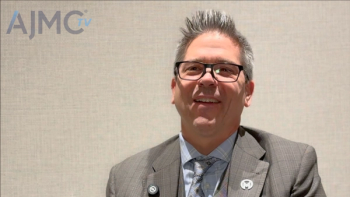
As more oral cancer therapies become available, medically integrated dispensing models are increasingly vital, says Kenneth Komorny, PharmD, BCPS.
Advertisement
Advertisement
Trending on AJMC
1
Bepirovirsen Approval Offers New Option for Chronic HBV Treatment
2
Inhaled Amikacin Raises Culture Conversion in New MAC Lung Disease
3
Pulmonary Embolism Can Affect Elite Athletes, Too: Samantha Pettigrew, MD
4
Uninsured Rate Rises to 11.2% as Coverage Erodes Before Medicaid Cuts
5