
Commentary|Videos|February 24, 2026
A Multilevel Strategy for Diversity in Clinical Trials: Tina Bhatnagar, DO
Author(s)Maggie L. Shaw, Bhavana (Tina) Bhatnagar, DO
Fact checked by: Christina Mattina
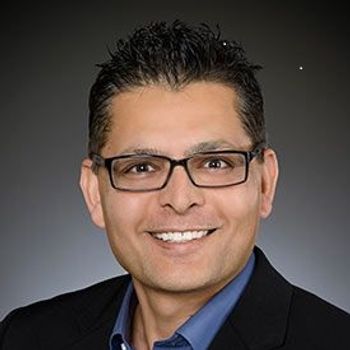
Tina Bhatnagar, DO, speaks to the importance of diversity in clinical trials and the need to remove barriers, enroll underrepresented backgrounds, and reflect real-world health conditions.
Advertisement
The push for diversity in clinical trials has emerged as a critical priority within the health care field. Organizations including the National Institutes of Health (NIH) have taken a stance on this issue, advocating for
As Bhavana (Tina) Bhatnagar, DO, notes in this interview, “It's a big topic right now, and even the NIH has put in a plug to make sure that there is diversity in the clinical trial space.” Bhatnagar is a
Enrolling individuals from underrepresented backgrounds is an essential first step toward achieving equity in research, and it requires a dual-track educational approach targeting patients and their health care providers. Education is especially vital for doctors who do not practice within large academic medical centers, as they may not be fully versed in the ins and outs of clinical trials. On the patient side, there is a clear need for increased awareness regarding the general importance of clinical research and the specific reasons why enrollment is beneficial for the individual and the community.
Institutional buy-in and the development of local infrastructure are also vital components for success. Currently, much of the existing trial infrastructure is concentrated within academic centers, but these locations may not be the most effective for enrolling minority populations, Bhatnagar says. In clinical practice, many patients show a high degree of hesitation when they are asked to travel to a different facility or a distant location to receive their care. To solve this barrier, clinical trials should be opened within local community hospitals. However, this requires a significant investment in personnel and resources to ensure the trials have the proper infrastructure to be conducted correctly.
Furthermore, the responsibility for diversity may fall on study sponsors to design trials that include a broad spectrum of patients. A major existing barrier is that many trials are currently designed with the intent to enroll only the fittest possible patients, but as Bhatnagar explains, “In the real world, patients have other medical problems. They have other medical comorbidities.”
Future trial designs must account for these real-world health conditions, as well as the practical time commitments and visit frequencies that can prevent diverse patients from participating. By involving community sites in the initial design phase, trials can be better tailored for broad implementation in the community. Building this large-scale infrastructure to support diverse enrollment will eventually benefit the entire field of
Advertisement
Related to this article
The editor in chief of Evidence-Based Oncology, who was recently named medical director of Precision Medicine for The US Oncology Network, discussed milestones met and those still to be achieved.

Cleveland roundtable panelists across 4 disease states name access, not evidence, as the shared barrier to care.

Alice Hall-Partyka, JD, a partner at Crowell & Moring explains the lawsuits challenging CMS' Medicaid rule on pediatric gender care and its legal weak points.

Siva Mohan, MD, explains how drug costs drive silent nonadherence, PA burden, and biosimilar hesitancy, and what payers can do about it.

On National Latinx AIDS Awareness Day, experts outline HIV prevention gaps in Hispanic communities and how payers can ease PrEP access.

HR 1 brings Medicaid work requirements and narrower immigrant eligibility by January 2027, and CBO projects 10 million more uninsured by 2034.

CMS ends ACA subsidies for 189,000 enrollees with duplicate Medicare, Medicaid, or CHIP coverage or listed as deceased, with a 30-day dispute window.

Using baseline samples from 177 patients in the VISION/HO141 trial, researchers built a functional prognostic model for CLL that outperformed the CLL-IPI.
Advertisement
Advertisement
Trending on AJMC
1
PBM Reform and Supportive Care Needs: Nicolas Ferreyros
2
Coroner Reports Pennsylvania's Sixth Measles-Associated Death
3
5 Things to Know About the One Big Beautiful Bill Act
4
Automated HCV Surveillance Shows Promise But Needs Validation
5