

Opinion|Videos|June 24, 2026
CEPHEUS at 6 Years: Counseling Transplant-Ineligible Patients and Managing DVRd in Frail Populations
Cepheus data shows durable 6‑year control with DVRd, prompting new counseling and tailored dosing for frail, transplant‑ineligible myeloma patients.
Advertisement
Episodes in this series
In this episode, 'CEPHEUS at 6 Years: Counseling Transplant-Ineligible Patients and Managing DVRd in Frail Populations,' the panelists/expert pharmacists, hematologists, and oncologists explore the following questions:
- CEPHEUS now shows that nearly 60% of transplant-ineligible patients treated with DVRd were alive and progression-free at 6 years. Could this durability change how you counsel transplant-ineligible patients about their long-term expectations at diagnosis?
- With efficacy benefits seen across frailty subgroups, and safety described as consistent with established drug profiles, how might you approach dose modifications and supportive care in frail or older transplant-ineligible patients on DVRd moving forward?
The panelists examined the six-year CEPHEUS durability data, showing nearly 60% of transplant-ineligible patients alive and progression-free, and discussed how this level of efficacy meaningfully changes the shared decision-making conversation with patients at diagnosis, offering a more optimistic long-term prognosis while also prompting important questions about whether the impressive outcomes with quadruplet therapy should cause clinicians to reconsider the threshold for transplant eligibility. The discussion also highlighted how this data reinforces the broader push toward quadruplet induction even in borderline or frail patients, with the panelists emphasizing that the definition of frailty must remain individualized, noting that some patients over 80 may be robust enough to tolerate a full quadruplet regimen, while others may benefit from starting at reduced doses of lenalidomide with the option to escalate in subsequent cycles based on tolerability.
Throughout the conversation, the experts provide a comprehensive reflection on the field and the factors that may shape how clinicians approach care moving forward.
The next episode in this series, 'Examining BelaDRd, BCMA Targeting, and Contextualizing Early MRD Data,' features the panelists advancing their conversation on multiple myeloma and focusing on where a BCMA-targeting antibody-drug conjugate like belantamab mafodotin fits into frontline therapy sequencing, the real-world tolerability concerns around ocular toxicity in the upfront setting, and how the early MRD negativity rates observed with BelaDRd compare to those seen with DRd and DVRd.
Advertisement
Related to this article

Panelists engaged in a debate regarding using complement inhibitors in geographic atrophy, gauging public sentiment with a deciding vote.

A session at AAO 2026 highlighted how big data and minimally invasive glaucoma surgery (MIGS) could be utilized to help patients receive peak care.

The opening session of AAO 2026 featured a keynote speech discussing how artificial intelligence (AI) will play a part in health care.
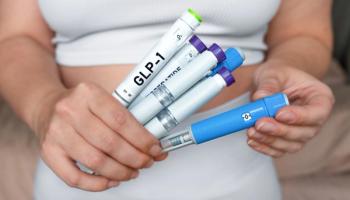
Incidence of diabetic macular edema and the need for glaucoma surgery were reduced after treatment with glucagon-like peptide-1 receptor agonists.

Medicaid expansion was associated with lower colorectal cancer mortality, with the largest reductions in Hispanic patients and stage IV disease.

TP53 mutations occurred in 3% of myeloproliferative neoplasms (MPNs) but 10% of myelofibrosis or blast-phase cohorts in a review of 11 cohort studies.

Amanda Velazquez, MD, discusses GLP-1 formulary strategies, overcoming prior authorization hurdles, and building scalable obesity care infrastructure.
Cepheid's Connie Savor, MD, MBA, explains where its 13-pathogen respiratory panel fits in diagnostic stewardship and antibiotic decisions.
Advertisement
Advertisement
Trending on AJMC
1
MASH Fibrosis, Not Resolution, Predicts Mortality: Zobair Younossi, MD
2
5 Things to Know if Retatrutide Is Classified as a Biologic
3
Full POLARGO Data Reveal OS, Safety for Pola-R-GemOx in DLBCL
4
FDA Approves Once-Monthly Subcutaneous Olanzapine for Schizophrenia
5