Now Playing
Experts unpack new myeloma regimens—quadruplet induction, dual maintenance, earlier smoldering therapy—plus real-world access and cost hurdles.
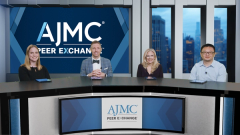
Welcome back to another AJMC Peer Exchange series. In this episode titled, 'Setting the Stage: The Most Significant Shifts in Frontline Multiple Myeloma Treatment,' Ryan Haumschild led the conversation about the following question:
The panelists highlighted three defining shifts that have reshaped the frontline multiple myeloma treatment landscape in recent years, beginning with the broad adoption of quadruplet induction therapy, a meaningful departure from the previous practice of reserving four-drug regimens for high-risk patients based on cytogenetic factors, with evidence now supporting universal quadruplet use across the newly diagnosed population except in cases of frailty or advanced age. The discussion also addressed the evolution of maintenance therapy, noting a transition from lenalidomide monotherapy to doublet maintenance combining daratumumab with lenalidomide in both standard- and high-risk patients, reflecting the field's commitment to achieving deeper, more durable responses following induction.
Throughout the conversation, the experts provide a comprehensive reflection on the field and the factors that may shape how clinicians approach care moving forward.
In the next episode, 'From Satisfaction to Solutions: Unmet Needs, Future Frontline Regimens, and Anti-CD38 Formulary Management in NDMM,' panelists will continue their discussion on multiple myeloma and highlight the most significant unmet needs remaining in newly diagnosed multiple myeloma, the panelists' vision for the ideal frontline regimen of the future, and how the availability of multiple anti-CD38 options is shaping both clinical treatment selection and pharmacy formulary management.