Phentolamine 0.75% (Ryzumvi) won FDA approval for presbyopia based on the phase 3 VEGA-2 and VEGA-3 trials.
Deborah Doroshow, MD, PhD, discusses lung cancer trial access, targeted therapy advances, and treatment gaps in part 2 of her interview.
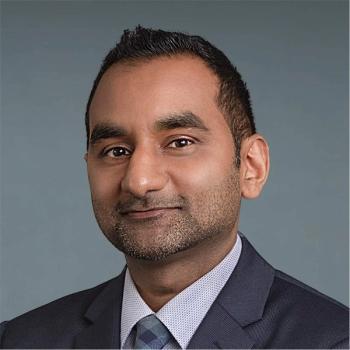
In part 2 of her interview with The American Journal of Managed Care®, Deborah Doroshow, MD, PhD, assistant professor of medicine at the Tisch Cancer Institute,
Regarding clinical trials, Doroshow explains that she introduces the concept early in a patient's journey since most people, even those connected with a health profession, have very little familiarity with them. She works to dispel the common misconception that trials are only for patients who have run out of other options, instead framing them as part of the “full menu of available treatments” to be considered at every stage of a patient's cancer experience. Doroshow also reassures patients that declining a trial will not disappoint her, as offering all potential options is simply the right thing to do.
She next focuses on 2 main categories of targeted therapies: mutation-targeting pills and antibody drug conjugates (ADCs). Doroshow describes ADCs as a rapidly expanding area with far more trials than the field can reasonably pursue, making thoughtful trial design all the more critical. She also highlights progress in identifying targetable mutations, pointing to the emergence of KRAS G12D inhibitors alongside the already established KRAS G12C inhibitors as a promising development for patients with lung cancer and other tumor types.
When asked about the biggest unmet need in lung cancer care, Doroshow points not to a lack of drugs but to a lack of access. She shares examples of patients whose treatment was delayed by months due to insurance changes, immigration complications, or the challenge of traveling long distances to receive care. For Doroshow, meaningful progress in oncology requires ensuring that all patients, regardless of circumstance, can actually reach and benefit from the treatments being developed.
“These kinds of barriers meaningfully limit people's ability to get the treatments that could help improve their lives and extend their lives,” she said. “So, we're not doing a good job until everybody has access to these treatments.”
Watch part 1