
Opinion|Videos|May 5, 2026
Earlier Intervention, Lasting Benefit: What VESALIUS-CV Tells Us About Timing and Future Guidelines
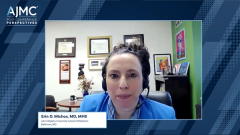
Author(s)Erin D. Michos, MD, MHS
Landmark analyses from VESALIUS-CV reveal that the cardiovascular benefits of intensive LDL lowering build meaningfully over time in primary prevention—reinforcing the "lower for longer" principle and pointing toward lower LDL targets for high-risk diabetic patients.
Advertisement
Episodes in this series
A key insight from VESALIUS-CV is how the timing of benefit differs between patients with and without established atherosclerosis. A landmark analysis revealed that while patients with known atherosclerotic disease experienced earlier separation of event curves, those with diabetes but no documented disease saw substantial benefit emerge after approximately one year of treatment—ultimately achieving a 41% risk reduction at that timepoint. This pattern reflects the distinct biological mechanisms at work: in patients with existing plaque, intensive LDL lowering stabilizes and may partially regress atherosclerotic lesions; in patients without established disease, the benefit comes from slowing plaque formation in the first place. The message, in both cases, is that starting sooner yields more cumulative benefit.
The implications for future guidelines are significant. Although the 2026 ACC/AHA dyslipidemia guideline was finalized before the main VESALIUS publication, its recommendations for high-risk diabetic patients—who carry an LDL goal of below 70 mg/dL and may receive high-intensity statins or non-statin add-ons as a class IIa recommendation—are directionally consistent with what VESALIUS demonstrated. The trial's diabetic subgroup achieved LDL levels around 44 mg/dL, suggesting that the sub-70 target may itself be insufficiently ambitious for this population.
The study's safety profile was reassuring over a nearly 5-year follow-up, with no meaningful excess of adverse events in the evolocumab arm. If future guideline iterations incorporate these data, clinicians may see stronger encouragement to pursue PCSK9 inhibition in high-risk primary prevention patients with diabetes—potentially collapsing the distinction between primary and secondary prevention thresholds for this group, and supporting a single, uniformly low LDL target for all high-risk individuals.
Advertisement
Related to this article

Phase 3 wins for ianalumab and dazodalibep bring targeted therapies closer for Sjögren disease as patients face diagnostic delays and high costs.

Although PMOS Awareness Month has ended, the conversation continues, with experts saying closing diagnostic and care gaps requires ongoing efforts.
Invivyd's VYD2311 shows superior safety and tolerability vs Comirnaty in the phase 3 LIBERTY trial, with no vaccine interference.
Survodutide achieved up to 13.1% weight loss vs 3.1% with placebo at 76 weeks in adults with obesity and T2D in the phase 3 SYNCHRONIZE-2 trial.

A rare case of soft-tissue sarcoma spreading to the heart shows how multimodal imaging guided diagnosis and care in a 36-year-old man.

Weekend catch-up sleep was associated with lower odds of overactive bladder and milder symptoms, with the benefit concentrated in the first 1.5 hours.

The triple agonist also lowered HbA1C by up to 1.6% over 80 weeks, with up to 40% of participants reaching normal levels.

A network meta-analysis found vibegron outperformed mirabegron and tolterodine on several OAB efficacy measures but had higher odds of adverse events.
Advertisement
Advertisement
Trending on AJMC
1
Pharmacists Bridge the Vaccine Trust Gap as COVID-19 Persists
2
Pipeline Advances in Sjögren Disease Bring Targeted Therapies Closer
3
FDA Approves Pirtobrutinib for Untreated CLL/SLL Without 17p Deletion
4
Who Recommends COVID-19 Vaccines Without ACIP?
5