As CKCC nears its sunset, kidney care leaders urge CMS to preserve a dedicated, nephrologist-led accountable care model for advanced kidney disease.
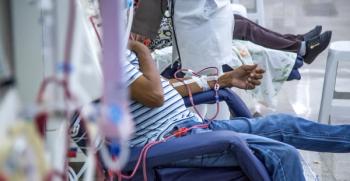
The benefits of exercise are particularly notable for patients who are dependent upon dialysis, a new review suggests.
A new report shows that physical exercise can lead to numerous benefits for people with
Those are among the top-line findings of a new review and meta-analysis that was based on 82 studies. The report was
“One significant advantage of physical exercise therapy for CKD is its broad applicability,” they wrote. “The physical exercises can take various forms, including aerobic exercise, resistance training, and a combination of both.”
Still, despite a number of reports linking exercise to benefits in patients with CKD, they said, there have been few attempts to look holistically at the issue and summarize what randomized clinical trials and other research have found.
The authors searched scientific databases seeking randomized controlled trials related to CKD and physical exercise. The search ultimately yielded 82 trials that met the study’s inclusion criteria. A total of 4192 patients were included in those trials. Approximately two-thirds of the trials related to patients who were dialysis-dependent, and the remaining trials evaluated exercise in patients who were not dialysis-dependent. The follow-up periods of the trials varied widely, from 4 weeks to 5 years.
Fourteen of the studies in the analysis looked at the effects of exercise on all-cause mortality. The pooled results of those studies showed a 46% reduction in the risk of death (95% CI, 0.31-0.93; P = .026). However, when the investigators performed a subgroup analysis separating the 10 studies focused on dialysis-dependent patients from 4 studies of non-dialysis-dependent patients, they found that the reduction in death was only statistically significant in the dialysis-dependent group (risk ratio [RR], 0.45; 95% CI, 0.22-0.89; P = .022).
The findings suggest other benefits from exercise. Six-minute walking test results improved by a weighted mean difference of 50.99 meters after patients began an exercise intervention, according to pooled results from 32 studies. Those benefits were significant regardless of dialysis status, the authors found.
Blood pressure did not improve by a significant amount in the pooled results of 20 studies that assessed systolic blood pressure and 21 studies that addressed diastolic blood pressure. However, within the subgroup of patients who were dependent on dialysis, systolic blood pressure was reduced by a statistically significant 9.27 mmHG (95% CI, -14.95, -3.58), they said.
Pulmonary outcomes were reported in 20 of the studies, and the authors found that forced vital capacity, peak oxygen uptake, and forced expiratory volume in the first second (FEV1) all improved with exercise.
The authors also found that dialysis adequacy improved with exercise, and residual renal function was better maintained when patients were on an exercise plan.
The analysis makes clear that exercise is an important component of CKD care.
“The pooled results of this work consistently demonstrated the benefits of various modes of physical exercises for CKD patients in multiple aspects, including all-cause mortality, cardiopulmonary function, inflammation conditions, and nutritional status, as well as residual renal function for pre-dialysis patients and dialysis adequacy for dialysis-dependent patients,” the authors wrote.
The authors said clinicians should
References
1. Chen Y, Ren S, Yao X, et al. Benefits of physical exercises in chronic kidney disease: a systematic review and meta-analysis of randomized controlled trials. Ren Fail. 2026;48(1):2654288. doi:10.1080/0886022X.2026.2654288
2. Rivière D. Ordonnance de prescription de l’activité physique [Medical prescription of physical activity]. Rev Prat. 2020;70(3):279-285.