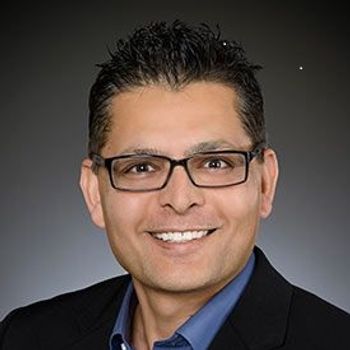
The editor in chief of Evidence-Based Oncology, who was recently named medical director of Precision Medicine for The US Oncology Network, discussed milestones met and those still to be achieved.
Racial gaps in cancer pain care; CGT program reimbursement hurdles; FIB4 liver screening underused; OCM legacy debated; MM bispecifics face access gaps.
A study presented at the
Lead author Ila Sruti, MPH, an outcomes researcher at Ontada, told The American Journal of Managed Care® (AJMC®) that the cancer-specific and treatment-specific nature of the disparities means interventions cannot follow a one-size-fits-all approach, and called for future research incorporating claims data, sociodemographic variables, and multivariable analyses to determine how much of the variation stems from patient preference, provider bias, access to supportive care, or broader systemic barriers.
Panelists at a recent discussion on cell and gene therapy (CGT) delivery said institutions frequently underestimate the operational, financial, and governance complexity of programs for CAR T cell, tumor-infiltrating lymphocyte, and gene therapies, often assuming the products can be ordered like conventional drugs. Speakers urged centralized governance structures that include often-overlooked voices such as ethicists and legal teams and advised starting small and building on institutional strengths.
The speakers also noted that community hospitals face steeper readiness gaps than academic centers due to limited infrastructure for apheresis, toxicity management, and accreditation. Reimbursement emerged as the greatest challenge, with roughly 60% of physicians citing financial constraints as access barriers and missing permanent billing codes delaying treatment; looking ahead, panelists expect allogeneic and in vivo therapies to simplify delivery but said current "buy and bill" reimbursement models may need fundamental change, urging institutions to dedicate staff, understand payer coverage versus payment realities early, and treat CGT as an enterprise-wide initiative rather than a single service line.
Routine screening for metabolic dysfunction–associated steatotic liver disease (MASLD) remains inconsistent across primary care and obesity medicine despite the availability of the fibrosis 4 (FIB4) index, a low-cost, guideline-supported calculation using age, liver enzymes, and platelet count that can flag high-risk patients before irreversible damage occurs. Speaking on a recent AJMC podcast episode, Chika Anekwe, MD, of the Massachusetts General Hospital Weight Center, described FIB4 as "guideline-supported and noninvasive" yet "notoriously underutilized," while Naim Alkhouri, MD, of the Clinical Research Institute of Ohio, said the FDA approvals of resmetirom and semaglutide for the more aggressive metabolic dysfunction-associated steatohepatitis have raised the urgency of early detection now that actionable treatment exists.
Both speakers pointed to noninvasive blood tests, point-of-care imaging, telemedicine, and culturally tailored interventions as ways to close access gaps for underserved and rural patients, particularly given the disproportionate impact of MASLD on Hispanic patients linked to the PNPLA3 gene variant, and agreed that screening should become a routine part of care for any patient with elevated metabolic risk.
Seven oncology leaders reflected on the 10-year legacy of the Oncology Care Model (OCM). Stuart Staggs, MSIE, of McKesson pointed to patient distress screening as the most compelling measure of change, noting more than 1 million assessments were conducted in 18 months under the successor Enhancing Oncology Model to address food insecurity, financial hardship, and transportation barriers, while Richard Ingram, MD, of Shenandoah Oncology said root-cause analysis of hospitalizations enabled earlier intervention and his practice extended OCM-style care plans to every patient. David Wenk, MD, of Florida Cancer Specialists & Research Institute credited standardized statewide protocols for consistency across metropolitan and rural sites, and Susan Escudier, MD, of Texas Oncology said the model prompted oncologists to weigh drug cost when outcomes were equivalent. Johnetta Blakely, MD, MS, MMHC, of Tennessee Oncology said the OCM underemphasized care pathways and leaned too heavily on cost, and Ted Okon, MBA, of the Community Oncology Alliance offered the sharpest critique, arguing that rather than building on what worked, CMS abandoned the OCM for a successor program now plagued by practice dropouts and missing performance reports.
Swarup Kumar, MD, assistant professor of medicine in the Division of Hematology and Medical Oncology at UConn Health, discussed the daily challenge of bringing bispecific antibodies, an immunotherapy that has transformed outcomes for relapsed/refractory multiple myeloma and is expanding into cancers such as small cell lung cancer, to community oncology practices, where the adverse effect profile, monitoring requirements, and step-up dosing phases can feel daunting for clinicians managing patients with multiple comorbidities and limited hospital infrastructure.
Kumar's team is closing that gap by identifying high-risk patients early, involving social work and supportive care teams from the start, leveraging the institution's charity care model, exploring outpatient administration protocols, and partnering with the International Myeloma Foundation to extend resources into the community; he noted that some patients actually prefer inpatient step-up dosing because it is less disruptive than repeated outpatient visits, and said that as bispecifics move beyond myeloma, "it's only imperative that... everybody is prepared to handle the adverse events."