
Opinion|Videos|November 2, 2026
HS Treatment Window of Opportunity: Moderate Disease and Early Biologic Therapy
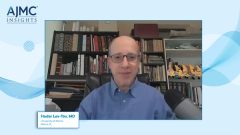
Author(s)Hadar Lev-Tov, MD
Earlier treatment appears to improve the likelihood of remission in HS. Dr. Lev-Tov challenges clinicians to rethink what counts as moderate disease and to consider advanced therapies sooner.
Advertisement
Episodes in this series
This episode, "HS Treatment Window of Opportunity: Moderate Disease and Early Biologic Therapy," features Dr. Lev-Tov explaining why timing matters in HS treatment.
Dr. Lev-Tov introduces the concept of a therapeutic window of opportunity. In the data sets he describes, patients who started appropriate treatment with biologics early in the disease had a higher likelihood of achieving remission and improvement.
He is careful to add two qualifications. Treatment should not be withheld from patients who present late. Not everyone needs a biologic at the first visit. Still, the concept suggests that when diagnosis is delayed, clinicians may be catching patients too late.
He says there is such a thing in HS as too late, though it is hard to pinpoint. Dermatologists know that moderate to severe cases need systemic treatment. Most can intuitively recognize severe disease, so he spends time on defining moderate disease.
Early stages refer to the existence of at least one tunnel. Some would argue that by the time a tunnel forms, the inflammation and tissue destruction are already so severe that they have caused an almost permanent wound in the skin. Dr. Lev-Tov suggests clinicians should consider moderate disease even before that point.
He points to the validated IHS4 scoring system, which places a patient in the moderate category with four nodules or two abscesses. He finds this reasonable. A patient with two or three nodules today may have six on a bad day.
Dr. Lev-Tov asks clinicians to think more holistically about moderate disease and to offer advanced therapies such as biologics, and hopefully small molecules in the future. The goals are to shrink the diagnostic delay and to catch patients earlier within that window of opportunity.
Our next episode, "HS Comorbidities: Navigating Metabolic, Bowel, Cardiovascular, and Mental Health Risks," turns to the conditions that travel with HS and how dermatologists can manage them.
Advertisement
Related to this article
October's FDA approvals included the introduction of 5 non-oncology treatment options across specialties.

A phase 4 study found 69% of patients with OAB were consistently satisfied with vibegron at 12 months, with exploratory persistence of 59.8%.

Initial frontal fibrosing alopecia treatment was largely similar in Black and White patients, though tetracycline use was higher in Black patients.

From taladegib to admilparant and inhaled treprostinil, here are the key 2026 advances in idiopathic pulmonary fibrosis care.

HHS does not intend to take enforcement action against pharmacies compounding BPC-157 and 5 other unapproved peptides if they meet 10 conditions.
Real-world data show antifibrotic dose reductions in IPF were not significantly linked to faster disease progression vs staying on full dose.
Advertisement
Advertisement
Trending on AJMC
1
As Employers Pull Back on GLP-1s, Andel and Novo Offer a Workaround
2
Four Major Idiopathic Pulmonary Fibrosis Advances From 2026
3
Birth Weight, Childhood Weight Gain Linked to Non-Hodgkin Lymphoma Risk
4
Myeloma Is Many Diseases, and Treatment Must Reflect That
5