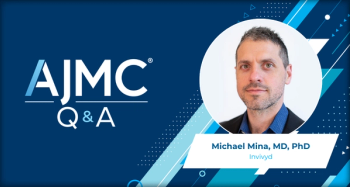
Michael Mina, MD, PhD, explains which adverse events drove VYD2311's edge vs an mRNA COVID-19 vaccine and who may benefit most.
Coverage from the Institute for Value-Based Medicine session in Dallas, Texas, held May 21,2026.
Community and academic oncologists, hematologists, and pharmacists from the Dallas-Fort Worth area convened May 21, 2026, for a session of the Institute for Value-Based Medicine® that addressed both current challenges and future threats to cancer care. Discussions examined how on-the-ground barriers, such as turnaround times, reimbursement, and specialty drug access can shape care for patients with acute blood disorders and lung cancer.
A separate panel addressed the rising number of patients receiving bispecific antibodies in outpatient settings, and a final group looked at maintaining access to care in changing times.
When patients are diagnosed with blood disorders, obtaining a molecular profile is an essential step to creating a treatment plan. Yet delays continue to plague this process, said , a professor at UT Southwestern and a specialist in leukemia and lymphoma, who moderated the first panel, “Diagnosing and Treating Acute Blood Disorders.”
“Molecular profiling is extremely important, especially for blood disorders,” he said. “A lot of times we have to wait weeks—a substantial amount of time to get the results back that dictate care,” Awan explained, as he opened the discussion with his fellow panelists: Ngoc Nguyen Sallfors, PharmD, BCOP, a clinical pharmacy specialist at Baylor Scott and White; Asim Ahmad, MD, a hematologist and medical oncologist at the Center for Cancer and Blood Disorders; and Katherine Wang, MD, PhD, a medical oncologist and hematologist with Texas Oncology.
Sallfors described a newly implemented rapid acute myeloid leukemia profiling test her health system uses, which returns results in 48 to 72 hours.1 However, she cautioned that treatment still must be individualized once results arrive.
“My takeaway from all of this is there is no one size fits all,” she said. “Even if the patients are on the same regimen, we can always modify the dose based on their drug-drug interactions,” she said. Or, “Based on their [calculations], modify the duration of therapy.”
Ahmad argued that the sheer volume of genomic information returned by modern test panels requires teams, not individuals, to interpret and act on the data. "There's not one person that's going to be able to do that themselves, not a physician, not a nurse, not a pharmacist, in the community," he said. "This is going to take a community effort." Later, he reiterated this when discussing why CAR T-cell therapy utilization has plateaued relative to bispecific antibodies use, telling the group, "I think a lot of it isn't just utilization. I think it's accessibility," referencing data that show only 20% to 30% of eligible patients receive CAR T for logistical or social reasons.2
Wang, who follows Texas Oncology's disease-specific testing pathways, said her group is held to pathway compliance targets near 85% but works with a centralized prior-authorization and pharmacy team to navigate exceptions and specialty-drug approvals.3 On monitoring patients through targeted therapy, she said the approach is “really disease dependent, also patient dependent, and the medication really varies on what kind of toxicities and the patient's tolerabilities.” Patient age and socioeconomic status factor in as well.
The panel also addressed drug access for hospitalized patients, with several speakers describing cases where manufacturers directly intervened to expedite non-formulary drugs. Awan described how pharmaceutical companies also stepped up when bispecific antibody programs launched, sending staff to train inpatient nursing and pharmacy teams on toxicity management.
The discussion closed with an audience contribution from Larry Anderson, MD, PhD, professor of internal medicine at UT Southwestern, who cautioned against sequencing decisions that could foreclose future options for myeloma patients. “A lot of patients are not getting CAR Ts or access to CAR T,” he said, “so I'm hesitant of doing bispecifics first unless they understand that their options may be decreased later.”
When it comes to minimal residual disease (MRD) testing, which panelists agreed is far more established in myeloma than in acute leukemias, Anderson added, “We do the periodic monitoring. I think it's very good if someone has sustained MRD negative. I think that's where it's going to be helpful.” Awan agreed MRD's role is expanding but unsettled, describing current practice as “different flavors of MRD” across disease states.
The evening's second panel, "Precision in Practice: Implementing Biomarker Testing in Lung Cancer," was moderated by Lori Brisbin, MS, who leads the precision medicine program at Texas Oncology. Panelists were Randall Hughes, MD, professor in the division of Hematology and Oncology, UT Southwestern; Cynthia Wei, MD, assistant professor, internal medicine, US Southwestern; and Jonathan Dowell, MD, and Sawsan Rashdan, MD, both of UT Southwestern's thoracic oncology group.
Rashdan, who is the quality and safety officer, Thoracic Medical Oncology Clinical Operations, framed the challenge as stage-dependent: for resectable disease, turnaround time drives treatment decisions, while for hospitalized metastatic patients, reimbursement for testing becomes the obstacle. “Molecular testing or [next-generation sequencing] testing is recommended for pretty much all stages except for stage 1A lung cancer,” she said, “so when we’re dealing with stage II or stage III resectable disease, really, turnaround time is going to be the main challenge.” She added that outside biopsies referred to the tertiary center often complicate testing further, calling the result “different challenges at different levels.”
Wei said UT Southwestern's default is to order both tissue- and blood-based comprehensive genomic profiling on every lung cancer patient, in part because tissue quantity is often insufficient. She emphasized why the group tolerates these obstacles: “This information is so critical; that's why these challenges are so much at the forefront of everything we do every day. Because in order to get the best treatment for every specific patient, you need all of this information.”
Dowell, who is professor of internal medicine, said his institution lacks a single in-house NGS panel and relies on outside vendors, adding that insurance coverage gaps sometimes push clinicians toward a specific vendor over another. He was most direct about the field's need to normalize testing as standard of care. “We really need to get past molecular testing in lung cancer being sort of an ancillary extra test.” he said. “No one would consider breast cancer without ER, PR, and HER2 testing; they’re synonymous. But in lung cancer, we have to wait and get these tests ordered special.”
Hughes, whose practice includes both lung and head and neck cancers, said the urgency of testing differs by tumor type. “In the head and neck world, I do order mutation profiling, but I don't have quite the immediate need because there aren't as many actionable targets,” he said. Later, he noted that incidental germline findings, such as Li-Fraumeni syndrome, Lynch syndrome, or BRCA mutations in male patients, can still matter for a patient's family even when they don't change the treatment plan at hand. “Finding more sometimes is useful.”
Much of the discussion centered on report quality and vendor choice, with panelists naming Tempus, Foundation Medicine, and Caris as the commercial platforms most used at UT Southwestern, both by institutional pattern and because results integrate directly into the Epic electronic health record. None of the panelists routinely order paired germline testing alongside tumor sequencing, citing workflow limitations when biopsies originate outside their own health system; instead, they rely on an internal genetics group to flag results suggestive of germline mutations for follow-up.
Brisbin closed by describing how Texas Oncology scaled precision testing systemwide, crediting industry partners for training hospital pathology staff not to exhaust biopsy tissue on lower-yield tests before comprehensive panels could run, and for supplying a continuously updated diagnostic decision-support tool aligned to guidance from FDA, the National Comprehensive Cancer Network, and the American Society of Clinical Oncology. Results, she said, have been dramatic. “We were running 100 solid tumor molecular profiles in 2019 per month. We now run 6000 per month, and that doesn't include the hematological malignancies.”
She acknowledged that extending comparable infrastructure to blood cancers remains unfinished work. "This is a big gap for our practice,” Brisbin said. “We need some more support in collaboration with our hospitals."
Anderson is director of the Myeloma, Waldenström's, and Amyloidosis Program at UT Southwestern’s Harold C. Simmons Comprehensive Cancer Center, where he also leads the Hematologic Malignancies and Cellular Therapy Clinical Research Program. In the program’s second half, he moderated the panel, “Bringing Bispecifics Where Patients Live.”
Panelists were Adeel Khan, MD, MPH, MS, assistant professor, internal medicine at UT Southwestern Medical Center; Samer Al Hadidi, MD, MS, FACP, associate professor, Harold C. Simmons Comprehensive Cancer Center/UT Southwestern; and Ashwani Agarwal, MD, of Texas Oncology and Methodist Charlton Cancer Center.
Together, the panel examined how bispecific antibodies for multiple myeloma are being operationalized outside major academic centers, with Anderson framing the discussion around sequencing bispecifics against CAR T-cell therapy, patient selection, safety, and models for academic-community collaboration, noting the goal of "increas[ing] the access for patients who cannot travel to the big city centers."
Khan noted both a CAR T-cell therapy, ciltacabtagene autoleucel (cilta-cel/Carvykti; Legend/Johnson&Johnson) and a bispecific, teclistamab (Tecvayli;Johnson & Johnson) are now approved in second line.4,5 This gives oncologists an expanded menu of options targeting the same protein, BCMA. But absent head-to-head trial data, Khan said the choice must be specific to the patient, because “in this data-free zone of a direct head-to-head comparison, all those other almost non-quantifiable factors end up being very relevant.”
Given recent trial results, Al Hadidi sees things differently. “I think sequencing is a sign of failure,” he said, arguing that the combination of teclistamab and an anti-CD38 therapy, daratumumab (Darzalex; Johnson & Johnson) allowed 83.4% of patients remain disease-free 3 years out; these patients may never need a second line at all.6 He noted CAR T's roughly 5-week manufacturing timeline and apheresis logistics make it unsuitable for rapidly relapsing patients, and he flagged higher non-relapse mortality and Parkinsonism risk with CAR T in older patients—factors that favor bispecifics, which he noted are “off the shelf.”
Referrals and CRS fears. “In the community, it becomes harder and harder to refer these patients,” Agarwal said. “They have to travel anywhere from 50 to 100 miles to get to the CAR T center.” Although his practice has a seamless referral pathway linked through the electronic health record to Baylor for CAR T and step-up dosing, he said community hospitals are not ready to administer bispecifics themselves, largely due to delays in insurance approvals and the logistics of step-up dosing.
Much of the discussion focused on reducing the risk of bispecifics for outpatient and community use. Prophylactic tocilizumab, home-based dexamethasone packaged as “pocket dosing,” and structured symptom pathways were credited with reducing hospitalization for cytokine release syndrome (CRS), which panelists noted affects roughly two-thirds of patients but is severe for only a minority. Khan said that fear of CRS, inherited from CAR T experience, has been a major psychological barrier to community adoption. He predicted that CRS would eventually become as routine to manage as neutropenic fever once was.
Infection risk. Al Hadidi emphasized that infection, not disease progression, is the leading cause of death for myeloma patients in their first 3 months of treatment, and he advocated for monthly treatments with intravenous immunoglobulin (IVIG) regardless of IgG threshold during the first 6 months of bispecific therapy, along with antimicrobial prophylaxis. Khan described writing a standard letter of medical necessity—built around a recent expert opinion piece by Rahul Banerjee, MD, FACP,7 and colleagues in Blood Advances—to overcome insurer pushback on IVIG approval.
On choosing between BCMA- and GPRC5D-targeted bispecifics, panelists agreed BCMA is generally preferred first given better tolerability, since GPRC5D agents can cause dysgeusia and nail or skin changes. Combination BCMA/GPRC5D therapy was noted as an emerging option for extramedullary disease; it is included in the National Comprehensive Cancer Network guidelines although it is not FDA approved.
The panel closed with the idea of a dedicated “bispecific navigator,” modeled on existing CAR T and transplant coordinators, to help patients manage appointments and adverse event monitoring. They also discussed a recently agreed-upon consensus definition of “cure” in myeloma—5 years off treatment with sustained MRD negativity8—which panelists said reflects genuine progress even as patients require lifelong monitoring.
The evening's final panel, moderated by Sucharu “Chris” Prakash, MD, director of quality for Texas Oncology, brought together Ray Page, DO, PhD, FACOI, FASCO, past president and director of research at the Center for Cancer and Blood Disorders, Fort Worth; and Lalan Wilfong, MD, chief medical officer, Navista; and Ahmad to discuss the financial and structural pressures facing community oncology.
Prakash said the goal of value-based care is straightforward: “The whole premise of value is to cut costs and improve quality for our patients.”
Whether it’s being achieved is another story.
Page identified consolidation and stagnant fee-for-service reimbursement as existential threats to community oncology, something advocacy groups are battling hard to turn around. “Fee for service in the face of inflation—with the Inflation Reduction Act and impacts on ASP+6 with the drugs—I think those are major threats that could put community oncology out of business if we don't do anything about it.” He noted community oncology fee schedules have barely moved in 25 years even as hospital reimbursement rises roughly 3% annually.9
Wilfong traced the field's evolution from early pay-for-performance—a precursor to the Merit-based Incentive Payment System, or MIPS—to total-cost-of-care models like the Oncology Care Model, and back again. He argued total-cost-of-care models fail in oncology because the disease landscape shifts too quickly for benchmark-and-trend methodologies to work. He cited how lung cancer went from a 2-way non-small-cell/small-cell split in 2016 to roughly 40 molecularly defined subtypes. “I completely agree,” he said regarding shifting reimbursement away from drug margins, “if we could move the way that we get paid from relying on drug and drug margins to relying on actual payment for administration and the complexity that that takes... it would change the way we think about the way a financially viable medical oncology practice would function.”
Ahmad described the cost of remote monitoring, temperature checks, and administrative overhead, all of which is now expected of practices. He was blunt about diminishing returns. “There has to be another way to reimburse this cost.”
Prior authorization (PA), he said, has become “an arms race” between AI-assisted appeal letters and AI-assisted denials. “There is no universe where a computer should be saying whether a drug is or isn't approved.”
Page described Texas's pioneering "gold carding" law, which exempts high-compliance physicians from PA, as a partial success, one complicated by covering all specialties rather than oncology alone, and by years of rulemaking delay. He also flagged Texas's new requirement that a human, not an AI tool, make adverse coverage decisions, warning that AI-driven PA—already piloted in other procedural specialties under the federal WISeR model—is likely to reach oncology within 2 years.10 Wilfong added that ERISA-governed self-insured employer plans, covering 60% to 70% of commercially insured patients, remain outside state PA reform laws entirely, since many employers actually want tighter authorization controls to manage costs.
Drug pricing. Wilfong warned that Medicare's move to negotiate Part B drug prices could eliminate published Average Sales Price (ASP) data, undermining the ASP-based reimbursement structure underlying nearly every commercial contract. “There hasn't been much discussion about how we protect medical oncology and make sure the specialty stays financially viable for the future,” he said. Page proposed replacing ASP-based margin with a separate, stable “chemotherapy management” fee to compensate for drug administration complexity.
Health equity. Page described a decade-old AI tool, built with the company Jvion, which ranks patients across roughly 4000 social determinants of health to identify those at highest risk for mortality, malnutrition, or mobility decline, enabling proactive referrals to palliative care, nutrition, or rehab.11 Ahmad pointed to lack of geographic access to academic centers and clinical trials as a core equity driver, describing his and Page's efforts to bring cell and bispecific therapies directly into Fort Worth-area community practices.
Wilfong closed with a note of cautious optimism. “We're not going to be we can't solve the world's problems, but we have to be able to ask and try,” he said. “I am an eternal optimist…that we'll actually figure something out. It is a challenge. But we just have to continue to advocate for our patients and understand what's happening to them and why, and advocate for things to change so that we can have equitable care in the US.”
Following the session, Randall Hughes, MD, professor in the Division of Hematology and Oncology at UT Southwestern Medical Center, died unexpectedly on June 26, 2026. He was 66. Dr Hughes served as chief of the Medical Hematology/Oncology Service and as an attending physician on the solid tumor service team at Clements University Hospital. According to UT Southwestern, his work extended across Clements University Hospital, the Simmons Comprehensive Cancer Center, and Parkland Health, “where colleagues regarded him as a cornerstone of the Hematology and Oncology Division.” The team at The American Journal of Managed Care offers condolences to Dr Hughes’ family, friends, and colleagues at UT Southwestern.
For the full memorial notice, visit: