The editor in chief of Evidence-Based Oncology, who was recently named medical director of Precision Medicine for The US Oncology Network, discussed milestones met and those still to be achieved.
This discussion will appear in the August issue of Evidence-Based Oncology.
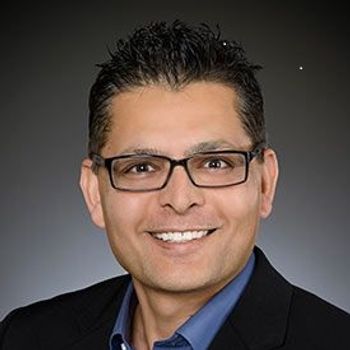
Sucharu “Chris” Prakash, MD, editor in chief of Evidence-Based Oncology (EBO), is a medical oncologist and director of quality for Texas Oncology. Based in Paris, Texas, Prakash is the immediate past president of the Texas Society of Clinical Oncology. Here, he discusses his work on improving access to care for rural populations.
EBO: What inspired your commitment to improving oncology access, particularly for rural populations?
Prakash: Over the past 2 decades, my work has been shaped by 1 abiding conviction: Where a patient lives should never determine their chance of surviving cancer. Practicing in Northeast Texas, where I built and continue to serve a large rural oncology practice to help meet a tremendous community need, I have seen firsthand how geography can shape outcomes in ways that are both profound and preventable.
For many patients in rural America, receiving cancer care is not as simple as scheduling an appointment. Long travel distances, physician shortages, delayed diagnoses, limited access to specialty services, and socioeconomic barriers often stand between a patient and the care they need. I have treated patients who drive several hours each way for treatment while balancing jobs, caregiving responsibilities, and serious financial pressures. Those realities make it impossible to separate medicine from access.
Those experiences motivated me to dedicate much of my career to reducing disparities and ensuring that patients in underserved communities receive the same opportunities for cutting-edge care as those treated at major academic institutions. That motivation has never wavered.
EBO: One major issue in oncology today is access to biomarker testing. Why has this become such a focus for you?
Prakash: Precision medicine has fundamentally transformed cancer care. Biomarker testing allows us to identify genomic alterations and match patients to targeted therapies that can dramatically improve outcomes. Yet despite becoming the standard of care in many cancers, significant implementation gaps persist, particularly in community and rural settings.
The troubling reality is that many eligible patients never receive testing, meaning they may miss potentially life-extending therapies not because of biology, but because systems failed them. That is an inequity we can and must address.
That is why I have invested heavily in quality initiatives aimed at reducing disparities in biomarker testing and treatment access. These efforts have focused on identifying barriers, improving clinical workflows, educating providers, and helping practices implement sustainable, systematic testing strategies.
I also pursued policy change in this area, including lobbying for the passage of Texas Senate Bill 989 (SB989), a landmark bill designed to improve insurance coverage and access to comprehensive biomarker testing for patients in Texas. Specifically, the bill expanded coverage requirements to ensure that patients with serious conditions, including cancer, could access the genomic testing their physicians recommended without being denied on the basis of cost. Policy matters because innovation only improves outcomes if patients can actually access it.
EBO: Beyond clinical care, advocacy has clearly been a major part of your career. Why is it so important in oncology?
Prakash: Clinical care alone cannot dismantle structural disparities. If reimbursement policies, workforce shortages, transportation barriers, or insurance limitations prevent patients from accessing care, then scientific breakthroughs will never reach everyone equally. The gap between what oncology can achieve and what patients actually receive is fundamentally a policy problem, and that means it requires policy solutions.
That is why I have spent years advocating at both the state and federal levels for reforms that strengthen oncology access, particularly for underserved and rural populations. During my tenure as president of the Texas Society of Clinical Oncology, expanding access and addressing educational gaps remained central priorities.
Advocacy is about ensuring that the realities faced by community oncologists and rural patients have a seat at the table in policy discussions. Too often, rural health care challenges are treated as a footnote rather than a priority. Changing that requires persistent, organized advocacy from clinicians who have lived those realities.
EBO: Education also seems central to your mission. Tell us more about that.
Prakash: Education is one of the most powerful tools we have to reduce disparities at scale. Rural oncologists care for [patients with] incredibly complex [cases], often without the institutional resources available at larger centers. At the same time, oncology evolves rapidly: New therapies, evolving biomarker standards, and changing treatment paradigms require constant learning. Keeping pace can be genuinely difficult when providers are already stretched thin by demanding patient volumes and limited support staff.
That is 1 reason I moderate a biannual “oncology congress” specifically designed to educate rural oncology providers. The goal is practical, evidence-based education that clinicians can implement immediately in community practice—not abstract research updates, but actionable guidance for real-world settings.
Additionally, as editor in chief of Evidence-Based Oncology, I have had the privilege of helping shape the conversation around value-based care, clinical innovation, policy, and the real-world implementation of cancer advances. Disseminating rigorous, practical evidence and fostering meaningful professional dialogue is another powerful lever for improving patient outcomes at scale.
EBO: You also served on the ASCO Rural Cancer Care Task Force. What did that experience teach you?
Prakash: Serving on the American Society of Clinical Oncology (ASCO) Rural Cancer Care Task Force reinforced something I already knew from years of practice: Rural disparities in cancer care are real, persistent, and deeply multifactorial. They do not yield to simple solutions.
Closing these gaps will require coordinated investment across multiple domains: workforce development, expanded continuing education, telehealth innovation, meaningful policy reform, local infrastructure, and better integration of precision medicine tools into community settings. No single intervention is sufficient on its own.
That said, I came away from that work genuinely optimistic. Across the country, there are passionate clinicians, researchers, advocates, and institutional leaders who are committed to this challenge. The will is there. Our task is to channel it more effectively.
EBO: Beyond oncology, you helped bring an internal medicine residency program to Northeast Texas. Why was that important?
Prakash: Physician shortages are one of the greatest structural threats to rural health care access, and they are not easily resolved. Communities are significantly more likely to retain physicians who have trained and built relationships locally; the evidence on this is consistent and compelling.
Helping establish an internal medicine residency program in Northeast Texas was important because it represents a long-term, systemic investment in the regional health care workforce. Training physicians in the communities where care is needed creates pipelines that persist for decades. If we are serious about improving access sustainably, we must create the conditions for future physicians to build careers in underserved areas, and that means bringing graduate medical education to them.
EBO: After more than 2 decades of advocacy, education, and quality improvement, what are you working on now?
Prakash: One of the things that continues to motivate me is that there is still so much meaningful work ahead. In many ways, I believe some of the most important opportunities in oncology remain in front of us, rather than behind us.
My current mission is both simple and ambitious: Every patient diagnosed with cancer should receive both comprehensive somatic genomic profiling and germline testing. Somatic testing identifies the mutations driving a patient's tumor; germline testing reveals inherited variants that inform the risk for the patient, their treatment course, and their family members. Together, they offer the most complete picture of a patient's cancer and inherited risk, a foundation for truly personalized, informed care.
Precision medicine has already transformed what we can offer patients, but access to comprehensive testing remains deeply inconsistent. Too many patients still do not receive appropriate genomic evaluation because of logistical, financial, educational, or systemic barriers. Closing those gaps is among the most urgent challenges facing our field.
Universal somatic and germline testing is the vision I am actively working toward. It is both a clinical aspiration and a justice imperative because the benefits of precision oncology should not be reserved for patients at well-resourced academic centers.
At the same time, the broader work continues. Improving health care access for rural populations, expanding biomarker testing, educating providers, advocating for policy reform, strengthening the physician workforce, and reducing disparities in cancer care are all ongoing efforts. They remain as urgent as they were when I started, perhaps more so.
After more than 25 years in oncology, I remain convinced that our greatest advances will not be measured solely by new drugs or technologies, but by our ability to ensure that every patient, regardless of geography, income, or circumstance has equitable access to the promise of modern cancer care. That mission has guided my career, and it continues to drive me every day.