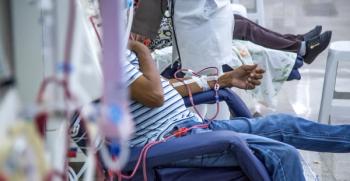
Povetacicept reduced proteinuria by 52% vs 4.3% with placebo at week 36 in adults with IgA nephropathy in the phase 3 RAINIER trial’s interim analysis.
OPTIMA trial data show genomic testing helps many patients with high‑risk breast cancer skip chemotherapy safely and start endocrine therapy sooner.
The OPTIMA trial represents a landmark advance in the management of early breast cancer, addressing a question that has challenged clinicians and patients for decades: which patients with clinically high-risk, hormone receptor–positive breast cancer truly benefit from adjuvant chemotherapy following surgery, and which can safely avoid it? Iain MacPherson, MD, PhD, FRCP, professor of breast oncology at Glasgow University, explains some of the important results of the trial and what they mean going forward in this interview with The American Journal of Managed Care®.
Using the Prosigna genomic test, the study demonstrated that approximately two-thirds of women who would historically have received chemotherapy can safely forgo the treatment without a meaningful increase in the risk of cancer recurrence. This finding has significant implications for reducing patients' exposure to the well-known toxicities associated with chemotherapy while maintaining equivalent oncologic outcomes.
A notable strength of OPTIMA is its inclusion of patient populations historically underrepresented in trials of this kind. Specifically, the study enrolled patients at the highest clinical risk of recurrence. This included patients with more than 4 involved axillary lymph nodes, a group for whom prospective evidence has been largely absent.
Additionally, OPTIMA enrolled premenopausal women, a population in whom the utility of tests like Prosigna has previously shown mixed results and for whom current guidelines have generally discouraged genomic test use in the high clinical-risk setting. Crucially, OPTIMA demonstrated that its findings apply equally to both premenopausal and postmenopausal patients, potentially expanding guideline-supported genomic testing to a broader population.
Regarding follow-up duration, MacPherson noted that while longer follow-up remains important and ongoing, the timing of chemotherapy's benefits in preventing recurrence is well understood to occur predominantly within the first 5 years. With a median follow-up of 4 years prompting the results, a late divergence in outcomes between the test-directed and control arms is not anticipated, lending confidence to the current results.
The trial's design also holds particular relevance for health economics and coverage decisions. Unlike prior studies, OPTIMA randomized patients either to standard chemotherapy followed by endocrine therapy or to a Prosigna-directed arm, in which only those with a high risk-of-recurrence score received chemotherapy. This head-to-head structure, where there is test use vs no test use, provides the kind of comparative evidence that payers and health systems need to evaluate cost-effectiveness.
A preliminary estimate suggests that for every 3 Prosigna tests administered, chemotherapy is avoided in 2 patients, pointing toward a highly favorable economic profile. A full health economic analysis is expected to be presented at a major oncology conference later in the year.