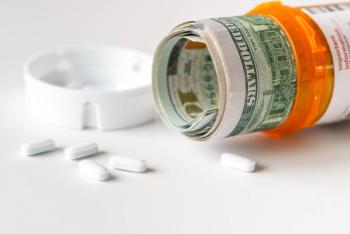
Siva Mohan, MD, explains how drug costs drive silent nonadherence, PA burden, and biosimilar hesitancy, and what payers can do about it.
The American Journal of Managed Care
This study found high out-of-pocket costs for branded diabetes medications in employer-sponsored health plans.
Am J Manag Care. 2026;32(5):260-261.
Takeaway Points
Pharmaceutical treatments for diabetes can decrease the incidence of cardiovascular, kidney, liver, and ophthalmologic complications, although their out-of-pocket costs can lead to nonadherence and financial insecurity. Regulatory attention has focused on the price of insulin, but other branded medications to treat diabetes also have high cost-sharing burdens. To help policy makers and those who design employer-sponsored health plans, we describe the distribution of utilization and out-of-pocket costs for 4 classes of branded diabetes medication among members of employer-sponsored health plans in 2023.
We used deidentified pharmacy claims data from the WTW Rx Collaborative coalition from January 2023 through December 2023 to assess out-of-pocket costs of 4 classes of diabetes medications: insulins, dipeptidyl-peptidase-4 (DPP-4) inhibitors (gliptins), sodium-glucose cotransporter 2 (SGLT2) inhibitors, and glucagon-like peptide-1 (GLP-1) receptor agonists. The data represent more than 400 employer-sponsored pharmacy benefit plans with 5.3 million members distributed widely geographically, with collective spending of almost $7 billion. This database included drug claims from 244,088 unique members who had at least 1 prescription from 1 of these 4 classes of medication. The data we accessed do not include diagnoses or member plan design.
We restricted the analysis to 69,185 unique individuals who filled the equivalent of at least twelve 30-day prescriptions of these 4 classes of diabetes medications combined to eliminate members who were treated for only a small portion of the year. The database does not account for manufacturer-sponsored co-pay coupons, distinguish between people with type 1 and type 2 diabetes, or include those treated for diabetes with only generic medications of other classes, which are available at low cost. Our methodology is described further in the eAppendix (
Median out-of-pocket cost for branded diabetes medication was $643 per year (
Many plan members with diabetes (58%) were taking multiple branded medications to treat their diabetes. Annualized out-of-pocket spending was higher for those taking 2 or more classes of diabetes medications. The top decile of patients with diabetes taking 1 class of diabetes medication spent $1217 annually in out-of-pocket costs, whereas the top decile of those taking 3 or more classes of diabetes medication spent $2681 annually (Table).
The median out-of-pocket cost for members taking any of the 4 classes of diabetes medications has risen since our analysis of 2021 claims data,1 largely driven by an increase in out-of-pocket costs for GLP-1s and members switching from other medications to GLP-1s. This increase was partially offset by a reduction in out-of-pocket insulin costs, which are expected to decline further after 2023 due to price decreases driven by the American Rescue Plan Act.2 Out-of-pocket costs could also fall for GLP-1s as generic versions of the GLP-1 medication liraglutide (Victoza) become more readily available. CMS negotiations for the price of semaglutide (Ozempic, Rybelsus, Wegovy) could also decrease costs and diminish out-of-pocket costs.
This analysis demonstrates that those with diabetes covered by employer-sponsored health insurance face high out-of-pocket costs for drugs other than insulin, and many are prescribed multiple different branded drugs for diabetes. Many with diabetes face additional out-of-pocket costs for testing and for drugs and medical services for other medical conditions. Policy makers and those designing employee health benefits should consider the distribution of expected costs for all branded diabetes medications when addressing affordability of diabetes care.
Author Affiliations: WTW (formerly known as Willis Towers Watson) (JZ, CSR, CM, JL-S), Arlington, VA; Harvard T.H. Chan School of Public Health and Harvard Medical School (JL-S), Boston, MA.
Source of Funding: None.
Author Disclosures: Ms Zhu and Drs Reagan, Midlam, and Levin-Scherz are employees of WTW, a consulting firm that works with pharmacy benefit managers to procure medications for employer-sponsored health plans.
Authorship Information: Concept and design (JZ, CSR, CM, JL-S); acquisition of data (JZ); analysis and interpretation of data (JZ, CSR, CM, JL-S); drafting of the manuscript (JZ, CSR, CM, JL-S); critical revision of the manuscript for important intellectual content (JZ, CSR, CM, JL-S); and statistical analysis (JZ).
Address Correspondence to: Jeff Levin-Scherz, MD, MBA, Harvard T.H. Chan School of Public Health, 677 Huntington Ave, Boston, MA 02115. Email: jlevin@hsph.harvard.edu.
REFERENCES
1. Quach J, Midlam C, Sell C, Levin-Scherz J. Out-of-pocket costs for diabetes medications in employer-sponsored health insurance plans. Am J Manag Care. 2024;30(3):107-108. doi:10.37765/ajmc.2024.89510
2. Williams E. What are the implications of the recent elimination of the Medicaid prescription drug rebate cap? KFF. January 16, 2024. Accessed June 4, 2025.