
Opinion|Videos|January 22, 2026
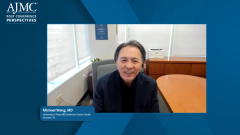
Overarching Themes in MCL at ASH 2025
Author(s)Michael Wang, MD
Michael Wang, MD, highlights ASH 2025 data showing how continual innovation across targeted agents, cellular and immune therapies—paired with MRD monitoring and intensified maintenance strategies—is redefining outcomes in mantle cell lymphoma.
Advertisement
Episodes in this series
In this interview, Michael Wang, MD, reflects on a central theme emerging from research in mantle cell lymphoma (MCL) at ASH 2025: the evolution of MCL treatment from chemotherapy to targeted agents, cellular therapies, and immune-based approaches such as T-cell engagers. Rather than replacing earlier strategies, each new generation has expanded the therapeutic arsenal, delivering higher efficacy and improved tolerability. Wang emphasizes that even “best-in-class” agents are rapidly followed by next-generation drugs, including newer BCL2 inhibitors and BTK inhibitors with both covalent and noncovalent properties, often demonstrating even higher response rates than their predecessors.
He notes that the field is also benefiting from parallel advances in cellular therapy and bispecific antibodies, with increasingly effective and better-tolerated CAR T-cell products and T-cell engagers such as glofitamab and epcoritamab. Together, these developments underscore how rapidly the MCL landscape continues to expand, offering clinicians multiple highly active options across disease settings.
Wang highlights minimal residual disease (MRD) as another major focus at ASH 2025. While methodologies vary, MRD assessment across studies consistently predicts longer progression-free survival, duration of response, and overall survival. He argues that MRD monitoring has matured to the point where it should routinely inform clinical decision-making. In his own practice, rising MRD levels prompt early intervention with relatively simple therapies, often reversing molecular relapse before clinical progression.
Maintenance therapy also emerged as a critical driver of improved outcomes. Wang references data from studies such as LyMa, ECHO, and TRIANGLE, which collectively demonstrate that intensified or dual-agent maintenance can significantly improve progression-free and overall survival and, in some cases, eliminate the need for autologous stem cell transplantation. Building on this evidence, Wang describes his experience using prolonged, multi-agent maintenance following deep remission, including triple maintenance approaches that have thus far yielded no relapses even among high-risk patients.
Wang concludes that integrating novel therapies, MRD-guided management, and optimized maintenance strategies is transforming MCL into a disease increasingly defined by durable, chemotherapy-free control.
Advertisement
Related to this article
Michael Mina, MD, PhD, explains which adverse events drove VYD2311's edge vs an mRNA COVID-19 vaccine and who may benefit most.

Medicaid expansion was associated with lower colorectal cancer mortality, with the largest reductions in Hispanic patients and stage IV disease.

Cepheid's Connie Savor, MD, MBA, explains where its 13-pathogen respiratory panel fits in diagnostic stewardship and antibiotic decisions.

The FDA approves atezolizumab with a fluoropyrimidine and oxaliplatin as adjuvant therapy for stage III dMMR colon cancer based on the ATOMIC trial.
Michael Mina, MD, PhD, explains Invivyd's accelerated approval path for VYD2311 and how it could change the timing of COVID-19 protection.

Biomarker-driven care is advancing in mantle cell lymphoma, though cost and infrastructure limit access in community oncology, according to a review.
Fibrosis stage, not MASH resolution, best predicts mortality, which should shape trial end points, says Georgetown's Zobair Younossi, MD, MPH.
Remibrutinib (Rhapsido; Novartis) is the only treatment with approved uses in both chronic spontaneous urticaria and symptomatic dermographism.
Advertisement
Advertisement
Trending on AJMC
1
MASH Fibrosis, Not Resolution, Predicts Mortality: Zobair Younossi, MD
2
FDA Approves Once-Monthly Subcutaneous Olanzapine for Schizophrenia
3
5 Things to Know if Retatrutide Is Classified as a Biologic
4
GLP-1s Have Protective Benefit Against DME, Glaucoma Surgery
5