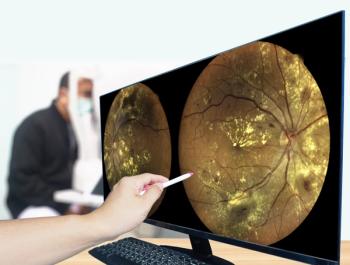
The meeting covered several topics in eye care, including how artificial intelligence (AI) can play a part in eye care.
Pulmonologists play a key role in comprehensive biomarker testing, helping more patients with lung cancer access precise targeted therapies.
Pulmonologists can help close persistent gaps in comprehensive biomarker testing for lung cancer, a step that determines whether patients can access a growing number of precise therapies, according to Eric K. Singhi, MD, assistant professor in the Department of General Oncology at The University of Texas MD Anderson Cancer Center. Speaking at
Singhi highlighted 3 trends: systemic therapies are moving into earlier-stage disease, treatment is increasingly personalized through biomarker testing, and options extend beyond chemotherapy, immunotherapy, and targeted therapy to antibody-drug conjugates, T-cell engagers, and vaccines. Pulmonologists are central. “You’re often the first specialist to actually meet the patient to tell them they have a diagnosis of cancer, and you play a fundamental role in getting enough tissue so we can run all the tests that we need.”
At least 10 genomic alterations have FDA-approved matched targeted therapies, yet a 2024 global survey from the International Association for the Study of Lung Cancer found that 43% of providers started drug therapy before biomarker results returned.
Minority communities also appear less likely to receive routine biomarker testing, which Singhi called an unmet need requiring action from multiple stakeholders. Engaging pulmonologists early, he said, helps testing start quickly. He also studies patient education, arguing that patients and families should understand the reasoning behind treatment recommendations. Citing patient advocate Jill Feldman, he noted that informed decision-making is a prerequisite for shared decision-making, and his research aims to translate practice-changing data into information patients and families can understand and use.