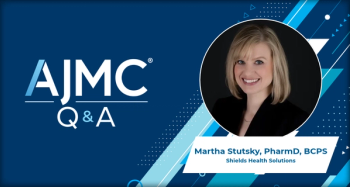
Stutsky explains why shifting therapy perceptions had more pharmacist touchpoints and longer time on therapy among patients with ATTR-CM.
SUNRISE data showed tezepelumab improved asthma outcomes while reducing steroid dependence in severe asthma.
Severe asthma affects patients in different ways, ranging from recurrent exacerbations and uncontrolled symptoms to impaired lung function and chronic oral corticosteroid dependence.1 However, emerging treatment options including biologic medications are providing hope that the chronic respiratory disease can be brought under control.
Data presented at the American Thoracic Society International Conference 2026 in Orlando, Florida, highlighted the potential of tezepelumab (Tezspire; AstraZeneca) to address several of these disease burdens simultaneously.
Results from the phase 3 SUNRISE (
In an interview with The American Journal of Managed Care®, Michael Wechsler, MD, MMSc, explained that success in severe asthma treatments often varies depending on the individual patient’s disease burden.
“All of these outcomes are actually important, and it may depend on the patient,” Wechsler said. “Some patients you add on a biologic because they have exacerbations. Some patients you add on a biologic because they continue to have symptoms or lack asthma control.”
Wechsler also noted that tezepelumab’s broad mechanism of action may help explain its effects across multiple asthma outcomes. By targeting thymic stromal lymphopoietin, an upstream inflammatory mediator, the therapy may suppress several downstream inflammatory pathways at once rather than focusing on a single cytokine target.
He also emphasized that emerging data continue to reinforce the importance of identifying patients with type 2 inflammatory profiles, including eosinophilic disease, elevated nitric oxide levels, or allergic asthma, as those populations may experience the strongest responses to therapy.
The discussion additionally focused on the growing push to reduce chronic steroid exposure in asthma management. Minimizing long-term oral corticosteroid use has become a central priority not only for clinicians and patients but also for health systems and guideline committees, he explained.
“In this day and age, in 2026 and beyond, we really shouldn’t have patients on oral corticosteroids,” Wechsler said. “It’s a major initiative of the GINA guidelines, and it’s one of the major goals of asthma care.”
References
1. Wechsler ME, Brightling CE, Brusselle GG, et al. Efficacy and safety of tezepelumab versus placebo in reducing OCS use in OCS-dependent patients with severe asthma: results from the phase 3 SUNRISE study. Presented at: American Thoracic Society 2026 International Conference; May 17-20, 2026; Orlando, FL. Poster 521.