Now Playing
Most patients with asthma carry a type 2 inflammatory signature, and the sickest fifth of them account for the bulk of an $80 billion annual burden.
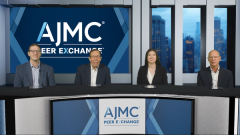
Welcome back to another AJMC Peer Exchange series. In "Type 2 Inflammation and the Economic Cost of Severe Asthma," moderator David Bernstein, MD is joined by Geoffrey Chupp, MD, Michael Wechsler, MD, MMSc, and Giselle Mosnaim, MD, MS to open the series on severe asthma, starting with disease biology and the economics that follow from it.
Dr. Bernstein frames the program around treatment updates in severe asthma and the expanding role of IL-5 inhibition. He then asks Dr. Chupp to outline the subtypes of asthma seen in practice.
Dr. Chupp explains that several subtypes likely exist, but clinicians currently recognize two broad categories: type 2 (T2)-high and T2-low disease. T2-high disease is identifiedmainly through biomarkers, including blood eosinophil levels, fractional exhaled nitric oxide, and the presence of allergy or atopy. In most published series, at least 80% of patients show some T2-high signal in the clinic. For that reason, he describes T2 inflammation as the predominant driver of asthma.
He adds that T2-low patients remain an important unmet need. He cautions, however, that T2-low pathways probably overlap with T2-high pathways, even in patients who look T2-high. He expects the field to learn considerably more about these overlapping mechanisms in the years ahead.
Dr. Bernstein turns to Dr. Wechsler to quantify the true cost of asthma. Dr. Wechsler notes that the United States spends more than $80 billion a year on asthma. Some of that reflects indirect costs from missed work and school, while about $50 billion goes to direct patient care.
He emphasizes that the most severe 20% of patients consume roughly 80% of those costs. Much of that spending flows from hospitalizations, emergency department visits, and unscheduled office visits. Each course of systemic corticosteroids also carries long-term costs of its own.
Dr. Wechsler argues that preventing exacerbations is a shared responsibility for clinicians and the health system. A single emergency visit costs several thousand dollars, so payers are generally willing to spend more upfront. From a pharmacoeconomic perspective, he says, investing in biologic therapy to prevent repeated exacerbations is usually worth it.
The next episode in this series, "Severe Asthma Exacerbations, Indirect Costs, and When to Escalate Therapy," follows the money into the clinic, as Dr. Mosnaim, Dr. Chupp, and Dr. Wechsler examine utilization, lost productivity, and the signals that call for escalating therapy.