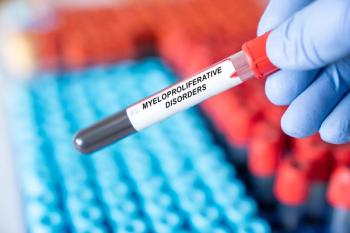
TP53 mutations occurred in 3% of myeloproliferative neoplasms (MPNs) but 10% of myelofibrosis or blast-phase cohorts in a review of 11 cohort studies.
Beyond progression-free survival, the combination of teclistamab and daratumumab hyaluronidase-fihj showed deep clinical responses, notes Ajay K. Nooka, MD, MPH.
On March 5, the FDA expanded
The approval is supported by data from the phase 3 MajesTEC-3 trial (
Clinical data showed that 83% of patients in the treatment arm were progression free at the 3-year mark, compared with just 30% in the control arm. Nooka notes that these results are difficult to replicate and demonstrate how the benefit of highly effective therapies extends significantly when moved from later lines to early lines of therapy.
Beyond progression-free survival, the combination showed deep clinical responses. The overall response rate was 89%, with 81.8% of patients achieving a complete response or better. Additionally, 58.4% of patients achieved minimal residual disease negativity, a stark contrast to the 17.1% seen in the control group.
Regarding safety, although the teclistamab arm had higher rates of infections vs the control arm (96.5% vs 84.1%), grade 3 infections notably decreased after the first 6 months of treatment. Cytokine release syndrome was reported in 60.1% of patients, but all cases were low-grade, and no patient had to discontinue treatment because of it.
Looking toward the future, Nooka reassures that even if a patient eventually relapses after this early-line intervention, the pipeline for myeloma remains robust. Researchers are currently evaluating newer targets such as GPRC5D (via bispecifics and chimeric antigen receptor T-cell therapies and FcRH5. This “multitarget approach” ensures that patients will continue to have therapeutic options long after their initial treatment with BCMA-targeted bispecifics.
Reference
Shaw ML. Teclistamab combo approved by FDA for R/R MM. AJMC®. March 5, 2026. Accessed March 13, 2026.