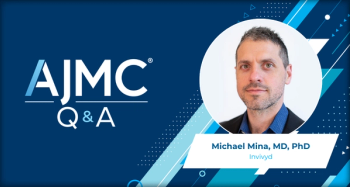
Michael Mina, MD, PhD, explains Invivyd's accelerated approval path for VYD2311 and how it could change the timing of COVID-19 protection.
Michael Mina, MD, PhD, of Invivyd explains how a few amino acid changes let VYD2311 move from IV to a single IM shot that could expand access.
Captions are auto-generated.
VYD2311, Invivyd’s investigational next-generation monoclonal antibody designed to prevent
The
“[Those changes] actually increased the potency of the antibody about tenfold, if not more, which allows us to actually move from an IV administration to a single, simple injection into the arm as an intramuscular injection,” he explained in an interview with The American Journal of Managed Care®.
This small change could make a substantial difference in administration and access for patients looking to stay protected against COVID-19. In LIBERTY, VYD2311 was administered as a 250 mg intramuscular (IM) injection, whereas pemivibart is a 4500 mg dose administered intravenously.1
“Being able to provide somebody with a simple IM injection that doesn't appear to cause many adverse symptoms, in terms of injection site reactions or anything like that, we think is going to really change the game in terms of how many people can access this medicine and how easily they can get it,” Mina said.
Rather than traveling to an infusion site, patients could get the shot at a pharmacy or clinic, Mina said. As Invivyd works to bring VYD2311 to market, he said these access points, which would resemble how people get vaccines today, could change not only the type of protection people get but also how they think about when and how to get it.
“And if we fast-forward even further into the future, we're contemplating things like subcutaneous injections. Maybe people can do it at home,” Mina said.
References
1. McCrear S. VYD2311 shows superior safety vs mRNA COVID-19 vaccine. AJMC. October 1, 2026. Accessed October 8, 2026.