

Conference Coverage
Latest Content

Jul 02, 2026 | Commentary
Contributor: Fraud, Waste, and Abuse—A Value-Based Care Risk Hiding from Health Care Leaders

Upcoming 2026-2027 Vaccine Season: Deals, Data, and an FDA Vote
Jul 01, 2026

Oxylanthanum Carbonate Second CRL Deepens Delay for Patients With Chronic Kidney Disease
Jul 01, 2026

Real-World Wet AMD Outcomes Still Lag Trial Results: Carl Regillo, MD
Jul 01, 2026

Orca-T Gains FDA Approval for Matched Donor Stem Cell Transplant
Jul 01, 2026







Advertisement
Shorts

1:02
Health Plan Policies Can Expand Access to Pharmacy-Based Contraceptive Care: Sally Rafie, PharmD
20 hours ago
by
Sally Rafie, PharmD(+1 more)

0:51
How the OCM Reshaped Oncology Practice Conversations: Kathy Oubre, MS
2 days ago
by
Maggie L. Shaw(+1 more)

0:51
Building the Ideal CRM Care Team: Sheng Fu, MD
2 days ago
by
Pearl Steinzor(+1 more)

1:20
The Evolution & Risk of Modern Cell Therapy: Muhammad Bilal Abid, MD
3 days ago
by
Muhammad Bilal Abid, MD(+1 more)

1:51
Next Steps After Negative Biomarker Testing in NSCLC: Robert Kratzke, MD
3 days ago
by
Brooke McCormick(+1 more)

0:25
Care Management Is the Future of Oncology: Stephen Schleicher, MD, MBA
6 days ago
by
Maggie L. Shaw(+1 more)

0:33
4 Strategies to Protect Severely Immunocompromised Patients: Muhammad Bilal Abid, MD
7 days ago
by
Muhammad Bilal Abid, MD(+1 more)
0:25
The Advent of the OCM: Stephen Schleicher, MD, MBA
7 days ago
by
Maggie L. Shaw(+1 more)

0:46
Sleep Apnea is Underdiagnosed, But Treatment is Covered: Martin Hopp, MD, PhD
7 days ago
by
Giuliana Grossi(+1 more)

0:44
Why You Should Be Getting a 12-Month Supply of Birth Control: Sally Rafie, PharmD
8 days ago
by
Sally Rafie, PharmD(+1 more)
A Conference You Don't Want To Miss
Two days of strategy, insights, and innovation in patient-centered oncology care. September 24–25.

Innovation Starts Here
We’re now accepting applications for OncoVenture—submit your oncology innovation.

Center on Health Equity & Access
Start seeing what truly shapes access and learn how you can redefine the landscape.

Stay Ahead of Clinical and Policy Change
AJMC's e-newsletter features payer-focused insights across priority disease areas.


Center on Health Equity & Access






Advertisement
All News
Advertisement

As CAR T-cell therapy expands into outpatient and community settings, Reimagine Care and The Center for Cancer and Blood Disorders are creating a monitoring infrastructure to support patients and caregivers alike.

Real-world data reveal racial disparities in cancer pain medication timing and strong opioid prescribing, with gaps most pronounced in breast and prostate cancer.

This study evaluated whether adherence to a hypertension quality measure correlates with actual blood pressure control. Findings reveal misalignment between adherence metrics and clinical outcomes.

NCCN added pemivibart to its lymphoma guidelines, expanding COVID-19 prevention options for immunocompromised patients.

There was no observed increase in risk to short- or mid-term clinically relevant infections despite the low levels of immunoglobulins.

House lawmakers reviewed veterans' health bills focused on mental health, rural access, spinal injury care, and military aviation research.

Chemo-free zanubrutinib plus rituximab in phase 3 MANGROVE cuts progression/death risk 43% vs BR for frontline mantle cell lymphoma.
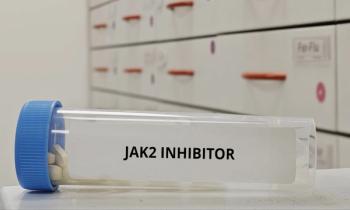
New research reveals ruxolitinib’s hidden cholesterol risk in patients who have MPN and pelabresib’s durable benefit when added to ruxolitinib in myelofibrosis.

Reconstructed Kaplan-Meier data benchmark durability of CAR T-cell therapy, bispecific antibodies, and zanubrutinib combos for relapsed follicular lymphoma.

The House passed HR 5347 to extend flexible Medicare ACO quality reporting and support smaller practices transitioning to digital measures.
Advertisement
Advertisement
Trending on AJMC
1
Orca-T Gains FDA Approval for Matched Donor Stem Cell Transplant
2
Upcoming 2026-2027 Vaccine Season: Deals, Data, and an FDA Vote
3
Racial Gaps in Cancer Pain Management Persist in Community Care: Ila Sruti, MPH
4
Ocrelizumab Led to Declines in Immunoglobulins in Patients With MS
5