

Quality of life was also a top concern among patients when asked about their priorities if they experienced relapse or were refractory to therapy.
Jared is a freelance writer for The American Journal of Managed Care® (AJMC®), and previously worked as a senior editor for HCPLive® at MJH Life Sciences®.
He has an MA from University of Sioux Falls. You can connect with Jared on LinkedIn.
Quality of life was also a top concern among patients when asked about their priorities if they experienced relapse or were refractory to therapy.

Early tests show stem cells can be used to spark expression of a miniature version of the dystrophin protein.
Only about 1% of patients with chronic lymphocytic leukemia (CLL) developed an invasive fungal infection while on a Bruton’s tyrosine kinase (BTK) inhibitor, investigators found.
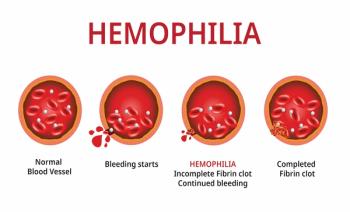
Different types of assays led to different results in measures of factor IX variant FIX-R338L, the authors found.

A new study also found a lack of correlation between physical activity levels and bleeding episodes among people with hemophilia A.

People receiving hypomethylating agent (HMA) therapy spent 33 more days at home than people receiving anthracycline-based therapy in the first year after diagnosis.

A new prevalence study shows more people are living beyond age 65 with type 1 diabetes (T1D).

A Chinese study shows hypertension management led by nonphysicians can be safe and effective.

The most common treatment-related adverse events were injection site reactions, the study found.

There currently are no guidelines on how to treat this patient group, despite a high risk of mortality.

Men are less likely than women to desire community when exercising, the authors found.

The authors said their analysis should help clinicians better monitor patients for potential adverse events.

The coalition said, however, that patient-reported outcomes (PROs) in the myelodysplastic syndrome (MDS) space will be most meaningful if they are collected rigorously and if the data are transparent.

The new data shed light on long-term outcomes for patients receiving duvelisib, although the investigators said the treatment landscape has also shifted significantly since the original trial.

The report found a selective serotonin reuptake inhibitor (SSRI) did not offset the effects of myasthenia gravis (MG) medication.

A new report builds on previous research that could help scientists better understand type 1 diabetes (T1D) risk.

However, investigators said there is some evidence suggesting attention-deficit/hyperactivity disorder may be more common in certain age groups of children with hemophilia.

A 68-year-old man was diagnosed with ocular myasthenia gravis after presenting with double-vision and photophobia.

A new report finds secondary immunodeficiency disease (SID) also increases the risk of mortality in patients with B-cell malignancies.

A new report says early evidence of using gene therapy to treat monogenic diseases offers reason for optimism.

Patients with type 1 diabetes (T1D) reported improved glucose outcomes, but they also said their sleep and quality of life benefited.

The findings show exercise-induced hypertension increases myocardial oxygen demand.

New therapies are helping patients, but are also driving up overall costs of care.

Physicians treated the patient without surgery, although they said the patient’s case is particularly challenging and treatment was ongoing at the time of the report’s writing.

COVID-19 and worsening myasthenia gravis (MG) were the most common treatment-emergent adverse events, the study found.

The investigators said their new system makes it possible for researchers to leverage artificial intelligence even if they do not have expertise working with advanced software.

Only 11 cases of adverse events (AEs) were reported over a 6-year time frame, the investigators found, following administration of chimeric antigen receptor T-cell therapy (CAR T).

The analysis also found the therapy has a manageable safety profile.

The therapy bridges activated factors IX and X to mimic the function of missing or deficient factor VIII.

A new survey has found that most patients who have generalized myasthenia gravis who switched from eculizumab to ravulizumab preferred the latter.