

The next-generation BCL2 inhibitor is approved for adults with relapsed or refractory MCL who have received at least 2 lines of systemic treatment
Mary Caffrey is the Executive Editor for The American Journal of Managed Care® (AJMC®). She joined AJMC® in 2013 and is the primary staff editor for Evidence-Based Oncology, the multistakeholder publication that reaches 22,000+ oncology providers, policy makers and formulary decision makers. She is also part of the team that oversees speaker recruitment and panel preparations for AJMC®'s premier annual oncology meeting, Patient-Centered Oncology Care®. For more than a decade, Mary has covered ASCO, ASH, ACC and other leading scientific meetings for AJMC readers.
Mary has a BA in communications and philosophy from Loyola University New Orleans. You can connect with Mary on LinkedIn.
The next-generation BCL2 inhibitor is approved for adults with relapsed or refractory MCL who have received at least 2 lines of systemic treatment

The complexity of MCL calls for personalized therapeutic strategies, but prior authorization protocols may not recognize distinct patient needs.

Epcoritamab added to R2 sharply boosts follicular lymphoma responses, but infection risks and real-world feasibility raise tough treatment decisions.
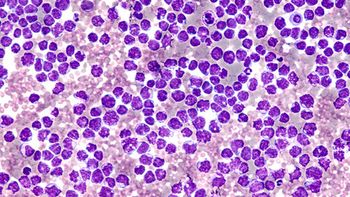
Real-world data show zanubrutinib cuts atrial fibrillation, major bleeding, and mortality versus ibrutinib in B‑cell cancers—guiding safer BTK inhibitor choices.
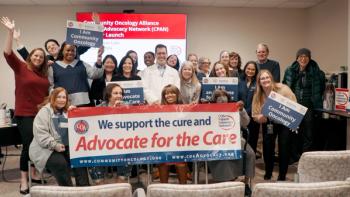
COA's Patient Advocacy Network, or CPAN, was featured in the "From Our Partners" section of the May issue of Evidence-Based Oncology.

AI drives community oncology transformation as practice leaders offer examples of what is working in community oncology to streamline calls, triage, and documentation.

As CAR T-cell therapy reaches community oncology, practice leaders discuss the challenges of payer hurdles, single case agreements, apheresis costs and whether to pursue accreditation.
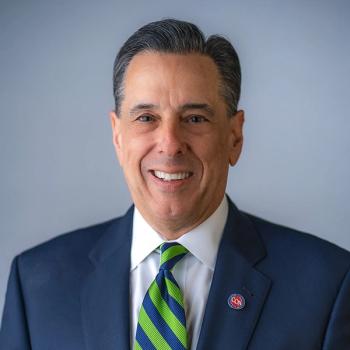
Policy experts discuss how PBM reforms came together, what changes are on the horizon, and what threats are looming for community oncology.

Bringing these curative treatments to more patients means making them available at the community practice level. But that's a big lift, according to experts who spoke at a COA session.

Results of a study using Flatiron Health and SEER data show that community oncology patients with metastatic breast cancer and metastatic NSCLC live longer, highlighting advantages of COA-backed local care.
COA's annual conference hits Orlando April 28, focusing on AI, targeted therapy innovation, and state-level oncology advocacy, explains cochair Johnetta Blakely, MD, MS, MMHC.

The COA Community Oncology Conference will tackle AI, the rollout of bispecifics and CAR T in the community setting, plus reimbursement, radiation oncology, and patient access strategies.

Mosunetuzumab, a bispecific, plus polatuzumab vedotin, an antibody-drug conjugate, deliver high response rates in relapsed MCL, potentially enabling outpatient community oncology treatment and wider patient access.

Off-the-shelf cema-cel clears MRD at more than triple the rate of observation alone—and may propel a shift to frontline use of CAR T-cell therapy when relapse is hard to detect.

Todd Doyle, MD, of OneOncology, warns that commercial payers lag on updating bundled codes, which has slashed radiation oncology revenue and risks community cancer access in 2026.

KFF Health Tracking Poll finds prior authorization tops patient hassles; Drew Altman, PhD, warns complexity delays care, hitting chronic patients hardest.

Lalan Wilfong, MD, a medical oncologist well known for his work in practice transformation, said he looks forward to creating "something more or less from scratch."

Nancy L. Lewis, MD, MBS, FACP, discusses her path from the clinic to biopharma and her goals as NCCN's new CSO, including health equity and faster drug development.
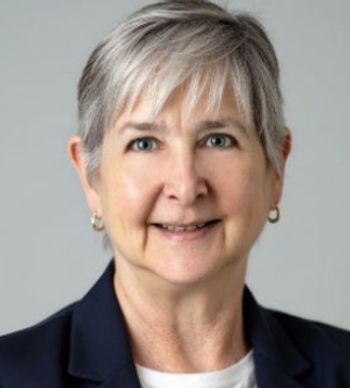
A phase 1 clinical trial specialist, Nancy L. Lewis, MD, MBS, FACP, most recently spent more than a decade at Novartis and was previously a faculty member at Fox Chase Cancer Center and Thomas Jefferson University Hospital.

The law stems from the case of a beneficiary of the state workers health plan, repeatedly denied an alternative cancer treatment, only to be approved after he was too ill to be a candidate.

The FDA now permits outpatient monitoring for epcoritamab’s first full dose in R/R DLBCL, as EPCORE-NHL-6 data support safe bispecific antibody access.

A new approach to posttransplant prophylaxis for graft vs host disease promises to increase access to the procedure to patients from minority groups with blood cancers. Investigators are now studying a lower dose of the treatment to limit toxicity.

The study covers the period of 2015-2019 in Germany, before approvals for CAR T-cell therapy, pirtobrutinib, and the arrival of less toxic BTK inhibitors.

Interim data from the EPCORE-NHL-6 trial show safety outcomes similar to those in the pivotal trial that led to approval for the bispecific T-cell–engaging antibody.

Obesity enlarges organs, adding cells that raise liver, kidney, and pancreatic cancer risk, such that organ size may predict danger better than body mass index.

"The One Hundred Year Effect," a documentary about retired Oregon Health and Science Professor Kent Thornburg, PhD, and his efforts to spread the message of the harms of chronic disease, recently premiered.

Discussions at this February IVBM evening covered advances in biomarker testing in lung cancer to the real-life challenges of maintaining diversity in clinical trials.

UK real-world data show that bridging therapy before brexu-cel in mantle cell lymphoma boosts responses but also increases cytopenias and early mortality.
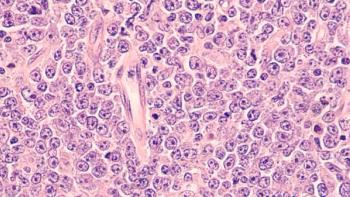
DLBCL is the most common subtype of non-Hodgkin lymphoma, known for its aggressiveness and heterogeneity. This presents treatment challenges if patients relapse following the initial chemoimmunotherapy regimen.

Researchers find that epigenetic changes from the famine caused CV and mental health effects for 3 to 4 generations on both sides of the Atlantic.