
KFF Health Tracking Poll finds prior authorization tops patient hassles; Drew Altman, PhD, warns complexity delays care, hitting chronic patients hardest.
Mary Caffrey is the Executive Editor for The American Journal of Managed Care® (AJMC®). She joined AJMC® in 2013 and is the primary staff editor for Evidence-Based Oncology, the multistakeholder publication that reaches 22,000+ oncology providers, policy makers and formulary decision makers. She is also part of the team that oversees speaker recruitment and panel preparations for AJMC®'s premier annual oncology meeting, Patient-Centered Oncology Care®. For more than a decade, Mary has covered ASCO, ASH, ACC and other leading scientific meetings for AJMC readers.
Mary has a BA in communications and philosophy from Loyola University New Orleans. You can connect with Mary on LinkedIn.
KFF Health Tracking Poll finds prior authorization tops patient hassles; Drew Altman, PhD, warns complexity delays care, hitting chronic patients hardest.

Lalan Wilfong, MD, a medical oncologist well known for his work in practice transformation, said he looks forward to creating "something more or less from scratch."

Nancy L. Lewis, MD, MBS, FACP, discusses her path from the clinic to biopharma and her goals as NCCN's new CSO, including health equity and faster drug development.
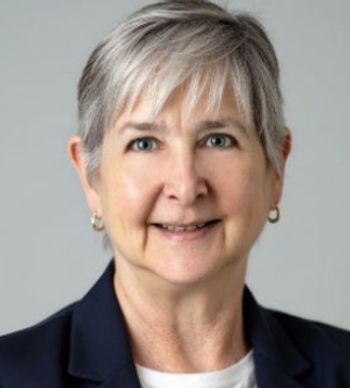
A phase 1 clinical trial specialist, Nancy L. Lewis, MD, MBS, FACP, most recently spent more than a decade at Novartis and was previously a faculty member at Fox Chase Cancer Center and Thomas Jefferson University Hospital.

The law stems from the case of a beneficiary of the state workers health plan, repeatedly denied an alternative cancer treatment, only to be approved after he was too ill to be a candidate.

The FDA now permits outpatient monitoring for epcoritamab’s first full dose in R/R DLBCL, as EPCORE-NHL-6 data support safe bispecific antibody access.

A new approach to posttransplant prophylaxis for graft vs host disease promises to increase access to the procedure to patients from minority groups with blood cancers. Investigators are now studying a lower dose of the treatment to limit toxicity.

The study covers the period of 2015-2019 in Germany, before approvals for CAR T-cell therapy, pirtobrutinib, and the arrival of less toxic BTK inhibitors.

Interim data from the EPCORE-NHL-6 trial show safety outcomes similar to those in the pivotal trial that led to approval for the bispecific T-cell–engaging antibody.

Obesity enlarges organs, adding cells that raise liver, kidney, and pancreatic cancer risk, such that organ size may predict danger better than body mass index.

"The One Hundred Year Effect," a documentary about retired Oregon Health and Science Professor Kent Thornburg, PhD, and his efforts to spread the message of the harms of chronic disease, recently premiered.

Discussions at this February IVBM evening covered advances in biomarker testing in lung cancer to the real-life challenges of maintaining diversity in clinical trials.

UK real-world data show that bridging therapy before brexu-cel in mantle cell lymphoma boosts responses but also increases cytopenias and early mortality.
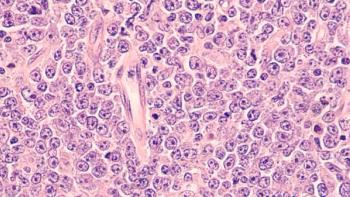
DLBCL is the most common subtype of non-Hodgkin lymphoma, known for its aggressiveness and heterogeneity. This presents treatment challenges if patients relapse following the initial chemoimmunotherapy regimen.

Researchers find that epigenetic changes from the famine caused CV and mental health effects for 3 to 4 generations on both sides of the Atlantic.


The results are the latest from the multiarm EPCORE-NHL-2 trial, which has studied the bispecific antibody epcoritamab in multiple uses and combinations.

Meta-analysis across B-cell lymphomas shows zanubrutinib (Brukinsa) delivers higher ORR/CR than acalabrutinib (Calquence) or ibrutinib among BTK inhibitors.

Real-world evidence shows Pluvicto matches pivotal trial benefits in PSMA-positive mCRPC, with longer PFS after an androgen receptor pathway inhibitor.

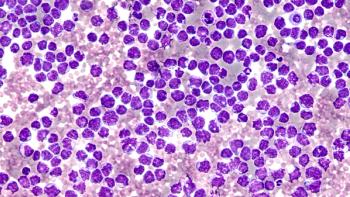
Investigators in China touted durable responses seen in a phase 2 study of the CAR T-cell therapy relma-cel, which has a similar mechanism of action as liso-cel. At present, there are no approved CAR T-cell therapies for relapsed/refractory mantle cell lymphoma in China.
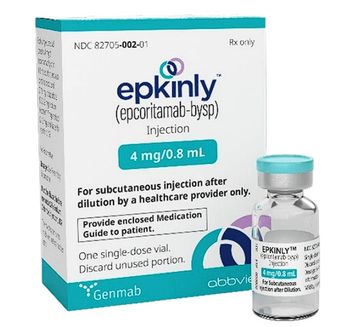
Genmab’s epcoritamab (Epkinly) streamlines bispecific antibody workflows for DLBCL and follicular lymphoma, cutting chair time, waste, and costs.

Enfortumab vedotin plus pembrolizumab boosts survival and pCR in muscle-invasive bladder cancer, according to EV-304 trial data.

With radiopharmaceutical therapy use up 20 times in Medicare, experts analyze clinical pathways for delivering it in academic and community settings.
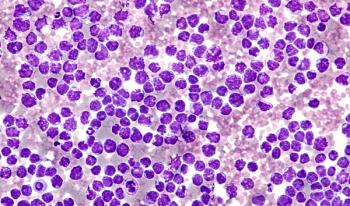
A review article examines questions about sequencing treatments in light of recent developments in relapsed/refractory mantle cell lymphoma.

Pooled trials show Pluvicto improves progression-free survival in advanced prostate cancer, without increasing serious adverse events.
An examination of patient outcomes from the ZUMA-2 trial creates new questions about treatment sequencing.
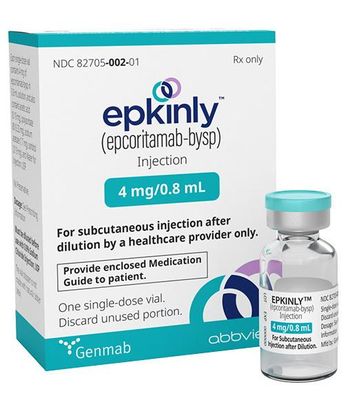
Epcoritamab delivers lasting 3-year remissions in relapsed large B-cell lymphoma, with over half of complete responders staying progression-free.

New leaders of the Sarah Cannon Research Institute discuss its mission and priorities amid a changing landscape in community oncology.
A study from Sweden, the largest of its kind, challenges the standard 24-month milestone as the key point when early relapse is a concern.