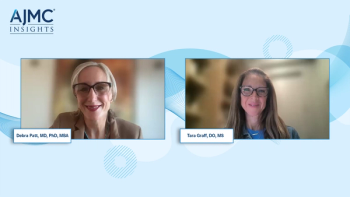
Dr. Patt and Dr. Graff close with a call to action for policy, payers, and practices to accelerate equitable access to CAR T-cell therapy in community oncology.
Dr. Patt and Dr. Graff close with a call to action for policy, payers, and practices to accelerate equitable access to CAR T-cell therapy in community oncology.

Debra Patt, MD, PhD, MBA, MPH, discusses how AI can streamline prior authorization and revenue cycle workflows in community oncology.
New ASCO 2026 real-world data compares safety and outcomes between FACT-accredited and non-accredited centers, challenging assumptions about which sites can deliver CAR T care safely.
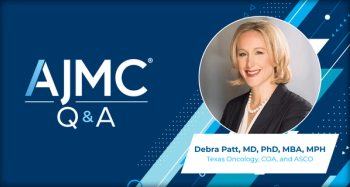
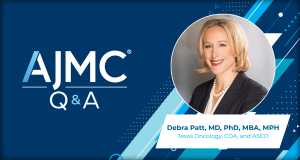
Debra Patt, MD, PhD, MBA, MPH, discusses AI adoption, administrative burden, and strategies to streamline prior authorization in oncology.
AI tools can ease administrative burden in community oncology, but practices face adoption, security, compliance, bias, and error concerns.
As non-FACT-accredited sites increasingly treat patients, the panel examines the calculus practices use to weigh reimbursement risk against growing patient need for CAR T-cell therapy.
Behind every CAR T program is a real cost structure, staffing, drug stocking, and around-the-clock monitoring, that Dr. Graff breaks down as a practical barrier independent of clinical readiness.
Dr. Graff outlines exactly what FACT accreditation demands operationally, while Dr. Patt argues accreditation should support quality rather than function as a rate-limiting barrier to patient access.
The panel traces FACT accreditation's origins in transplant medicine and asks whether a decade of improved CRS and neurotoxicity management has outpaced the original rationale for its strict requirements.
Dr. Graff details how rural geography and unfavorable payer reimbursement compound to limit which community oncology practices can safely and sustainably offer T-cell engaging therapies.
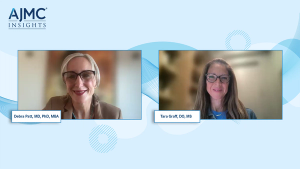
Debra Patt and Tara Graff open this Insights series by examining why CAR T-cell therapy access remains geographically concentrated, drawing parallels to earlier waves of specialized cancer treatment adoption.
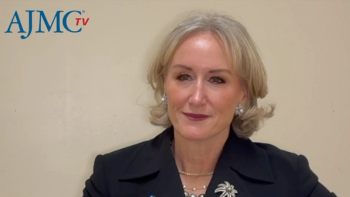
Alongside physician collaboration, patient advocacy is essential to ensure clinical trials and public policy reflect patient-centered outcomes.
Patient–physician collaboration ensures trials reflect outcomes that matter to patients, according to Debra Patt, MD, PhD, MBA, MPH.
The San Antonio Breast Cancer Symposium fosters collaboration among experts, enhancing research and treatment strategies for breast cancer's complex landscape.
Debra Patt, MD, PhD, MBA, MPH, spoke at SABCS about the importance of patient-investigator collaboration to enhance the clinical trial process.

“To error is human, and also to error is in machine learning,” said Debra Patt, MD, PhD, MBA, MPH.
Debra Patt, MD, PhD, MBA, MPH, warns that prior authorization barriers are delaying critical cancer treatments and urges a regulatory fix for Stark Law restrictions on mailing oral oncolytics.
Debra Patt, MD, PhD, MBA, MPH, emphasizes advocacy for pharmacy benefit manager (PBM) reform, physician reimbursement, and sustainable policy solutions to improve access to community cancer care.
Authors from the Community Oncology Alliance and Avalere Health present data that show breast cancer screening rates recovered more slowly among some racial/ethnic groups following on the onset of the COVID-19 pandemic.
August 24th 2026
September 18th 2026
August 18th 2026
August 18th 2026